The Association of Media Women in Kenya (AMWIK), in partnership with UNESCO through the International Programme for the Development of Communication (IPDC), has launched a programme aimed at strengthening the safety, equity and professional capacity of journalists.
The project dubbed “Empowering Journalists for Safety and Equity in Kenya” is an initiative designed to address the safety, mental health and professional advancement of journalists operating across Nairobi, Mombasa, Busia and Kakamega counties.
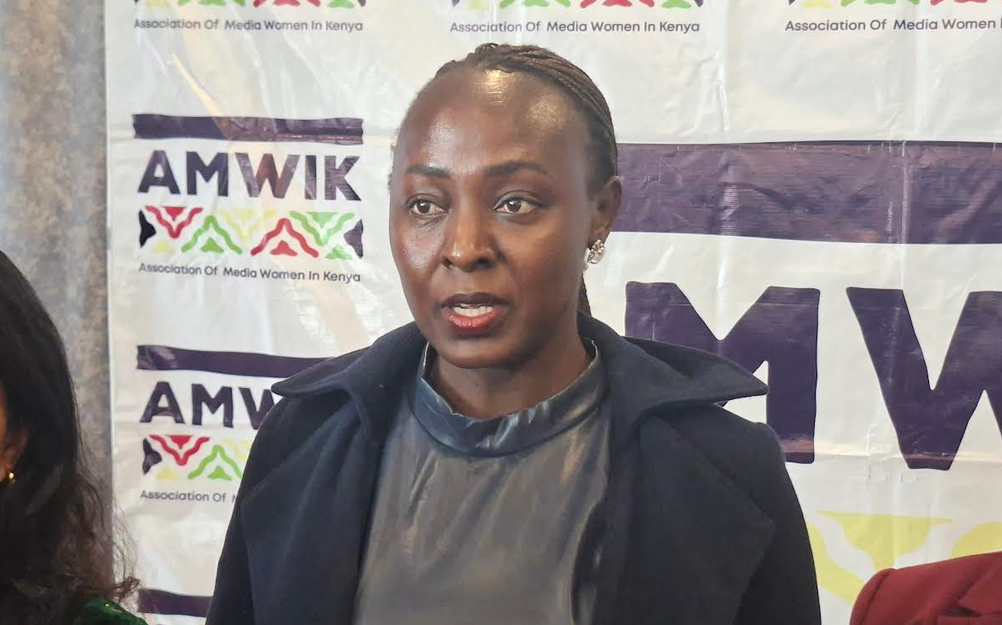
Speaking during the launch in Nairobi, AMWIK Executive Director Queenter Mbori said the initiative seeks to create a safer and more inclusive media environment by equipping journalists with skills in informed and gender-sensitive reporting while addressing challenges affecting media professionals, particularly women.
Mbori said the programme comes at a critical time following the release of the ‘State of Women in Media in Kenya report 2026’ by AMWIK, which highlighted concerns affecting women journalists, including physical safety, job insecurity, mental wellbeing and sustainability.
“The project could not have come at a better time. It seeks to build the capacities of journalists through informed and gender-sensitive reporting while creating an enabling environment within media organizations” she said.
She noted that the programme will support media houses to adopt sexual harassment policies, provide psychosocial support for journalists and strengthen institutional mechanisms aimed at reducing the challenges highlighted in the report.
According to the report, only 14 per cent of women media professionals in Kenya have permanent employment, a situation Mbori described as a major concern because of its implications on economic empowerment and livelihoods.
She added that about 70 per cent of women working in the media are below the age of 35, presenting both an opportunity and a challenge.
“While the youthful workforce presents opportunities, many are still new in the profession and require additional skills to effectively cover issues and inform the public. The report further shows that about 58 per cent of women journalists will be covering elections for the first time” she said.
Mbori expressed optimism that the project would strengthen the capacities of women journalists while fostering collaboration among media organizations and stakeholders to promote press freedom in the country.
She noted that sexual harassment remains prevalent within the media sector, affecting nearly 60 per cent of media professionals, particularly interns and entry-level journalists.
On women leadership in the media, she said only 2.8 per cent of women occupy media leadership positions, while 3.7 per cent hold editorial leadership roles.
The Executive Director said AMWIK has supported injured journalist Catherine Wanjeri through psychosocial services despite limited resources and remains committed to working with the wider media industry to support journalists seeking justice for cases of police brutality.
Kenya Union of Journalists (KUJ) Secretary General Erick Oduor said three journalists, including Catherine Wanjeri were injured while covering Gen Z protests in Nakuru and that the matter is currently before the courts.
“We believe the court will determine appropriate reparations for Wanjeri and the other journalists who were injured. At the same time, all journalists injured while carrying out their duties should also be considered for compensation” he said.
Oduor said KUJ has engaged the Office of the Director of Public Prosecutions (ODPP), which has concluded its investigations and is awaiting files from the Independent Policing Oversight Authority (IPOA) to facilitate prosecution of the officers involved.
“We want this case to set a precedent so that any officer who targets journalists while they are carrying out their duties is held personally responsible” he said.
UNESCO Communication and Information Specialist Kharel Aakriti reaffirmed the organization’s commitment to supporting AMWIK, describing it as a trusted partner in media development.
She said the programme supports the United Nations mandate on the safety of journalists, freedom of expression and access to information.
“The report developed by AMWIK provides evidence that informs this intervention. The project seeks to support women journalists both physically and online, especially as Kenya prepares for the next General Election” she said.
She said UNESCO will work with AMWIK to train 60 journalists under the programme while providing psychosocial support and strengthening resilience among journalists.
Media Council of Kenya Acting Manager Press Freedom & Advocacy Rebecca Mutiso said the initiative would contribute significantly to protecting journalists and safeguarding democracy.
“The safety of journalists is not only about protecting individuals, it is also about protecting democracy. When journalists are threatened, democracy is equally threatened” she said.
Kenya Community Media Network National Coordinator Tom Mboya said journalists working for community radio stations remain among the most vulnerable because they live and work within the communities they cover.
He said the project would help equip community journalists with essential safety skills ahead of the elections, when politically instigated violence often exposes journalists to targeted attacks.
By Anita Omwenga