For years, farmers in Baharini, Chekalini Ward, have planted their crops with their eyes on the sky, uncertain whether the rains would last long enough to carry their crops to harvest.
Prolonged dry spells and unpredictable rainfall have made rain-fed agriculture increasingly difficult, threatening food production and household incomes.
The expansion of the Baharini Dam Integrated Irrigation and Aquaculture Project is now offering farmers an opportunity to change that narrative by providing a more reliable source of water for crop production while opening new opportunities in fish farming.
Last month, the Kakamega County Government handed over Phase II of the project to Jaliya Contractors under the Financing Locally-Led Climate Action (FLLoCA) Programme.
The works include installation of two 10,000-litre water tanks, extension of irrigation pipelines to farms, bush clearing and other improvements to strengthen water distribution for irrigation and aquaculture.
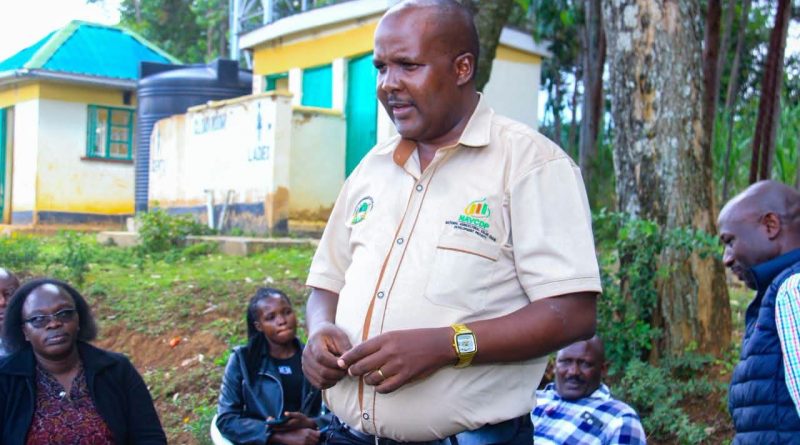
Ben Munialo, a farmer from the area, said the project could ease one of the biggest challenges facing farmers who depend on rainfall.
“Sometimes we plant when the rains begin, only for the rain to disappear before the crops mature. With irrigation, we will have a better chance of harvesting even when the rains fail,” he said.
Another farmer, Rose Nakhumicha, said reliable water would enable residents to expand horticulture and increase the frequency of harvests.
“We have fertile land, but water has always limited what we can produce. If the irrigation reaches our farms, we can grow vegetables more consistently and have something to sell,” she said.
An environmental and social impact assessment conducted for the project found the area suitable for vegetable production, particularly African leafy vegetables, and estimated that the dam would serve more than 100 acres belonging to members of the wider Chekalini community.
The integrated project also incorporates aquaculture, allowing residents to diversify their livelihoods through fish farming.
The county government says the initiative is expected to increase access to irrigation water, boost fish production, improve food security and create sustainable livelihood opportunities.
County Chief Officer for Agriculture Emmanuel Kariuki urged beneficiaries to take ownership of the infrastructure, protect the facilities and ensure they are used for their intended purpose.
For women and young people, the investment could generate opportunities beyond farming, including fish marketing, vegetable trading, transportation and processing.
“If production becomes reliable, agriculture can become a real business for young people instead of something we only do for subsistence,” Nakhumicha said.
Baharini is part of a wider effort by Kakamega County to harness water resources for agriculture and strengthen communities against climate-related shocks.
An earlier Kakamega County Integrated Development Plan documented 35 dams and 50 water pans across the county, highlighting the need to increase water storage and reduce wastage of rainwater.
The plan also identified the Munyuki Railway A Irrigation Project in Lugari, covering about 80 hectares, among the county’s irrigation schemes.
Other water investments include the rehabilitation of Machine Dam in Sinoko, Likuyani, while Mumonyonzo Dam and Musembe Dam in Chekalini have featured in county plans for agricultural and community development.
The investments reflect the county’s growing focus on irrigation as a way of reducing reliance on rain-fed agriculture.
Farmers, however, say they will also require continued agricultural extension services, quality inputs and reliable markets to turn increased production into better incomes.
Proper maintenance and equitable access to irrigation water will be crucial to ensuring the investment benefits the intended community over the long term.
For a community that has long depended on the uncertain rhythm of the rains, Baharini Dam offers more than stored water. It offers the prospect of productive farms through dry spells, diversified incomes and greater resilience to a changing climate.
If successfully completed and managed, the project could provide a model for how local water infrastructure can help smallholder farmers in Lugari build more secure and commercially viable livelihoods.
By Linet Wafula