Kenya’s electric mobility sector is set for a new push as battery-swapping technology emerges as a potential solution to the high cost and limited charging infrastructure slowing the adoption of electric motorcycles, scooters and three-wheelers.
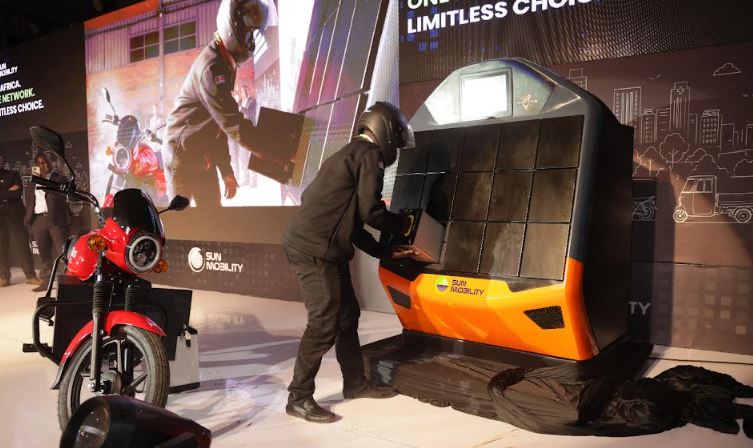
SUN Mobility, an electric mobility technology company, has introduced an open-architecture battery-swapping network that allows electric vehicles from different manufacturers to use the same batteries and swapping stations.
The company says it has already established 35 battery-swapping stations in Nairobi and Mombasa following its partnership with Vivo Energy, marking a new approach to building infrastructure for Kenya’s growing electric mobility market.
SUN Mobility Country Manager Gaurav Anand said the company’s model separates the vehicle from its energy source, allowing manufacturers to concentrate on making and supporting electric vehicles while the company manages the batteries and swapping infrastructure.
Unlike conventional electric mobility models, where individual manufacturers develop their own vehicles, batteries and charging infrastructure, the open-architecture system allows vehicles from multiple manufacturers to operate on a common energy network.
The platform supports electric motorcycles, scooters, passenger tuk-tuks and cargo three-wheelers, giving riders access to different vehicle models without requiring every manufacturer to build a separate battery network.
“The model allows vehicle manufacturers to focus on vehicle production, pricing, after-sales services and spare-parts support, while SUN Mobility manages the energy infrastructure,” Anand said.
SUN Mobility has partnered with more than 10 vehicle manufacturers in Kenya, including Afrina Neopower, BGauss, Fika Mobility, Motovolt, Odysse, Piaggio, QJ-YY, Sprocomm, VMoto and Wylex.
Anand said the company battery swapping could also significantly reduce running costs for riders compared with petrol-powered motorcycles and three-wheelers.
He said estimates show that riders could achieve savings of about 20 per cent when travelling 100 kilometres a day, rising to as much as 35 per cent at 150 kilometres per day.
The technology operates through three key components — smart batteries, quick-interchange swapping stations and a cloud-based smart network — enabling riders to replace depleted batteries with charged ones instead of waiting for vehicles to recharge.
The approach is expected to address one of the major challenges facing electric mobility: keeping vehicles on the road while reducing downtime associated with conventional charging.
Anand said they have spent nine years developing the technology, supported by more than 450 patents, design registrations and trademarks.
The company is drawing on its experience in India, where it reports having more than 125,000 vehicles operating through over 2,000 swapping stations across 25 cities, in partnership with more than 30 vehicle manufacturers.
In Kenya, the expansion is being undertaken in partnership with Vivo Energy, whose extensive network of more than 4,200 Shell and Engen-branded service stations across 29 African countries could provide strategic locations for additional battery-swapping stations.
SUN Mobility plans to expand the model across Africa, targeting more than 160,000 vehicles powered through 2,500 battery-swapping stations over the next five years.
The company believes the shared infrastructure model could accelerate electric vehicle adoption by reducing the amount of capital manufacturers need to invest in energy infrastructure while giving riders greater choice.
For Kenya, where electric motorcycles and three-wheelers are increasingly gaining attention as alternatives to petrol-powered transport, battery swapping could provide a new pathway for expanding the sector.
The technology places shared energy infrastructure at the heart of electric mobility, potentially allowing several vehicle brands to operate within one network while cutting operating costs and reducing the need for separate charging or swapping systems for every manufacturer.
By Tonny Omollo