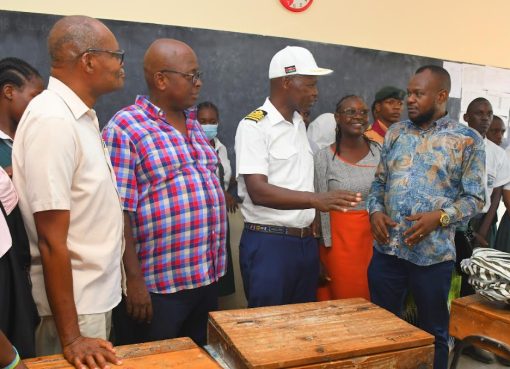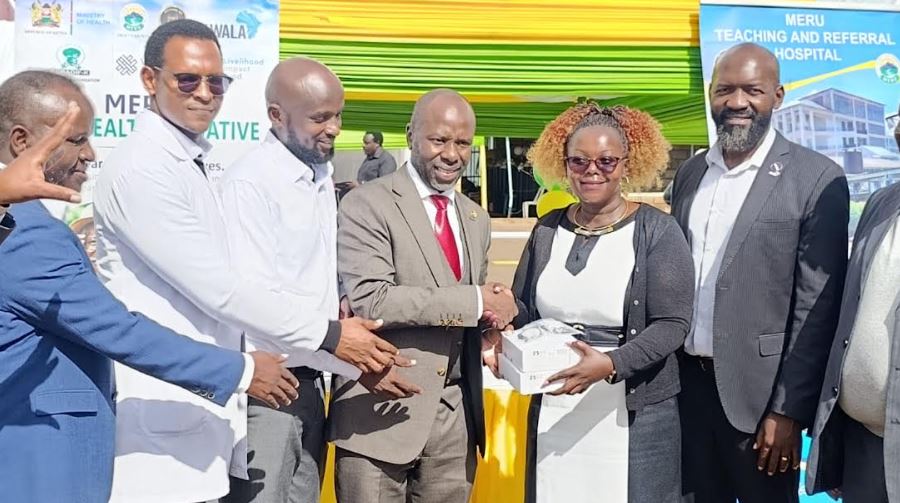
Meru County marked the World Sight Day 2026 with the launch of an eye-care programme targeting people with vision challenges through screening, training of health workers and distribution of reading glasses.
The initiative, implemented through partnerships involving the Meru County Government, Council of Governors (CoG), GLADIF, LWALA Village Alliance, Livelihood Impact Fund and other stakeholders, seeks to improve access to eye-care services, particularly for people affected by presbyopia.
Speaking during the celebrations, Meru Teaching and Referral Hospital’s Chief Executive Officer, Dr Bernard Murithi, said eyesight was a special sense whose impairment significantly affected people’s quality of life.
Dr Murithi thanked partners for supporting the initiative, saying improved access to eye-care services would help many people overcome challenges associated with poor vision.
He said the county would work closely with Community Health Promoters (CHPs) to identify people with vision problems and support them to access appropriate services.
Prof. Mutakha Kangu, who works with the Council of Governors, said the eye-screening programme would strengthen county governments’ efforts to address eye-health challenges.
He said partners had provided eyeglasses, trained personnel to undertake screening and officially launched the programme, with screening services commencing immediately.
LWALA Director, Kenneth Ogendo, said an estimated two billion people globally had some form of eye problem, with presbyopia, a condition that causes difficulty seeing nearby objects, affecting millions of people, particularly those aged over 40.
Ogendo said LWALA was working with the Council of Governors, Ministry of Health, GLADIF and Livelihood Impact Fund to reduce the burden of eye problems through the provision of reading glasses.
He urged communities to stop viewing eyeglasses as a sign of illness or shame, saying they were important assistive devices that improve people’s productivity and livelihoods.
“We also want to demedicalise glasses in the sense that they should not be found in hospitals only, but also in rural areas through outreaches using churches and even CHPs so they can be available for everyone,” he said.
He said the pilot programme was being implemented in Meru and Homa Bay counties, with plans to expand the initiative to other parts of the country if successful.
Livelihood Impact Fund representative Ann Njoroge said the organisation works with partners in Kenya and other African countries to provide near-vision glasses to people in need.
She said 85,000 glasses would be distributed under the initiative, with Meru and Homa Bay serving as pilot counties.
Njoroge said the pilot would help partners establish the most effective approach to addressing presbyopia among an estimated 7.5 million Kenyans who may be affected by the condition.
GLADIF Chief Executive Officer Gladys Miriti said the pilot programme would run from August 2026 to January 2027 and had two key components: training eye-care stakeholders and screening and dispensing near-vision glasses to people with presbyopia.
She said more than 57 senior county trainers had been reached, while approximately 500 health workers from Level Two to Level Three health facilities in Meru had been trained.
Miriti said the programme would conduct mass outreaches across various sub-counties to identify people requiring near-vision glasses and facilitate their access to the devices.
Meru County Chief Officer for Health Services Dr Koome Muthuri said World Sight Day provided an opportunity to reflect on the importance of eye health, noting that the theme for this year’s celebrations was “Love Your Eyes”.
He said eye problems could occur in different forms, including conditions that could be treated, cases where people had no apparent disease but experienced poor vision, and complete loss of sight.
Dr Muthuri said the county had embraced the presbyopia initiative through partnerships and urged residents to undergo regular eye examinations.
He reaffirmed the county government’s commitment to supporting the programme, noting that its success would depend on concerted efforts by all stakeholders, adding, “My plea is to make the pilot a success.”
By Dickson Mwiti