For many people in Nyeri, the sight of a boda boda rider sneaking through traffic, carrying passengers or delivering goods, is an ordinary part of everyday life.
But behind the familiar motorcycle is a sector with a leadership structure, welfare systems, security networks and long-term plans that many people rarely see.
According to Charles Ndegwa, the Nyeri County Boda Boda Chairperson, the sector is more organised than it appears to a layman.
He says the structure has been operating for years, although much of it remains undocumented.
“The Nyeri boda boda society has a structured form of government which is rarely known by people because it is not documented,” Ndegwa explains.
At the top of the structure is the county leadership, headed by a chairperson who represents boda boda operators scattered in the eight sub-counties.
Below the county level are sub-county chairpersons and committee members, followed by ward structures and individual terminus.
Ndegwa says the organisation extends to hundreds of stages spread across the county.
“We have eight sub-counties with a chairperson for each. Then we have 30 wards and, from there, the stages. Overall we have a total of 32,000 registered riders who operate in all our 665 designated pickup and drop-off points,” he adds.
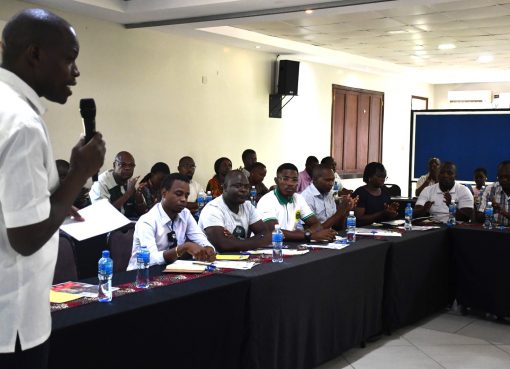
But Ndegwa says the organisation is not only about leadership. There are also discipline masters responsible for dealing with members who violate the rules in their respective stages.
“We have discipline masters who deal with those who violate our bylaws. With good communication, I believe, we can have one of the best-structured boda boda businesses,” he points out.
For a rider, a motorcycle is more than a means of transport. It is a means of eking a living. And losing a motorcycle under whatever circumstance is unfathomable.
Motorcycle theft is therefore one of the biggest fears among riders.
The bodaboda boss says the operators have developed their own communication networks and use tracking devices to help trace stolen motorcycles.
“When it comes to the theft of motorcycles, we use our connections and trackers to intercept the thieves,” he says. But recovering stolen motorcycles has at times taken dangerous twists.
Ndegwa recalls several instances where suspects accused of stealing motorcycles have been subjected to mob justice.
He gives the case of an alleged theft in the Gatitu area, where suspects were intercepted and being ferried towards Karatina, where they were later lynched.
“There was a case where a theft was intercepted at Gatitu, and the suspects were taken to Karatina, where they were burnt by angry boda boda operators as a warning to other thieves,” he recounts.
He claims that some stolen motorcycles eventually find their way to parts of Meru, where accessing them can be difficult.
Despite the anger caused by motorcycle theft, Ndegwa says security agencies and boda boda operators need to work together rather than resorting to mob justice.
To acquire a motorcycle, financing has become a major burden for riders.
“A boda boda can go for up to Sh150,000, but when you buy it on loan, you can end up paying Sh420,000. The exploitation is very high here,” he says.
Ndegwa now wants the government to examine the operations of motorcycle financing companies, arguing that the high cost of credit places riders under undue pressure.
“We suspect that some of the boda boda thefts are managed by the people who loan out motorcycles. This is because some of these motorcycles get stolen when one is almost clearing his loans, often two or three months before the due date,” he says.
Apart from theft, poor roads present another challenge. He also adds that young riders at times ignore basic safety requirements, including helmets, reflective jackets and safety shoes.
“We have a safety issue with young people who do not care about personal safety. They do not see the need for helmets, reflective jackets and safety shoes, and sometimes even the clients do not care about their own safety,” he says.
For him, the reflective jacket is not simply part of a rider’s uniform. At night, it can make the difference between being seen and being hit.
“Reflectors are very important because they help in easy identification of a motorcycle while on the road. When it is dark and you do not have a reflector, a car may fail to see you and end up running over you,” he says.
To address the problem, boda boda leaders organise meetings and safety hubs where riders are educated on road safety.
“We usually have boda boda meetings and safety hubs to teach our fellows about the importance of safety,” he says.
The sessions, he adds, sometimes involve doctors and accident survivors who share their experiences with riders.
“We invite guest speakers from the same sector, including survivors and doctors who attend to us after being involved in accidents,” he explains.
The possibility of unseen dangers on the roads has now pushed the riders to create welfare systems.
Ndegwa says the association has a social welfare structure that assists members during difficult moments such as in sickness and in death.
The riders have also established SACCOs and associations where members can access loans and support one another as guarantors.
“Our SACCOs and associations allow us to lend money to members. We also have good relations where we can guarantee one another when a boda boda rider wants a loan,” he explains.
Healthcare is another area where riders have benefited from government intervention.
As an accident survivor, Ndegwa says he can speak from a point of experience on how the Social Health Authority (SHA) came on board during his hospitalisation.
“The Social Health Authority is working. After my accident, SHA came in and bailed me out by paying Sh160,000. I want to urge Kenyans not to take SHA for granted. They should instead go out and register,” he advises.
For a sector spread across hundreds of stages, politics can easily become divisive.
Ndegwa says politicians at times exploit existing differences to divide boda boda operators along factional lines.
“Politicians are very divisive because they want to keep dividing people. But bodaboda riders should remain united despite their political differences and avoid violence during political campaigns,” he affirms.
“We are very neutral when it comes to politics. We always go with the sitting government, but we try not to entertain any violence during campaign rallies.”
For the riders, he says, the priority should be issues that affect their daily lives rather than political divisions.
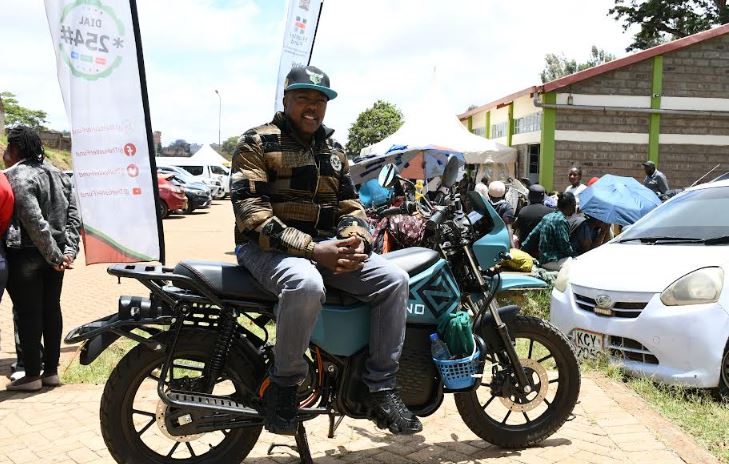
Ndegwa says Nyeri riders are increasingly embracing electric motorcycles, with more than 100 already operating in the county.
“We are very much ready to embrace modern electric bikes. We already have over 100 of them in Nyeri, and mine is one of them,” he says.
He says electric motorcycles have the potential to reduce operating costs, although the shortage of battery-swapping stations remains a challenge.
“The advantage of electric bikes is the cost of operation and production, but the challenge is that swapping stations are few,” he says.
He also encourages riders to embrace digital platforms such as Bolt and Uber apps as the transport industry continues to evolve.
For him, however, technology should not take away the independence that attracts many people to the boda boda business.
“Boda boda is a self-employed job. Unless you pay someone Sh250,000 per month, you cannot employ him because you will deprive him of his freedom. This job earns me a living and my daily bread,” he says.
Away from the road, the riders face another less visible challenge — mental wellbeing.
Ndege says family conflicts, motorcycle loans and the high cost of living can create pressure for a rider, with some turning to substance abuse.
“Mental illness among boda boda guys is caused by family wrangles, financial challenges and the high cost of living. This may lead people to alcoholism and substance abuse. The government should therefore ensure drugs and illicit brews do not get access to the market and get to our young people,” he says.
Despite their challenges, Ndegwa believes boda boda riders can play an important role in fighting crime. Because riders move through different parts of the county throughout the day, he says they often see and hear things that can be useful to law enforcement officers.
“We do not bribe our way out. We have created a good rapport with the police because we are also a source of information to them,” he says.
He believes stronger cooperation between the rider, the police and the government can improve security while also protecting the riders themselves.
But for Charles, the bigger issue remains representation.
“We do not have enough representatives in government to air our grievances accordingly. We need adequate representation. We want to be involved in the visions and decision-making processes, both in the county and national government, he prays.
By Samuel Maina and Silvia Mwangi