Bungoma County, in partnership with Interchristian Fellowships’ Evangelical Mission (ICEFEM), has equipped four hospitals with specialised eye-care equipment to improve diagnosis and treatment of eye conditions and reduce avoidable blindness.
Governor Kenneth Lusaka launched the equipment handover on Thursday, saying partnerships with non-governmental organisations were critical to bridging gaps in the county’s health sector.
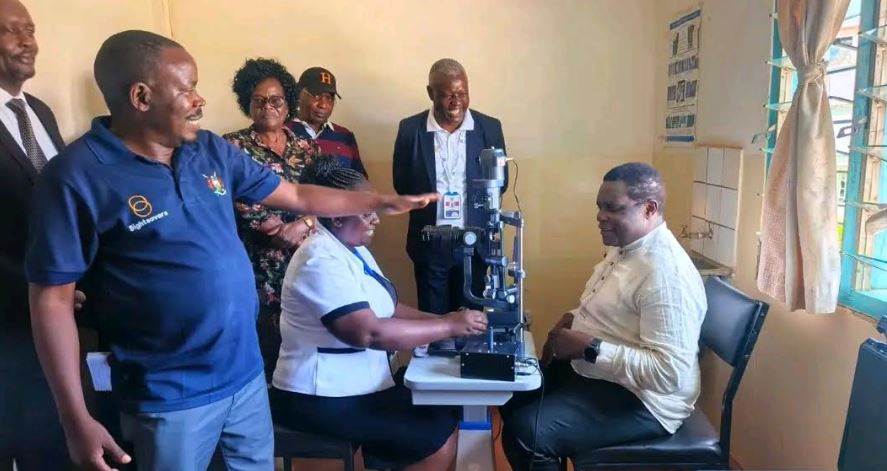
Kimilili, Cheptais, Kapsokwony and Webuye hospitals received equipment including arc lights, tonometers, computerised slit lamps, retinoscopes and visual acuity charts.
Health workers from the four facilities have also been trained to operate the equipment, which is expected to improve access to eye-care services and reduce the need for patients to travel long distances in search of specialised treatment.
Lusaka said limited funding remained a major challenge for the county’s health sector, with a significant share of the health budget going towards salaries.
“We know the health budget in the county is not sufficient, as a large portion goes to salaries. However, we will continue seeking partners to sort out our needs,” he said.
ICEFEM director Simon Nabie said the organisation was committed to working with the county government to improve healthcare delivery and bring services closer to residents.
“We are glad to partner with the county to make our health services better,” he said.
Nabie said the organisation would continue supporting the county’s efforts to improve access to healthcare, adding that the wider goal was to reduce avoidable blindness.
The initiative is being implemented under the BELIEVE Project (which stands for Bungoma Enhanced Localised Inclusive, Efficient, Vision Engagement).
The project combines accessibility audits, improvements to health facilities, provision of medical equipment and training of healthcare workers.
The project seeks to improve access to eye-care services for persons with disabilities and other vulnerable groups.
It aims to ensure that patients can access services in a safe and dignified environment while promoting independence and removing barriers that prevent them from receiving appropriate care.
By Chris Mahandara