The recent deaths of artisanal miners in Siaya County and West Pokot County have once again exposed the risk and dangerous conditions under which thousands of ordinary Kenyans continue to eke out living by extracting minerals in informal mining sites across the country.
In the last few days, three miners lost their lives after a gold mine shaft collapsed in Bondo, while 15 others died and many sustained injuries after rocks and soil caved in at an artisanal mining site in West Pokot.
The tragedies have renewed calls for the national and county governments to urgently streamline artisanal mining through regulation, safety enforcement, training, and provision of modern equipment.
The accidents have also stirred concern in Tinderet Sub County, where small-scale quarrying and artisanal extraction activities have become an important source of livelihood for many young people and low-income households.
Residents, leaders, and mining stakeholders in the area now say the country can no longer ignore the dangers facing miners who descend daily into unstable pits in search of income.
Across many parts of the country, artisanal mining has grown rapidly due to unemployment, shrinking agricultural returns and rising poverty levels. In regions rich in gold, quarry stones, sand and other minerals, many youths have abandoned casual labour and turned to mining as a quicker source of cash.
However, most of the activities remain informal, poorly supervised and largely unregulated.
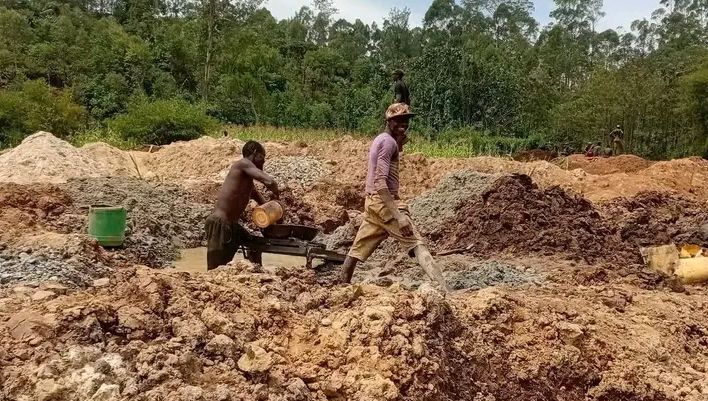
Mining experts say many artisanal miners work without protective gear, geological assessments or proper structural support systems. In many cases, pits are dug manually and expanded recklessly, exposing workers to cave-ins, flooding, and suffocation.
The situation worsens during rainy seasons when the soil becomes loose and unstable.
The repeated disasters have prompted concern among residents in the area, where local leaders say similar risks exist in quarrying zones and informal mineral extraction sites operating without proper inspection.
Area residents say many youths involved in such activities lack training on occupational safety and often work under pressure to earn daily income, ignoring the surrounding dangers.
Community elder Kiprono Tanui said many young people are increasingly turning to informal extraction activities because of unemployment.
“Some of these young men enter weak tunnels and unstable pits because they have no other source of livelihood. Unfortunately, safety is rarely considered because everyone is desperate to earn something,” said Tanui.
Mining and environmental stakeholders say one of the major challenges facing artisanal mining in Kenya is lack of formal registration of miners and mining groups.
Most operators work independently or in small informal groups, making it difficult for authorities to monitor safety standards or enforce compliance with mining laws.
Mining consultant Samuel Kibet noted that many artisanal miners possess little knowledge about geological risks.
“Most of them simply dig wherever they suspect minerals exist. There is no professional survey, no reinforcement of walls and no emergency response preparedness. That is why whenever collapses occur, rescue operations become extremely difficult,” said Kibet.
Kibet called on the national government to establish county-based artisanal mining support centres that would help miners obtain technical advice and safety education before commencing operations.
He further proposed mandatory inspection of all artisanal mining sites by officers from the Ministry of Mining and county governments.
Stakeholders now say both levels of government must move quickly to prevent more deaths.
Among the proposed interventions is the registration and licensing of all artisanal miners and mining groups across the country.
Such a move, experts argue, would help authorities maintain records of mining activities, monitor compliance and ensure only approved sites operate.
There are also calls for regular safety inspections and closure of dangerous sites.
Resident Josephine Jepkorir said some extraction areas continue operating despite visible signs of danger, including deep cracks and weakened walls.
“People continue working in risky pits because they fear losing their daily income. Unless the government intervenes firmly, more families will continue losing loved ones,” said Jepkorir.
Another key recommendation is the introduction of compulsory safety training programnes for artisanal miners.
Mining experts say many miners lack basic knowledge on tunnel support systems, ventilation, emergency evacuation and handling of weak soils.
County governments are also being urged to partner with the national government in offering modern safety equipment such as helmets, protective clothing, gas detectors and excavation support materials.
At the same time, the people are calling for improved emergency response mechanisms in mining zones.
The recent incidents exposed the lack of proper rescue equipment and trained personnel capable of handling mine collapses.
In many cases, fellow miners and residents rely on shovels and crude tools during rescue operations, exposing more people to danger.
The residents now want county disaster management units strengthened and equipped to respond quickly to mining accidents and other emergencies.
Environmentalists have also raised concern over the impact of unregulated mining on land degradation and water sources.
Grace Mutai, environmental conservation advocate, warned that poorly managed extraction activities could destroy agricultural land and expose nearby communities to environmental hazards.
“In farming areas such as Tinderet, unregulated mining can interfere with food production and damage water catchment areas. Environmental restoration measures must become compulsory,” said Mutai.
Youth leaders, however, insist that enforcement alone will not solve the problem.
Youth leader Brian Kirui argued that the government must address unemployment and poverty, which continue pushing many young people into risky informal activities.
“Young people are entering dangerous pits because they are searching for survival. The government should create alternative employment opportunities, support youth enterprises and invest in vocational training,” said Kirui.
Analysts say artisanal mining, if properly regulated, has the potential to contribute significantly to local economies while creating employment opportunities.
Kenya’s mining sector continues to hold enormous economic potential, but experts caution that growth must be accompanied by safety and accountability.
Residents in Tinderet now hope the painful lessons from Bondo and West Pokot will push authorities to act decisively before more lives are lost.
As families continue mourning loved ones affected by unpredictable cave-ins, the government should transform artisanal mining from a dangerous survival activity into a safer and sustainable economic venture.
By Sammy Mwibanda