As April, globally recognised as Autism Awareness Month, comes to an end, teachers, caregivers and parents working with children living with Autism Spectrum Disorder are calling for increased support to improve care and learning conditions.
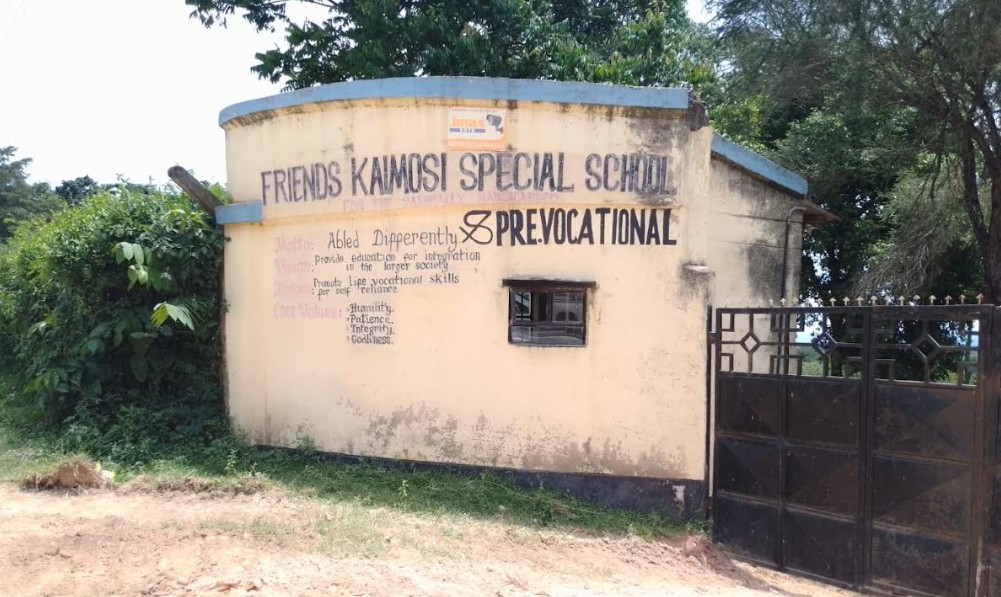
At Friends Kaimosi Special School in Vihiga County, 159 learners are enrolled, 35 of them being autistic children—20 girls and 15 boys.
The institution admits learners every term and operates on a regular academic calendar, offering education to learners living with disabilities from the age of eight years and above.
Under a shade in the green field of the school, the institution’s accountant, Victor Onzere, explained the admission criteria for autistic learners.
He said parents are required to present a referral letter from a hospital confirming the diagnosis, a national ID, the child’s birth certificate, and an allocation letter from the Ministry of Education placing the child in the school.
Beside him sat Caroline Khasimwa, a caregiver at the institution who has worked with autistic learners for four years. Her day begins as early as 4:30 a.m., when she helps learners bathe and prepare for classes.
“I take care of 35 girls. When they fall sick, it is sometimes hard to notice until they become very weak because some of them cannot communicate. In such cases, we rely on medication prescribed by the nurse,” said Caroline.
She noted that caregiving comes with emotional and physical challenges. At times, she said, managing menstrual hygiene among the girls becomes difficult, especially for those still learning personal care skills.
“Dealing with these children is something you get used to after some time. I clean them, bathe them, help them with feeding and give them medication as prescribed by the nurse, yet our salaries are quite low compared to the work we do. I earn Sh 8,000 per month,” she said.
Caroline added that the school lacks a resident doctor or therapist, meaning caregivers and teachers often step in to administer basic care and support under guidance from the nurse.
“Sometimes the students become very violent, especially after consuming sugar or wheat. We can only control such outbursts by giving them prescribed medication such as phenobarbital,” she added.
She also highlighted stigma from members of the public, saying some people still believe autism is contagious through contact.
According to Caroline, some learners are non-verbal and are mainly taught life skills such as grooming, washing and bathing. Those who master the skills often help their peers under supervision.
“In cases where learners complete school successfully, some are supported to start small businesses at home, such as barber shops or salons, depending on their skills and talents,” she said.
Next to them was Lilian Imbuhira, a teacher aide who assists learners in class and during daily routines such as hygiene and toileting. She works with 14 learners in her class.
With years of experience, she said she can often tell when a learner is unwell or needs assistance. She joined the institution in 1999 and is set to retire in three years.
“Over the years, the school has improved significantly. We now have gloves, mops and diapers, unlike earlier when we worked with bare hands. We also have teaching aids such as balloons and ABCD charts, which have made learning more interactive and enjoyable,” she said.
Lilian encouraged parents not to hide children with autism but instead to take them to school for learning and social interaction, noting that many improve over time.
Onzere further noted that the school faces several challenges, including inadequate food supply, unpaid school fees and strained infrastructure such as limited classrooms and poor dormitory conditions for girls. The cost of medication and lack of professional therapists were also cited as major concerns.
“The annual school fees stand at Sh21,000, but many parents are unable to afford it. We cannot turn away the children, so we do our best with the limited resources available,” he said.
He added that the school occasionally receives support from well-wishers and organisations in the form of food supplies such as maize and beans, as well as government grants that help sustain operations.
Despite the challenges, Friends Kaimosi Special School continues to emphasise skills-based learning, enabling learners who may not develop speech to acquire practical skills for independence. Some former students, now running small businesses, often return to the school as a source of inspiration to current learners.
By Yvonne Misango and Rose Wasike