

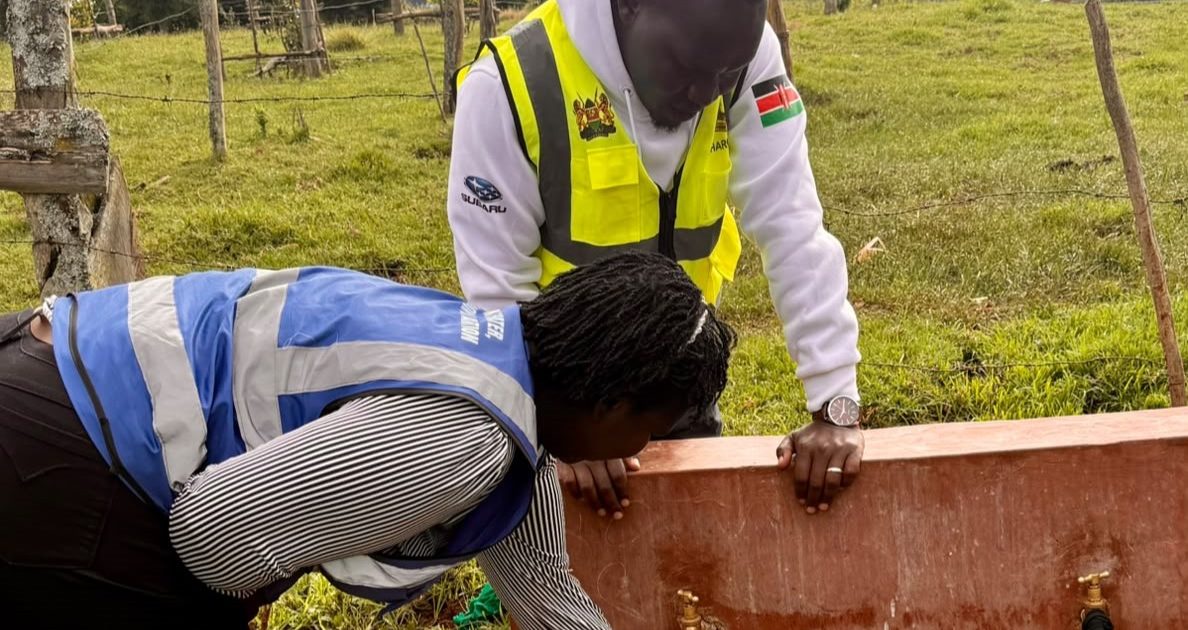
Water sector engineers in Uasin Gishu County have stepped up efforts to secure the long-term future of community water projects, training local leaders responsible for the Drys Girls Water Project in Ainabkoi/Olare Ward.
On Tuesday, Engineers Haron Kiprotich and Celestine Kigen conducted a hands-on capacity-building session for the Project Management Committee overseeing the facility.
The training covered water quality management, supply by-laws, project scope, day-to-day operations, and routine maintenance, which are core skills needed to keep the infrastructure running reliably for years to come.
“This project is more than pipes and tanks; it is a lifeline for schools, the dispensary and neighbouring households,” said Haron Kiprotich.
“By equipping the committee with practical knowledge, we are transferring ownership and responsibility to the community itself. That is the only way these investments survive beyond the construction phase,” he added.
Celestine Kigen emphasised the broader goal. “Sustainability is not automatic. It requires skilled, accountable local management. Today’s session strengthens the committee’s ability to protect water quality, enforce fair usage rules and carry out timely maintenance. When communities take charge, projects last.”
The Drys Girls Water Project supplies clean water to Drys Girls Senior School, Drys Farm Comprehensive Mixed Day and Boarding Primary School, Drys Dispensary and surrounding homes.
Reliable access is expected to reduce the time and distance residents previously spent fetching water, improve hygiene in the schools and health facility, and support daily operations for families and institutions in the area.
The training forms part of the county’s wider commitment under Nguzo No. 7, which prioritises the sustainability of completed water projects.
Across the county, water sector teams continue to roll out similar PMC trainings so that community-managed systems remain functional, accountable and responsive to local needs long after construction ends.
By building technical skills and fostering a culture of ownership, officials observe the initiative helps protect public investment while delivering envisioned benefits, including cleaner water, better health outcomes and greater resilience for the communities that depend on these projects every day.
By Maurice Aluda


