County governments have been urged to install air quality monitoring gadgets that will offer timely data that will help in tackling rising air pollution.
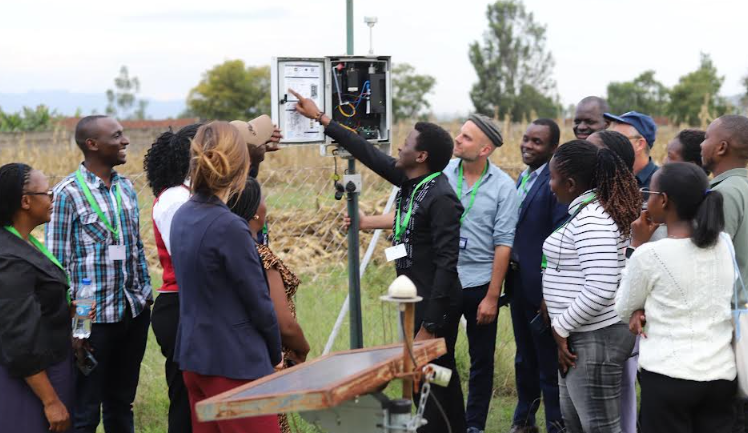
The Director of Research and Extension at Egerton University, Professor George Owuor, advised devolved units to place specialized devices at various spots in their localities that utilize high-resolution artificial intelligence and make data accessible to members of the public via a smartphone app and digital dashboards.
Professor Owuor was speaking at the institution’s Njoro Main Campus when he inaugurated a four-day workshop on establishing clear air quality thresholds for advisories and warnings, identifying vulnerable and target groups, and defining appropriate actions for different levels of air quality risk.
Professor Owuor called for stronger collaboration among universities, county governments, industries, communities, and development partners and emphasized the need for collective action in realizing sustainable solutions in improving air quality.
The workshop sponsored by RESPIRA explored the development of an integrated, sustainable, and user-friendly air quality forecasting, visualization, and early-warning system.
Respira is a global organization that promotes intelligent Heating, Ventilation, and Air Conditioning (HVAC) management systems that use Artificial Intelligence to improve energy efficiency, thermal comfort, and air quality in buildings and infrastructures.
Professor Owuor indicated that Egerton University was positioning itself to work with a team from Respira in conducting research to assess the air quality across the devolved unit and mapping out hotspot zones that contribute significantly to pollution levels, including heavy traffic routes, densely populated neighborhoods, the Giotto waste dumping site, and industrial zones.
The workshop brought together project partners and stakeholders to deliberate on how existing air quality monitoring infrastructure, scientific expertise, forecasting models, visualization tools, and communication platforms can be strengthened and connected to support an operational national air quality forecasting and early-warning service.
The four-day workshop brought together ward ambassadors, students, representatives from the Kenya Meteorological Department (KMD), county and city officials, health practitioners, traders, planners, media representatives, and other project partners.
Participants emphasized that technical air quality data must be translated into clear, practical, and actionable information that can support public health, decision-making, and community preparedness.
A key recommendation was to integrate air quality forecasting into the existing operational framework of the Kenya Meteorological Department, rather than creating a new parallel system.
This approach will build on KMD’s established forecasting and communication structures while connecting them with existing monitoring infrastructure, scientific expertise and forecasting models.
The experts also emphasized the need to strengthen data-sharing arrangements and develop Application Programming Interfaces (APIs) to support the smooth exchange of information between monitoring platforms and KMD systems. Strong data quality assurance, quality control, and scientific validation will be essential to ensure that forecasts and warnings are reliable and suitable for operational use.
The workshop further highlighted the importance of building technical capacity in air quality modelling and forecasting while developing a sustainable and locally manageable visualization and dashboard system.
Participants also called for clear institutional responsibilities for data management, forecasting, visualization, and dissemination.
The discussions recognized the potential value of integrating scientific information with relevant indigenous and community-based knowledge to improve the relevance and usefulness of forecasts, particularly at the community level.
According to Professor Owuor there was a need to enhance the accuracy of air quality forecasting and establish a central data center for continuous air quality monitoring, aligning with Kenya’s commitment to environmental sustainability and public health protection.
Egerton University has been appointed to host the RESPIRA Sense-Making facility with Professor Wilkister Nyaora Moturi and Dr Oscar Odonde, both from the Faculty of Environmental Science and Resource Development as project leads, while the Lead Researcher is Dr. Nick Rahier, a Postdoctoral Research Associate in the Department of Social and Cultural Anthropology at KU Leuven/Ghent University.
Professor Moturi indicated that lack of actionable data and insights has made it difficult to track progress or lack of progress.
She explained that by providing accurate, real-time data on air quality, monitoring sites can serve as the foundation upon which county governments can build more effective policies and interventions.
“With reliable data, Kenya will be better positioned to identify pollution hotspots, track pollution trends, and take swift action to reduce harmful emissions,” she said.
The Don expressed optimism that devolved units can set up systems that will be able to monitor air quality, compile a pollutant emission inventory, model and predict air quality trends, set and enforce air quality standards, and put in place the relevant legislative and administrative frameworks and also be able to provide regular online and real-time air quality reports, much like weather reports of the Kenya Meteorological Department.
She called for collaborative efforts to tackle air pollution in Kenya, adding that addressing air pollution is not only a government mandate but also of all stakeholders.
She said addressing air pollution was not solely the responsibility of the government or a handful of institutions and called for the engagement and participation of all stakeholders.
Professor Moturi advised county administrations to prioritize in curbing air pollution and include equipping cities with its air quality monitoring network and air quality management system, development and enactment of Air Quality regulations, capacity building training, procurement and deployment of a comprehensive low-cost sensor Air Quality monitoring network, and data and research, among others.
“As a vibrant premier industrial and commercial country, Kenya has to deal with consequences of rapid population growth and urbanization, such as increased motorized transport and industrial activities,” she said.
Possible air pollution drivers in African cities are industrial processes like untreated effluents, use of biomass, poor waste management practices, urban transport infrastructure, and dust from unpaved roads.
Air pollution is the world’s largest single environmental health risk, with the World Health Organization report showing that seven million people die every year due to exposure to air pollution.
Among other side effects, air pollution causes cardiovascular and respiratory diseases that lead to loss of healthy years of life.
RESPIRA lead researcher who is also a Postdoctoral Research Associate in the Department of Social and Cultural Anthropology at KU Leuven/Ghent University Dr Nick Rahier, acknowledged that the adverse impacts of air pollution on health, environment, society and economy could not be overstated, thus necessitating a well-thought-out plan to address air pollution.
“We believe this initiative will have a profound impact on enhancing the air quality in our city. It underscores our conviction that placing Nakuru at the forefront of implementation is a more sustainable approach to combating air pollution,” Dr. Rahier added.
He added that all stakeholders need to engage robustly with the community and residents to enhance air quality.
The private sector, Dr. Rahier said, must play its part by adopting cleaner technologies and reducing emissions from their operations, adding that civil society organizations had a crucial role in advocating for cleaner air and educating the public on the dangers of pollution.
According to the United Nations Environment Program (UNEP), ambient (outdoor) air pollution was estimated to cause close to 400,000 premature deaths in Africa alone in 2019, while indoor air pollution caused more than one million premature deaths.
Dr Rahier said understanding and addressing the disproportionate impact of air pollution on vulnerable populations, particularly women and children, was critical to the city and country’s future.
According to USAID Kenya air pollution is the fourth largest risk factor to early death globally and second in Africa after malnutrition.
By Esther Mwangi