For decades, Elgeyo Marakwet County has enjoyed global recognition as the cradle of champions, producing elite long-distance runners, who have dominated international athletics.
From the winding escarpments of Iten to the rugged highlands of Keiyo and Marakwet, athletics has long been woven into the County’s social and economic fabric.
Yet behind the success stories of world-class athletes is a growing concern among sports stakeholders, the need to institutionalize talent development and create structured systems that can sustain the County’s dominance in the increasingly competitive global athletics arena.
Today, that vision is beginning to take shape through a landmark partnership between Elgeyo Marakwet County and the Miramas in France.
This initiative, leaders say, could redefine grassroots sports development in Kenya and position the County as a continental model for sports excellence under the Competency-Based Education (CBE) curriculum.
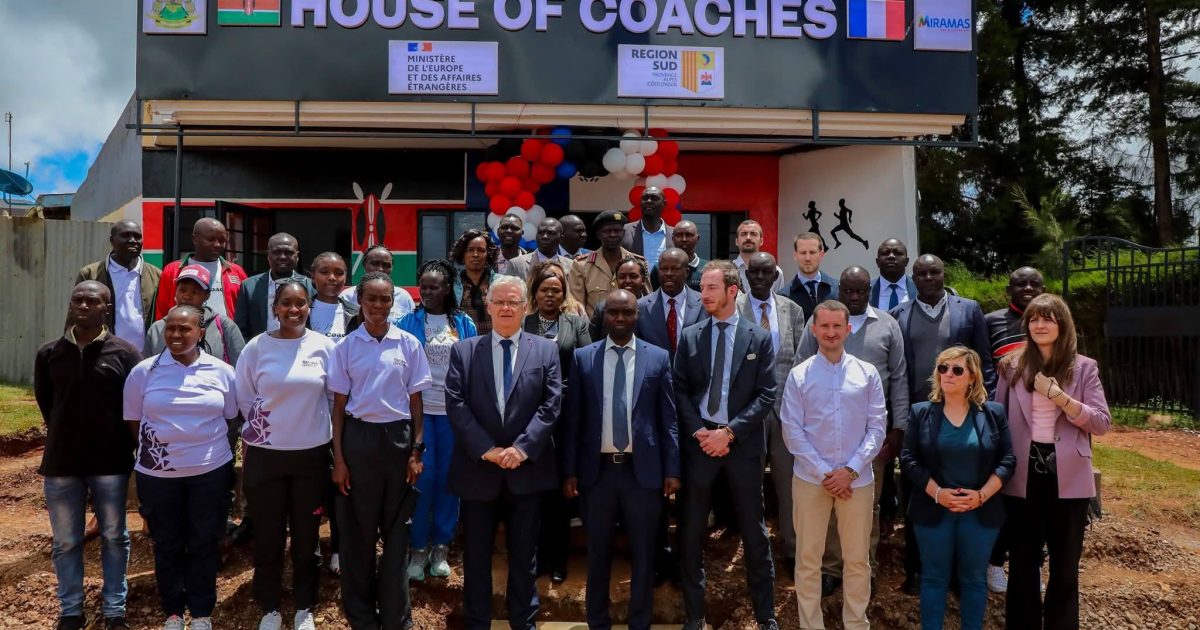
At the centre of the collaboration is the House of Coaches initiative, unveiled during a high level visit by a French delegation led by French sports Ambassador, Damien Combrest-Blassel and City of Miramas Mayor Frédéric Vigouroux in Iten, widely regarded as the world’s premier training destination for long distance runners.
The initiative seeks to strengthen coaching capacity, integrate sports science into grassroots athletics, and professionalize talent nurturing through structured mentorship and technical training for teachers and coaches.
Governor Wisley Rotich says the partnership was born out of a realization that talent alone, was no longer sufficient to guarantee continued athletic success.
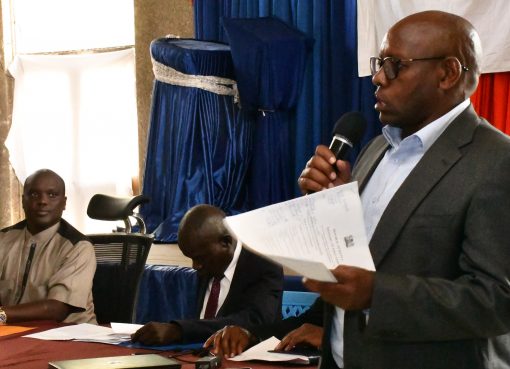
“When I assumed office, I asked myself why we were no longer as dominant in races such as the 800 metres and 3,000 metres as before,” Rotich recalled during the official launch ceremony in Iten.
“I realised the major challenge was inadequate coaching capacity, despite the abundance of talent in our schools,” he added.
According to the Governor, the County government initiated discussions with the City of Miramas, following the Paris 2024 Olympics, with the aim of establishing a sustainable sports development framework, which would move beyond individual talent to institutional systems.
The first phase of the programme saw 12 coaches from Elgeyo Marakwet, travel to France for specialised training in modern coaching methodologies, sports medicine, athlete welfare, psychology, and performance management. The programme was implemented with support from Athletics Kenya and the National Olympic Committee of Kenya.
Upon returning to Kenya, the coaches underwent certification at the University of Nairobi, before embarking on a countywide mentorship programme targeting teachers handling sports activities in schools.
Rotich said the County had since trained approximately 900 coaches drawn from primary schools, Junior Secondary Schools, and secondary institutions across the County.
“We agreed that every school should have a trained sports teacher capable of identifying and nurturing talent at an early stage,” he said.
The impact of the initiative is already being felt within school athletics competitions.
“The best boy and best girl during the recent national athletics championships, came from Elgeyo Marakwet, specifically from schools whose teachers benefited from the Miramas training programme,” Rotich noted.
“We also have eight students preparing to represent Kenya in Arusha, which demonstrates the impact of investing in coaching,” he added.
Sports analysts observe that the programme represents a shift from the traditional informal athlete development model that has historically characterised Kenyan athletics to a more scientific and education based system.
Under the Competency-Based Education curriculum, sports and arts have emerged as critical pathways for learner progression, creating demand for professionally trained instructors capable of nurturing specialised talents.
Teachers Service Commission Director, Elgeyo Marakwet, Loise Murei, said the programme aligns perfectly with ongoing education reforms.
“The teachers who underwent training in the City of Miramas, acquired practical skills in identifying, nurturing and developing talent,” said Murei.
“This is important because we want learners to view sports not only as recreation, but also as a future career pathway,” she added.
Education stakeholders believe the programme could significantly transform how sports are managed within schools, by integrating mentorship, safeguarding, athlete wellness, and structured performance tracking into learning institutions.
Rotich emphasised that teachers remain the most suitable individuals to mentor children, because they interact with learners daily and understand their educational and psychosocial needs.
“A teacher is the most suitable coach for children because they understand how to guide, protect and mentor them in a safe learning environment,” he said.
Beyond athletics, the initiative has also emerged as a tool of international diplomacy and cultural exchange.
French sports Ambassador Damien Combrest-Blassel described the collaboration as a unique partnership that combines education, sports, youth empowerment, and child protection.
“This programme is impactful because it goes beyond athletics,” said Combrest-Blassel.
“It is about education, protecting children and creating opportunities for them to grow in a safe and supportive environment,” he added.
The partnership has since evolved into a formal twinning arrangement between Elgeyo Marakwet County and the City of Miramas, paving the way for exchange programmes, joint training camps, and international athletics competitions between athletes from the two regions.
Rotich revealed that athletes from France would soon compete in Iten, while Kenyan athletes would travel to France for exposure to international standards and professional environments.
“We will be organising races in both the City of Miramas and Iten. Athletes from France will compete in Iten, while our athletes will also travel to Miramas,” he said, adding, “This exchange will expose our young people to international standards.”
Mayor Frédéric Vigouroux said the success of the initiative demonstrated what could be achieved through collaboration between governments, educational institutions, development partners and sports organisations.
He noted that the City of Miramas was committed to sustaining the partnership through continued technical cooperation and sports exchange programmes.
For local coaches, the programme has already transformed approaches to athlete management and performance development.
Kiplangat Terwes, one of the beneficiaries of the training, said the exposure in France introduced Kenyan coaches to modern systems of athlete preparation, data driven training, and athlete welfare management.
“We learned modern methods of coaching, athlete management and talent identification,” said Terwes.
“The results are already visible because eight athletes from our programmes, have qualified for East Africa competitions,” he added.
Sports stakeholders now believe the House of Coaches initiative could become one of Kenya’s most successful models for institutional sports development if replicated across other counties.
As Kenya continues to seek sustainable methods of maintaining its athletics dominance globally, the Elgeyo Marakwet-Miramas partnership is increasingly being viewed as a blueprint for the future, one where talent is not left to chance, but nurtured through structured training, international collaboration and long-term investment in young people.
By June Jebet