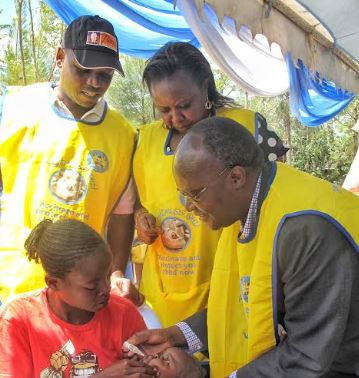
Global polio cases have fallen dramatically from approximately 1,000 children infected each day to just 35 reported cases annually, thanks to coordinated international efforts led by governments, health agencies and humanitarian organisations.
According to Rotary International, which has played a leading role in the fight against polio for decades, only two countries, Pakistan and Afghanistan, have recorded endemic cases of the disease in recent years.
The organisation expressed confidence that polio could be fully eradicated within the next year if global vaccination and disease surveillance efforts are sustained.
Speaking in Naivasha Country Club on Friday , Yinka Babalola, president-elect of Rotary International, said the worldwide immunisation campaign had made significant progress in controlling the highly infectious viral disease, which mainly affects children under the age of five.
Babalola said Africa was already certified polio-free in 2020, and polio eradication remained Rotary’s number one external initiative and that the foundation was marshalling financial support towards the ambitious plan.
“We made a promise to the world that we would eradicate polio. When we began this campaign, the disease was paralysing and killing nearly 1,000 children every day across 125 countries. Today, it remains endemic only in Pakistan and Afghanistan.”
However, he cautioned that the disease still posed a threat if countries became complacent, stressing the need for continued vaccination programmes and stronger disease surveillance systems.
“Soon, the poliovirus will exist only in laboratories and history books, but we must continue immunising our children and strengthening surveillance efforts,” he added.
The Global Polio Eradication Initiative, launched in 1988 and supported by organisations including World Health Organization, UNICEF and Rotary International, has reduced global polio cases by more than 99 per cent over the past three decades.
Health experts, however, continue to warn that gaps in immunisation coverage, conflict and weak health systems in some regions remain major obstacles to complete eradication.
Babalola said supporting equipping a digital laboratory support for Naivasha-based Mirera Primary School aimed at equipping learners with modern technological skills.
The school, which has more than 4,000 pupils and is among the largest public primary schools in the country, has faced numerous challenges, including shortages of teachers and learning materials.
“There will be generations of students passing through this school who will acquire digital skills that could have a lasting impact on their futures,” he said.
Wairimu Njagi, District Governor overseeing Rotary activities in Kenya, Ethiopia, South Sudan and Eritrea, said the organisation had invested over Sh5 million (USD 40,000) in the digital laboratory project.
She noted that the facility, fitted with modern computers and networking infrastructure, would help learners access new ideas, knowledge and opportunities in the digital economy.
“We look forward to partnering with the local Rotary Club to establish an additional digital laboratory at the school over time,” she said.
Njagi further observed that the school, located within one of Naivasha’s largest informal settlements, still faced pressing challenges, including inadequate access to books and clean water.
By Erastus Gichohi