The Government’s investment in water infrastructure must translate into reliable services at household level, Kericho Governor Dr. Erick Mutai has said.
Governor Mutai challenged water sector professionals to use sport, culture and partnerships to accelerate Kenya’s Water, Sanitation and Hygiene (WASH) agenda.
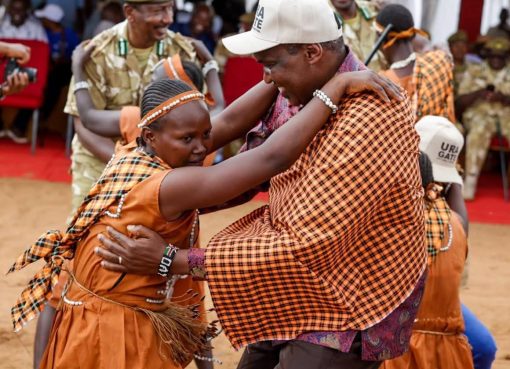
The Governor spoke at Kericho Teacher Training College (KTTC) while officially closing the 2026 Water and Sanitation Providers Association (WASPA) Games held under the theme “Developing WASH through Culture and Games.” The event brought together more than 3,000 participants from 37 water and sanitation sector institutions.
Dr. Mutai said the five-day Games had demonstrated the power of teamwork and collaboration and should provide a platform for professionals to develop practical solutions to the challenges affecting water service delivery across the country.
He said Kenya had continued to invest in water infrastructure, but greater attention was needed on distribution networks and last mile connectivity to ensure that water reaches households, particularly in underserved communities.
“The biggest challenge remains in terms of distributing this water, and taking this water to the client, which is the person down there in the village, who cannot afford to access water,” Dr. Mutai said.
He urged the national and county governments to prioritize resources for pipelines and other distribution infrastructure, saying the impact of water investments should ultimately be measured by the number of people gaining access to reliable services.
“For us to have a healthy and a prosperous Kenya, for us to have a developed Africa, we must be able to take water to the people’s doorsteps,” he said.
Dr. Mutai said improved access to water would contribute to better health, education and household productivity, while reducing the burden on women and girls who often spend considerable time fetching water.
He further called for stronger collaboration between the national and county governments in implementing water projects, particularly those serving communities across administrative boundaries.
The Governor also urged counties to strengthen water service providers through adequate financing and professional management, noting that financially stable utilities were critical to maintaining infrastructure and delivering sustainable services.
He said county governments should provide the necessary resources and policy support while allowing technical teams to manage water utilities professionally.
“As county governments, we commit that where our sector is struggling, where our water body is struggling in our counties, we will be committing to use the exchequer money to pay them out, out of any debt that they have,” he said.
Dr. Mutai also encouraged water institutions to develop innovative and bankable projects capable of attracting support from development partners, particularly for expanding water and sanitation infrastructure.
He called for greater cooperation in protecting shared water resources, saying issues such as pollution, catchment degradation and cross county water challenges require coordinated solutions.
The 2026 WASPA Games brought together institutions including Lake Victoria South Water Works Development Agency, Central Rift Valley Water Works Development Agency, Athi Water Works Development Agency and the National Water Harvesting and Storage Authority, alongside water service providers from across the country.
Dr. Mutai said the professional networks established during the games should be sustained beyond the sporting field through knowledge sharing, benchmarking and joint initiatives aimed at improving service delivery.
The Governor commended WASPA, participating institutions, officials and athletes for successfully organizing the five-day event, saying the games had demonstrated how culture and sport can complement Government efforts to advance development.
He challenged the water sector fraternity to carry the spirit of teamwork from the playing field into their workplaces and communities, with the ultimate goal of ensuring that safe water, sanitation and hygiene services reach more Kenyans.
The conclusion of the games therefore marked not only the end of a sporting event, but a renewed call for the water sector to convert collaboration into practical action and ensure that Government investment in WASH delivers tangible benefits to citizens.
By Gilbert Mutai