For dairy farmers in Nandi County, every litre of milk represents hours of labour and an important source of household income.
But without adequate facilities to preserve the highly perishable commodity, a huge part of that effort can easily go to waste.
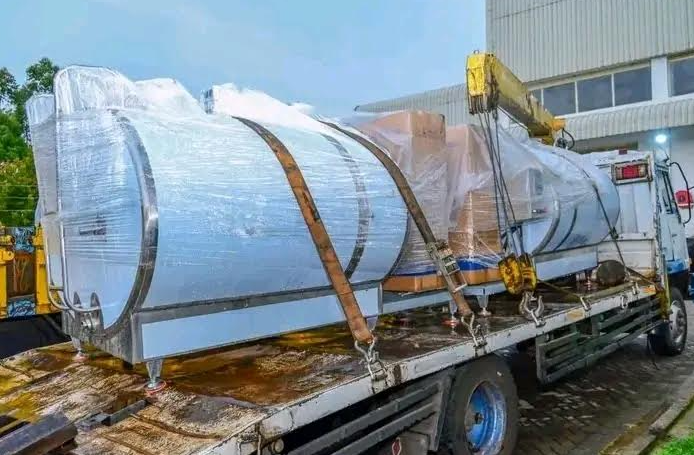
The distribution of five 2000-litres capacity milk coolers to dairy cooperatives across the county by the State Department for Livestock Development last week is expected to provide a major boost to the dairy sector by reducing post-harvest losses, improving milk quality, and enabling farmers to earn better returns from their produce.
The coolers, issued under the Livestock Value Chain Support Project (LVCSP) to dairy cooperatives, are expected to strengthen collective milk collection and aggregation by providing farmers with reliable facilities where milk can be stored at appropriate temperatures before being transported to processors and other markets.
For smallholder farmers, the intervention marks an important shift from merely increasing milk production to ensuring that a greater proportion of what is produced reaches the market in good condition.
Director of Livestock Development at the Ministry of Agriculture and Livestock Development, Dr Bashar Elmi, has emphasized the importance of investing in infrastructures that support farmers throughout the livestock value chain.
He stated that increased milk production alone cannot guarantee higher incomes if farmers continue losing their produce because of inadequate storage and transportation facilities.
“The new coolers are expected to help address one of the persistent challenges facing dairy farmers, milk spoilage between milking and delivery to the market,” he said.
In many rural areas, he said, farmers have traditionally depended on rapid collection of milk because of limited cooling facilities.
During periods when collection is delayed, farmers can be forced to sell milk cheaply or risk losing it altogether.
He added that by placing the cooling facilities under dairy cooperatives, the government has effectively strengthened the institutions through which farmers collectively market their produce.
The director asked the cooperatives to aggregate milk from individual farmers, cool it, and organize transportation in bulk.
Dr Elmi said doing so would improve efficiency while potentially strengthening farmers’ bargaining position with processors and other buyers.
Nandi County Executive Committee Member (CECM) for Agriculture and Livestock Development, Dr. Bernard Lagat, similarly stressed the importance of strengthening farmer organisations and investing in infrastructure that enables producers to obtain better value from enterprises.
Dr Lagat stated that the county government has continued to support interventions aimed at improving livestock production, including breeding services, farmer extension, and cooperative development.
The CECM said the milk coolers would complement these measures by addressing the post-production stage of the dairy value chain.
He explained their impact could be particularly significant as farmers seek to increase milk production.
“When farmers are confident that their produce can be safely preserved and marketed, they have a stronger incentive to invest in improved breeds, quality feeds, better animal husbandry, and larger dairy enterprises,” he stated.
Dr Lagat added that the intervention could also help improve the quality of milk reaching processors as proper cooling soon after milking slows bacterial growth and helps preserve the commodity before it reaches the processing plant.
However, he cautioned that the sustainability of the investment would depend on proper management of the equipment by dairy cooperatives.
He advised the cooperatives to ensure regular maintenance of the coolers, reliable electricity or alternative power supplies, proper hygiene, and transparent management of milk collection and payments.
The CECM urged the farmers to maintain high standards of cleanliness during milking and transportation to ensure that the milk entering the cooling facilities meets required quality standards.
“The coolers should be viewed as more than pieces of equipment. They are an investment in strengthening the entire dairy value chain, from the farmer and cooperative to the processor and consumer,” he said.
For Nandi, where dairy farming supports thousands of rural households, reducing milk losses could have a significant economic effect.
And every liter preserved represents income that remains in the farmer’s pocket rather than being lost through spoilage.
Collectively, these savings could translate into stronger cooperatives, increased household incomes, and greater investment in dairy enterprises.
The challenge now is to ensure that the newly issued coolers remain functional, accessible to farmers, and professionally managed.
By Sammy Mwibanda