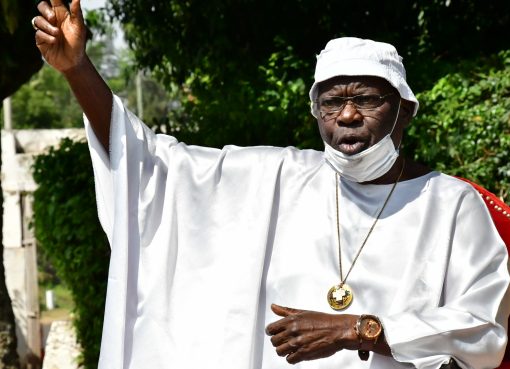
The story of Elvas Tuwei from Moiben Sub County in Uasin Gishu County, whose dream of university education was revived after years of financial hardship, has sparked debate among Nandi County residents on the need for the Government to make education accessible to every Kenyan regardless of their economic background.
Tuwei’s experience has resonated with many families who continue to struggle to finance the education of their children despite having bright and academically promising students.
After completing secondary school, Tuwei reportedly failed to join university because his family could not raise the required fees.
With no immediate alternative, he resorted to working as a private security officer for several years before intervention by the area Member of Parliament through the National Government Constituencies Development Fund (NG-CDF), which helped him return to the path of higher education.
For residents, the development illustrates both the transformative power of education and the barriers that poverty continues to place in the way of young Kenyans seeking to advance their studies.
Teacher John Wawire said Tuwei’s story should serve as a reminder that inability to pay school fees should never be allowed to extinguish the ambitions of a young person.
Wawire observed that there were many students across the country who performed well in national examinations but failed to proceed to universities, colleges and technical institutions because their parents could not meet the financial demands of higher education.
According to him, the Government should strengthen existing education financing programmes and ensure that needy students are identified early enough to receive assistance before they drop out.
He said education was one of the most effective instruments for breaking the cycle of poverty because it equips young people with knowledge, skills and qualifications necessary to participate meaningfully in the economy.
The educationist also called for greater investment in secondary education, arguing that the transition from primary to secondary school should not be undermined by poverty.
“Every child should have an opportunity to complete the highest level of education that their ability allows. Poverty should not determine how far a child goes in life,” the teacher said.
A college student Nancy Chepkirui said the story had demonstrated that young people could remain hopeful even when circumstances appeared to have closed all doors.
Chepkirui said many young people were forced to postpone their education while looking for casual employment to support themselves and their families.
According to the student, some eventually abandon their academic ambitions permanently after spending years working, getting married or taking on other responsibilities.
She urged the Government to establish stronger mechanisms for supporting students from poor households, particularly those transitioning from secondary schools to universities and technical and vocational education and training institutions.
“There should be the expansion of scholarships, bursaries and affordable student loans, saying the cost of accommodation, food, transport, learning materials and other necessities could be as challenging as tuition fees,” she stated.
A youth leader Jackson Kiprop said Tuwei’s journey should provoke a national conversation about the number of talented young people who could be lost to poverty before they get an opportunity to demonstrate their abilities.
The youth leader suggested that the Government should not only concentrate on tuition but also address the wider cost of education.
He argued that young people from disadvantaged households needed comprehensive support that could cover tuition, accommodation, learning materials and other essential requirements.
Kiprop said education financing should also be transparent, predictable and accessible, warning that bureaucratic procedures could prevent deserving students from benefiting from available assistance.
He called for stronger coordination between national Government agencies, county governments, NG-CDF offices, educational institutions, private organisations and development partners to ensure that needy students were not left behind.
A woman leader Linda Koech said the case was particularly significant because many families were struggling to educate several children at the same time.
She said women, who often bear a significant responsibility for meeting household needs, could be forced to make painful decisions when family resources were inadequate.
The woman leader called for deliberate measures to ensure that children from vulnerable families received equal educational opportunities.
She said girls and boys from poor households should have equal access to scholarships, mentorship, digital learning resources and technical training.
“The Government should strengthen support for learners with disabilities and children from vulnerable communities so that no group was excluded from educational opportunities,” she said.
She said access to education should be viewed as an investment in the country’s human capital rather than simply an expenditure.
Community elder Boaz Towett said Tuwei’s plight demonstrated the importance of giving people second chances.
The elder observed that not every young person who failed to proceed to university immediately after secondary school had abandoned education. Some were simply waiting for an opportunity that could enable them to resume their studies.
He said the Government should create mechanisms that allow young people who have left school because of financial difficulties to return to education without being permanently disadvantaged.
The elder also called for greater recognition of technical and vocational education, saying university should not be the only pathway through which young people acquire skills for employment and entrepreneurship.
He argued that Kenya needed an education system that offered different pathways according to individual talents, interests and abilities.
The reactions from the Nandi residents come amid continued national discussions on how to make education more inclusive and affordable.
They said the Government should strengthen early identification of needy learners, expand bursary and scholarship programmes, improve student financing and ensure that funding reaches beneficiaries in good time.
They also called for increased investment in public schools and training institutions to reduce the financial burden placed on parents.
For university and college students, they said, financing should go beyond tuition to address accommodation, meals, books, transport and other basic requirements.
The residents further argued that secondary education should remain affordable so that students do not reach the point of completing primary school only to discontinue their studies because their families cannot afford the next level.
They proposed a stronger national framework for education financing that would guarantee continuity from primary to secondary, tertiary, technical and university education for deserving learners.
The Government, they said, should expand technical and vocational training opportunities so that students who may not qualify for university or who prefer practical careers can still obtain marketable skills.
Tuwei graduated on Friday at Mt Kenya University with a bachelor’s degree in education science, a first class for that matter, highlighting a case of a gem that would have gone to waste, were it not for the intervention from the MP.
By Sammy Mwibanda
Photo-Elvas Tuwei, a private security personnel who graduated on Friday at Mt Kenya University.He was delayed for some years to join university due to financial constraint.