

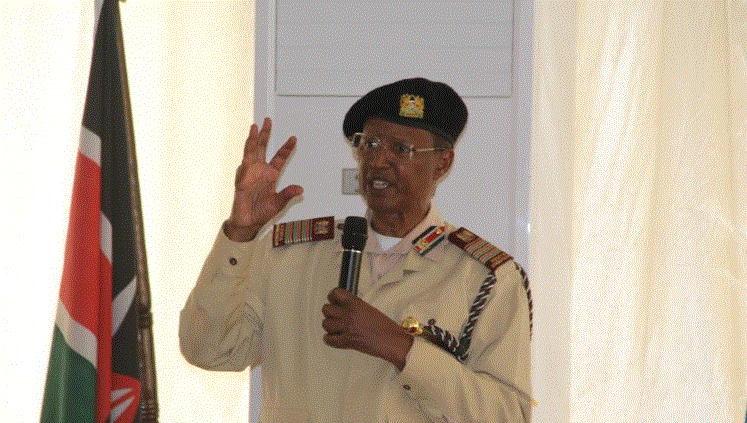
The Government is implementing 439 development projects across the Rift Valley region, targeting improvements in roads, affordable housing, markets, agriculture, water and institutional infrastructure, Regional Commissioner Dr Abdi Hassan has said.
Hassan said the projects were part of the Bottom-Up Economic Transformation Agenda (BETA), which seeks to expand economic opportunities at the grassroots, create jobs and improve household livelihoods.
Speaking during a media breakfast briefing organised by the State Department for Broadcasting and Telecommunications in Eldoret on Monday, ahead of Mashujaa Day celebrations scheduled for Tuesday, October 20, the Regional Commissioner said the investments were expected to stimulate economic growth across the region’s 14 counties.
Roads account for the largest share of the projects, with 157 initiatives, followed by 103 affordable housing projects and 77 institutional projects.
The portfolio also includes 53 Economic Stimulus Programme markets, 27 modern markets, 17 water and irrigation projects and five initiatives in other supplementary sectors.
Hassan said the projects were designed to improve access to essential services, strengthen local businesses and connect communities to economic opportunities.
He identified agriculture as a key pillar of the regional economy, noting that Government interventions, including subsidised fertiliser, certified seeds and other farm inputs, were intended to increase productivity, improve food security and raise farmers’ incomes.
He said the price of subsidised fertiliser had dropped from Sh7,500 in 2022 to Sh2,000, reducing production costs for farmers.
The RC noted that improved agricultural output would benefit rural households, support businesses and create employment opportunities across the region.
Hassan highlighted ongoing road projects intended to improve connectivity between farms, markets, schools, health facilities and urban centres.
He singled out the proposed expansion of the Gilgil-Mau Summit highway corridor, saying improved road infrastructure would help ease congestion, enhance road safety and facilitate the movement of people and goods.
He also cited the extension of the Standard Gauge Railway from Naivasha through Narok towards Kisumu and Malaba as a major investment expected to strengthen regional trade and improve freight transportation.
Hassan said better transport links, combined with special economic zones and other industrial investments, could attract investors, expand manufacturing and create jobs while opening markets for locally produced goods.
He added that water infrastructure, including dams, water supply systems and irrigation projects, was critical to supporting households, agriculture and wider economic activity.
The RC emphasised that security remained essential to development, noting that investment, trade, farming, education and the delivery of public services depended on a stable environment.
He reported that the overall security situation in the Rift Valley was favourable, with progress in restoring peace, containing criminal activities and strengthening government presence in previously affected areas.
Hassan said Operation Maliza Uhalifu had helped restore security in the North Rift, where areas previously affected by persistent banditry were gradually returning to normalcy.
He said continued security operations were necessary to sustain peace and enable residents to resume economic activities without fear.
The adminstrator described Mashujaa Day as an opportunity to honour Kenya’s heroes while reflecting on national development progress and renewing the country’s commitment to improving the lives of future generations.
Hassan urged journalists to provide accurate, responsible and public-interest reporting on Government programmes, public services and preparations for national celebrations.
He said hosting Mashujaa Day in the Rift Valley provided an opportunity to showcase the region’s contribution to national development and assess how ongoing investments could translate into tangible benefits for residents.
By Ekuwam Sylvester and Fredrick Maritim


