Kenya is accelerating its ambition to become Africa’s leading digital economy through stronger public-private partnerships, investments in digital infrastructure, and reforms supporting Artificial Intelligence (AI) and innovation.
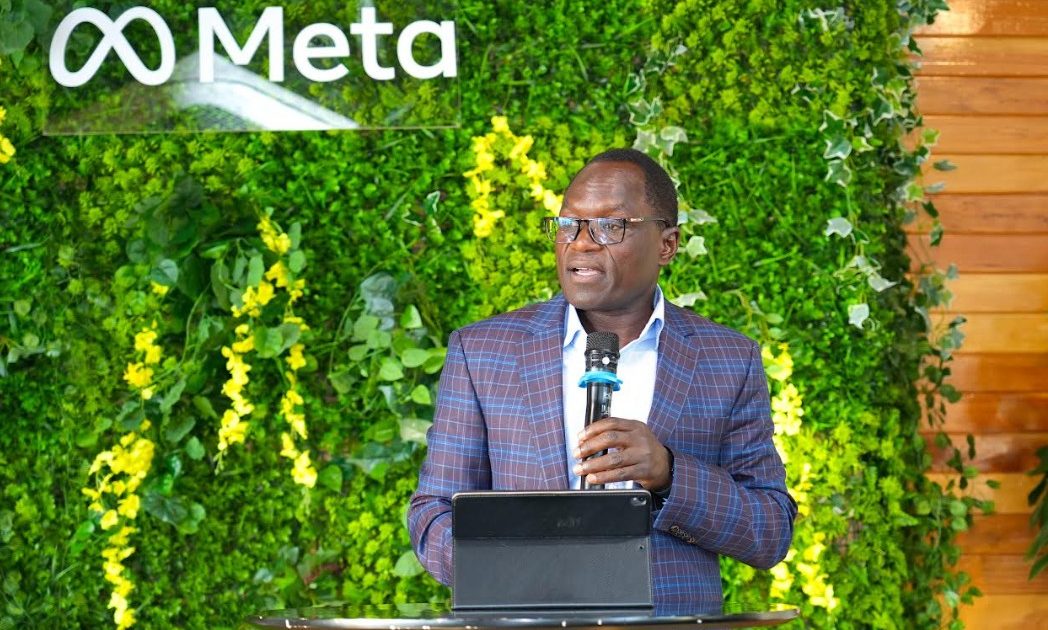
Broadcasting and Telecommunications Principal Secretary (PS) Stephen Isaboke said that collaboration between governments, technology firms, innovators, and academia is essential in driving digital transformation and economic growth.
Speaking on Friday during the launch of Meta’s Economic Impact in Kenya Report, Isaboke emphasized that technology partnerships are no longer optional to national development.
“Whether it is development, tech, or innovation, nothing works in isolation. We succeed through collaboration,” he said.
The PS said Kenya is actively implementing policy and regulatory reforms aimed at building a trusted, inclusive, and innovation-driven digital economy.
He highlighted ongoing efforts around artificial intelligence governance, data protection, platform accountability, and digital inclusion.
According to Isaboke, the government’s Digital Master Plan 2032 and Vision 2030 frameworks prioritize universal internet connectivity, digital public infrastructure, digital skills development, and investment in emerging technologies such as AI.
He urged young people to position themselves to benefit from the sector’s rapid expansion.
“When many traditional economies are shrinking, digital economies are expanding,” he said. “Young people must be empowered to harness the opportunities coming from this growth.”
The PS underscored the importance of connectivity in enabling participation in the digital economy, citing the government’s ongoing Digital Superhighway initiative. The programme aims to extend internet access across the country through fibre connectivity, 1,450 digital hubs, and 25,000 public Wi-Fi hotspots, particularly targeting underserved and rural communities.
He said the initiative is intended to bridge the digital divide and ensure that all Kenyans, regardless of location, can participate in the digital economy.
Isaboke lauded international investments in Kenya’s internet infrastructure, including the 2Africa subsea cable project, noting that Kenya now hosts one of the highest concentrations of fibre-optic cable landings in Africa.
“A single cable such as the 2Africa cable contributes significantly to economic activity and opportunities for young people,” he said.
The PS further revealed that approximately 2.7 million Kenyan small and medium-sized enterprises currently use Meta platforms for business activities, contributing substantially to economic growth and youth employment.
He added that the government is focused on creating a safe digital environment through laws addressing cybercrime, data protection, copyright protection, and online safety, particularly for children.
On artificial intelligence, Isaboke said Kenya is developing a National AI Strategy aimed at ensuring responsible adoption of the technology while supporting innovation, service delivery, manufacturing, healthcare, and education.
He projected that AI adoption could contribute up to $6.4 billion to Kenya’s GDP by 2035.
Meanwhile, Kenya’s Special Envoy on Technology, Philip Thigo, said the country is strengthening its digital ecosystem through investments in infrastructure, talent development, and governance.
Thigo highlighted recent developments including new international connectivity projects, modular data centres, and regional AI collaborations designed to improve access and innovation across East Africa.
He called for stronger collaboration between government, industry, and research institutions to ensure Kenya moves beyond being merely a consumer of technology to becoming a global developer of digital solutions.
“We do not want to just be users of technology; we want to be developers,” Thigo said.
He reiterated the government’s commitment to maintaining a pro-innovation environment while ensuring online platforms remain safe and secure for users.
The officials said Kenya’s growing reputation as the “Silicon Savannah” continues to attract global technology partnerships and investment, with Kenyan talent increasingly playing a major role in international technology companies and innovation ecosystems.
By Joseph Ng’ang’a