For Joyce Nduku, a vulnerable mother from Kalima Kathei village near Makutano Junction in Kyumbi, Machakos County, the collapse of her rusted iron-sheet house during heavy rains threatened her family’s safety and dignity.
With no reliable income beyond casual jobs, rebuilding the house was beyond her means. The leaking roof and weakened walls exposed her children to rain and cold, leaving her worried about their future.
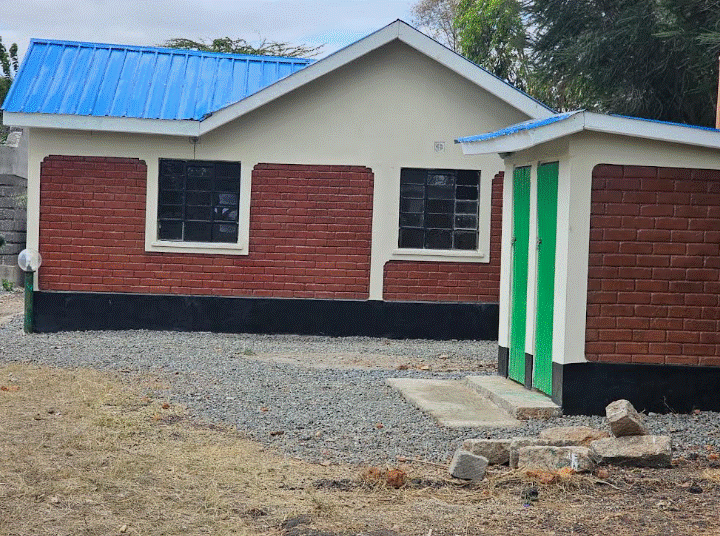
Today, her circumstances have changed following the construction of a new home by Habitat for Humanity Kenya through its Ujenzi Fiti (Smart Building) initiative.
“Having a decent house means my children can sleep safely, even when it rains. We are grateful for this new beginning,” she said.
Joyce is among four vulnerable families identified by a community project steering committee to benefit from the housing initiative, which promotes affordable and durable homes built using locally available materials.
Her story reflects the challenges faced by low-income households in Machakos, where financial constraints often prevent families from constructing homes that can withstand harsh weather.
Another beneficiary, Irene Mwongeli Wayua, a single mother supporting her two children and elderly mother through casual labour, has also received a new home after her previous mud house collapsed during heavy rains.
The destruction had left the family struggling to find safe shelter, particularly amid concerns about the effects of anticipated El Niño rains.
“Now my children have a safe place to sleep, and I no longer worry as much when it rains. This home has restored our hope,” Irene said.
For the two mothers, the intervention offers more than shelter. It provides security, dignity and an opportunity to focus on their families without the constant fear of losing their homes during heavy rainfall.
Pastor Elizabeth Makau of Africa Brotherhood Church (ABC), Kalima Kathei, said inadequate housing remained a major concern in the community, with many families living in structures vulnerable to extreme weather.
“When vulnerable families receive decent homes, they gain security, dignity and a better foundation for their future,” she said.
Beyond housing, Habitat for Humanity Kenya has also invested in education by constructing two modern Early Childhood Development (ECD) classrooms at Kalima Kathei Preschool, improving learning conditions for young children.
The church established the preschool in 1999 to provide education for children who previously had to walk long distances to access learning facilities. However, inadequate classroom space continued to hinder effective teaching.
For Jacinta Nduku Musyoka, the school’s headteacher, who has served the institution for 26 years, the new classrooms represent a significant improvement.
Previously, learners in Pre-Primary One (PP1) and Pre-Primary Two (PP2) shared a single classroom, making it difficult for teachers to manage lessons and provide individual attention.
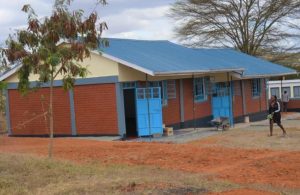
“We had two classes sharing one room, which disrupted lessons. The new classrooms allow teachers to concentrate on each group and give children more attention,” Musyoka said.
The spacious, well-ventilated classrooms have eased congestion, reduced distractions and created a more conducive environment for early learning.
Musyoka said the improved facilities could encourage enrolment and retention by giving parents greater confidence in the school’s learning environment.
Parent Sherine Makau, who has two children at the institution, welcomed the development, saying the classrooms had provided more comfortable spaces for learning and play.
“Our children now have enough space to learn and play. They are happier and more comfortable at school,” she said.
The housing and school projects were showcased during World Habitat Day celebrations at Kalima Kathei under the theme “Adequate Housing for All.”
The event also featured the planting of fruit trees within the school compound, highlighting the connection between decent housing, sustainable development and environmental conservation.
At the heart of the initiative is an alternative construction technology intended to reduce building costs while promoting environmental sustainability.
Habitat for Humanity Kenya used Interlocking Stabilised Soil Blocks (ISSBs), manufactured from locally available soil mixed with a small quantity of cement.
The blocks are produced on-site, reducing transportation costs and making construction more affordable for communities with limited financial resources.
Charles Misao, a construction supervisor at Habitat for Humanity Kenya, said the technology offered a practical option for building durable houses and learning facilities.
“One bag of cement can produce about 100 blocks. Producing them on-site reduces transport costs and makes construction more affordable,” Misao said.
He added that ISSBs could help reduce carbon emissions associated with construction while improving indoor thermal comfort. Buildings constructed using the blocks can remain cooler during hot weather and warmer during cold periods.
Through its Ujenzi Fiti initiative, Habitat for Humanity Kenya is promoting the technology as a sustainable approach to addressing housing challenges in Machakos and other parts of the country.
The approach also encourages communities to use locally available materials and construction methods that can reduce costs without compromising the durability of buildings.
For Joyce and Irene, the new houses have eased the burden of securing safe shelter.
by Anne Kangero and Alex Mulili