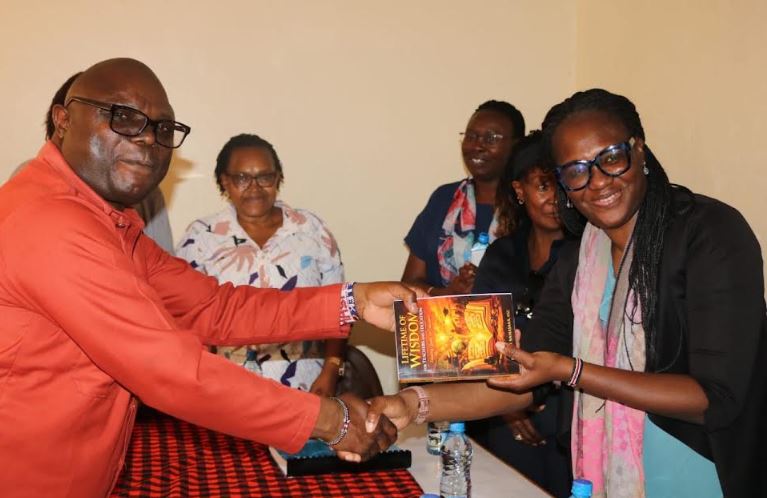
For Peter Wanjala Namasaka, protecting a child goes far beyond keeping learners safe within the school compound.
It can mean stepping into a family crisis to prevent a girl from undergoing Female Genital Mutilation (FGM) or being married off early, finding a sponsor for a child whose family cannot afford school requirements, or paying for a meal so that hunger does not keep a learner away from class.
As the headteacher of Ngong Township Comprehensive School in Kajiado North, Namasaka has made child protection a personal mission, reaching beyond the classroom to address the social and economic challenges that threaten children’s education and well-being.
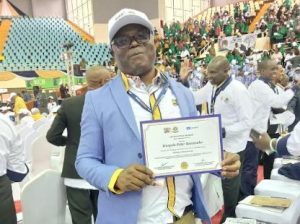
His work has now earned him recognition and was a finalist in the National Teacher of the Year Award, under the Child Protection Champion category, following vetting at Sub-County and regional levels.
But Namasaka says the recognition is less important than the children whose lives he has been able to influence.
One of the most difficult areas of his work has been protecting girls from FGM and early and forced marriage.
Namasaka says he has intervened in cases where girls were at risk and helped about 25 of them escape situations that threatened their safety, dignity and education. The girls were subsequently connected with safe rescue centres and opportunities to continue with their schooling.
For him, such interventions demonstrate why teachers cannot confine themselves to what happens inside classrooms.
He says protecting a learner sometimes requires engaging parents and communities, mobilising partners and taking a firm stand when a child’s future is at risk.
His approach to child protection is also closely linked to poverty, which he says remains a major barrier to education for many children in his community.
At Ngong Township Comprehensive School, which serves learners from two major informal settlements in Ngong Town, Namasaka has mobilised well-wishers to support vulnerable children with basic requirements, including uniforms, books, pens, shoes and food.
He has also established a sponsorship network that has connected more than 100 learners from disadvantaged families with sponsors and well-wishers.
The support has benefited children at different levels of education, from Early Childhood Development Education (ECDE) to primary and secondary school and university.
Some of the beneficiaries, he says, have progressed to higher education because someone was willing to invest in their future. Namasaka believes that child protection cannot be separated from hunger.
Through the Food for Education programme, learners can access a school meal at a subsidised cost of about Sh15 per day. For children from extremely poor households, he says, such a meal can determine whether a child attends school or remains at home.
Recognising the challenge, Namasaka says he personally pays for meals for 20 vulnerable learners from his own resources, and he is further mobilising well-wishers and partners to ensure that all vulnerable learners who need the support can access meals at school.
For Namasaka, feeding a hungry child is not simply about providing food. It is about improving attendance, concentration, retention, dignity and ultimately academic performance.
His commitment to vulnerable children has also taken him beyond his headteacher’s role. He established Rekindled Dream Preparatory School in Kajiado to provide education and support to children facing difficult circumstances, including orphans and abandoned children, street-connected children, learners from families affected by drug and substance abuse and children living with HIV.
The initiative seeks to provide education alongside basic support, including school requirements and assistance with medication for learners with underlying health conditions.
Namasaka says the philosophy behind the school is that a difficult beginning should not determine a child’s destiny.
At Ngong Township Comprehensive School, he has also partnered with the National Authority for the Campaign Against Alcohol and Drug Abuse (NACADA) to educate learners on the dangers of drugs and substance abuse.
He says prevention is more effective when schools combine education, mentorship, counselling, parental involvement and community partnerships.
The school has also developed links with law enforcement agencies. With support from the Officer Commanding Station at Ngong Police Station, police officers have engaged learners on the law, civic responsibility and the consequences of unlawful behaviour.
Children’s Officers from the Sub-County Children’s Office in Ngong are also invited to the school regularly to educate learners about their rights, child abuse and available protection mechanisms.
Namasaka says an informed child is better placed to recognise abuse, speak out and seek help and believes teachers themselves must also become champions of child protection.
He has encouraged teachers to see their role beyond delivering lessons and preparing learners for examinations, saying educators are also mentors, role models and protectors of children’s rights.
Namasaka’s efforts to motivate teachers have included writing inspirational messages on education and the teaching profession. By World Teachers’ Day on October 5, he said he had composed about 16,350 original quotes on teachers and education.
He has also authored Lifetime of Wisdom for Teachers and Education, a collection of about 7,200 inspirational quotes intended to encourage educators to appreciate the influence they have on society.
His belief in taking education beyond the classroom was tested during the COVID-19 pandemic, when he taught learners online as schools closed.
He says the lessons reached an audience of more than 50,000 learners, reinforcing his conviction that technology can extend a teacher’s reach during times of crisis.
For Namasaka, the true measure of an educator is therefore not found only in examination results.
It is the child who remains in school because someone intervened, the girl who escapes FGM and early marriage and returns to education, the hungry learner who receives a meal, or the vulnerable child who eventually reaches university because a teacher helped find a sponsor.
His national award nomination, he says, is therefore not a destination but a call to do more. He hopes to expand support for vulnerable learners, strengthen child-protection systems, mobilise more resources and mentor more teachers to take up their responsibility as protectors of children.
His guiding belief is simple: a child protected today is a generation empowered tomorrow.
For the headteacher, that is the measure of service, ensuring that poverty, culture or difficult circumstances do not determine how far a child’s dreams can go.
By Wangari Ndirangu