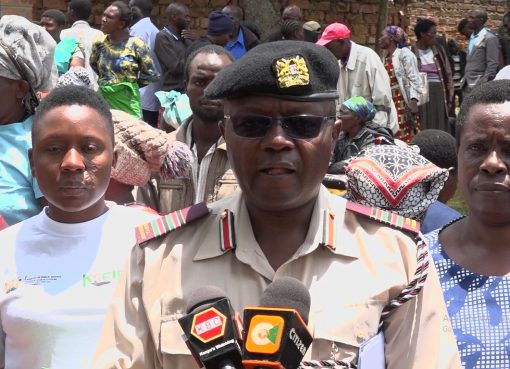
Union officials who addressed press in Embu Town on Thursday afternoon said the decision to resume duties followed the payment of April salaries, which had delayed and triggered the industrial action.
The strike had disrupted operations in hospitals and health centers, forcing patients to seek alternative medical services as most public facilities remained understaffed.
“We have agreed to call off the strike after the County Government agreed to release our April salaries and we have asked our members to resume work in the next 48 hours,” said Health Workers Union Chair Alloysius Njoka.
Njoka appealed to the County Government to ensure salaries are paid on time and statutory deductions remitted to relevant institutions without delay.
“We appeal to the County Government to obey the agreement we entered with it that salaries shall not be paid later than on the fifth day of the subsequent month,” he said.
Njoka said delayed salaries had caused financial hardship among workers, adding that health workers deserve better treatment considering the essential services they provide to residents.
He also criticized what he termed as arbitrary transfers of health workers, saying the transfers have been inconveniencing their lives and families.
The Chair called on the County Government to engage workers and union officials before effecting transfers to avoid unnecessary disruptions in their lives and service delivery.
Kenya Union of Nurses (KNUN) Embu Branch Secretary General Macharia Kanderi, called on the employer not to victimize the workers who have been on strike.
Kanderi said health workers had exercised their constitutional right to strike and should therefore not face intimidation or punitive measures for participating in the industrial action.
At the same time, Kenya National Union of Clinical Officers Embu branch Secretary, Jacinta Rwamba, said promotion of health workers remains one of the major grievances affecting staff morale.
Rwamba claimed that out of the Sh247 million used by the County Government for promotions, about 88 percent benefited one cadre, leaving other health worker cadres with minimal allocations.
By Samuel Waititu