Concern has been raised over the increasing cases of Female Genital Mutilation (FGM) and Gender-Based Violence (GBV) in Murang’a County with government officials and stakeholders calling for urgent action to curb the vices.
Speaking on Thursday during a stakeholders’ consultative meeting in Murang’a town, County Commissioner, Hassan Ali Bule, said recent findings from the Kenya Demographic and Health Survey (KDHS) showed that the county’s FGM prevalence rate stands at 17.5 percent.
Bule noted that the figure is significantly high compared to other counties in the Central region, terming the trend worrying.
“We cannot ignore these statistics. The rate is still high and we must work together as a community to end these harmful practices,” he said.
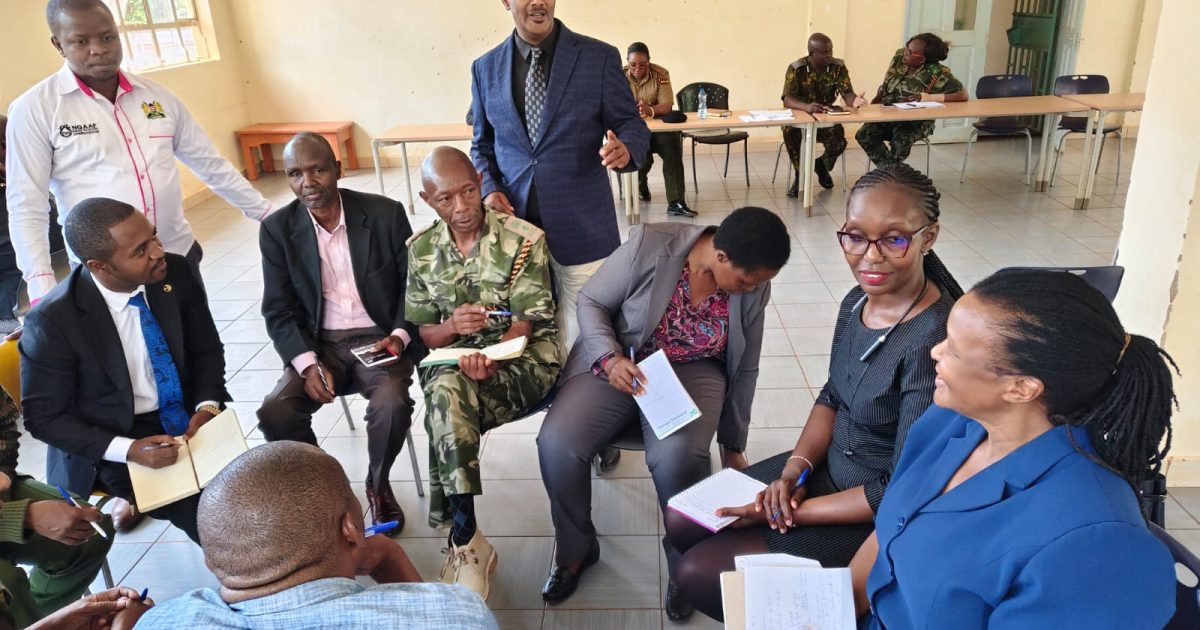
The consultative meeting brought together security officers, education officials, religious leaders, gender officers and other stakeholders to discuss measures aimed at fighting GBV and FGM in the county.
The county commissioner revealed that the government has launched a Rapid Results Initiative (RRI) that will run for 100 days in an effort to tackle the rising cases.
According to Bule, a multi-sectoral team has already been formed and will conduct sensitization forums across different parts of the county to educate residents on the dangers and effects of GBV and FGM.
He observed that some retrogressive cultural practices could be fueling the persistence of FGM in the county.
“There are some cultural beliefs and practices that still encourage FGM. We have also noted that certain cult-like groups could be perpetuating the vice,” He remarked.
Bule said security agencies working together with other stakeholders will intensify community engagement forums and come up with effective measures to eliminate the practices.
To strengthen security at the grassroots, the commissioner proposed the revival of the Nyumba Kumi initiative and strengthening community policing structures to help identify and report cases of abuse and harmful cultural practices.
He further announced that senior female security officers serving in the county will begin mentorship programmes targeting schoolgirls who are vulnerable to defilement and abuse.
At the same time, Bule urged managements of day schools to release learners early enough to allow them to get home before dark.
“Allowing students to leave school at 7pm or 8pm exposes them to risks of kidnapping and defilement. Let us protect our children,” he warned.
The county commissioner also called on all stakeholders, including political leaders, religious leaders and members of the community, to join hands in fighting the vices.
On his part, Murang’a County Gender Officer, Peter Muhia, described the level of gender-based violence in the county as alarming.
Muhia noted that while women remain the most affected, men are also increasingly becoming victims of GBV.
He said the Rapid Results Initiative, which began on May 21, seeks to identify the major causes behind GBV and FGM cases and develop long-term strategies to address them.
Muhia challenged key stakeholders, especially the church, to take an active role in discouraging retrogressive cultural practices that continue to fuel FGM in some communities.
“We must all work together to protect our families and ensure harmful cultural practices are completely eradicated,” he added.
By Bernard Munyao