A breast cancer care initiative at Jaramogi Oginga Odinga Teaching and Referral Hospital (JOOTRH) is gaining traction across Western Kenya, with 51 patients reached in April as uptake of screening, diagnosis and follow-up services continues to rise.
A progress report released on April 28, 2026 shows the Kisumu Breast Cancer Project (KBCP) is steadily expanding beyond Kisumu County, drawing patients from neighbouring regions and strengthening early detection efforts.
Kisumu County accounted for 18 patients during the period under review, while Siaya, Vihiga, Kakamega and Homa Bay each recorded three cases.
Kisii and Busia counties registered one patient each, underscoring the project’s widening regional reach.
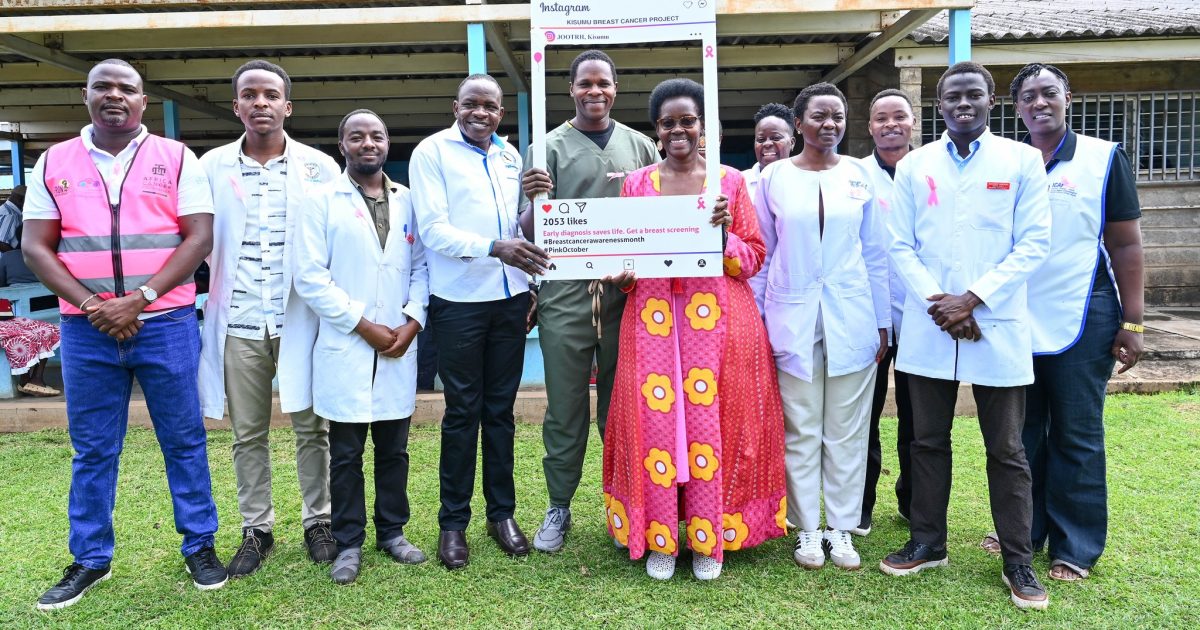
The Kisumu Breast Cancer Project is a multi-partner health initiative implemented at JOOTRH in collaboration with the Kisumu County Government, the Africa Cancer Foundation and the Tiba Foundation.
The programme focuses on improving early detection, diagnosis and continuity of care for breast cancer patients, particularly vulnerable women who face financial and access barriers.
As part of its model, the initiative offers subsidised and, in some cases, free diagnostic services, including biopsy, histopathology and hormonal receptor testing—key investigations that often determine treatment pathways but remain costly for many patients.
According to the report, the programme has strengthened its patient tracking systems, with demographic data for 38 patients already captured in its database.
Clinical management has also progressed, with 31 patients having histopathology results recorded and 18 undergoing cancer staging to guide treatment decisions.
Of the cases analyzed, 26 were found to be benign. Among confirmed cancer cases, Invasive Ductal Carcinoma (IDC) was the most common diagnosis, accounting for 19 cases, followed by other invasive cancers and Phylloides tumours.
Despite these gains, the report highlights ongoing concerns over late presentation.
Among patients who had undergone staging, seven were diagnosed at Stage II and another seven at Stage IV, pointing to delays in seeking care and the need for earlier screening.
Beyond diagnosis, the programme places strong emphasis on patient follow-up and psychosocial support.
A total of 100 bi-weekly follow-up calls have been made to monitor patients’ progress, with 17 women receiving initial follow-up and 13 undergoing at least three check-ins.
The growing uptake according to the report, reflects increasing confidence in the programme and improved awareness of breast cancer services in the region.
The integrated approach combining free or subsidised diagnostics, structured patient tracking and continuous follow-up is helping bridge long-standing gaps in cancer care.
By Chris Mahandara