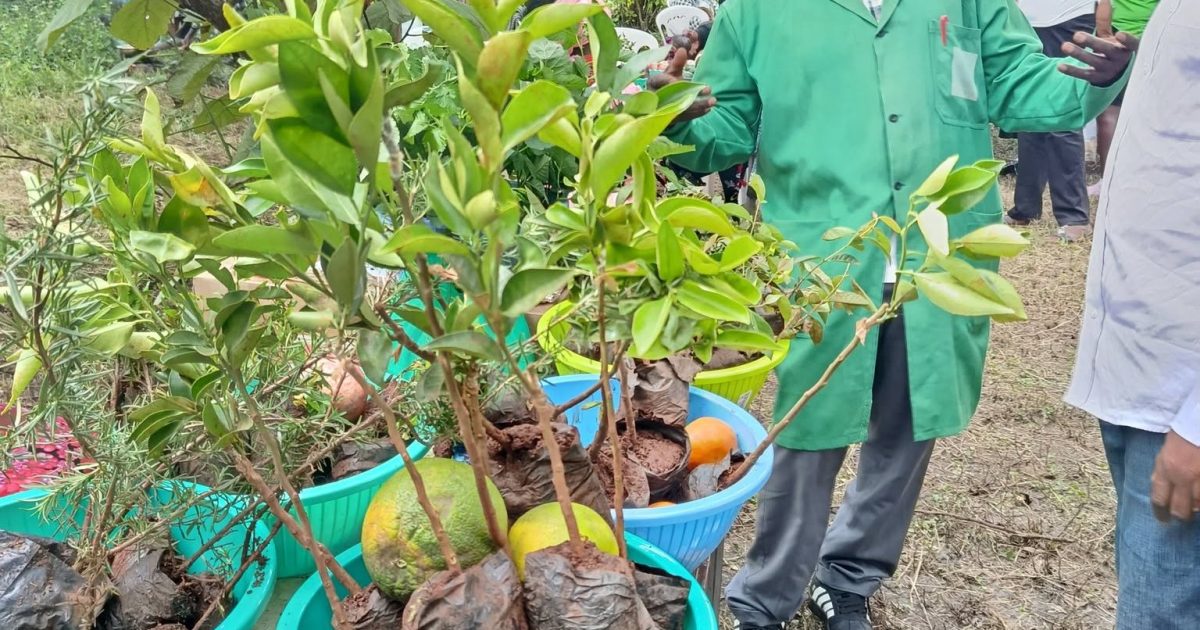
Farmers in Kajiado North have been urged to embrace drought-tolerant crops, water harvesting and efficient irrigation methods to improve food production amid unreliable rainfall and shrinking farmland.
Sub-County Agricultural Officer Night Opunga said the area continues to rely heavily on food supplies from other sub-counties because local production remains inadequate.
Speaking as the world marked the World Food Day, marked annually on October 16, Opunga Opunga attributed the low yields this season to the early cessation of rains, which affected crops at critical stages of growth.
She said farmers who planted early managed to harvest beans, but maize production was poor because the rains ended before the crop could mature.
Opunga identified the conversion of agricultural land to residential land hosting buildings and commercial developments in Rongai, parts of Ngong and Oloolua as another challenge facing farming activities in the area.
In Oloolua, she noted, approximately seven-eighths of the land had been taken up by homes and businesses, leaving farmers with smaller plots for cultivation.
“Maize, beans and potatoes need large pieces of land, but farmers with small plots can still do well if they grow high-yielding crops and farm carefully,” she said.
The officer also cited the rising cost of farm inputs, particularly improved seeds, as a barrier to higher production.
She said a packet of improved maize seed could cost close to Sh1,000, forcing some farmers who cannot afford, to replant seeds from previous harvests without selecting suitable seed, a practice that can reduce yields over time.
To address the challenges, the agricultural office has trained farmers on drought-tolerant maize, beans, sweet potatoes and cassava, as well as water harvesting and drip irrigation to conserve water.
The office also links farmers to partners, including the Community Sustainable Agriculture and Healthy Environment Programme (CSHEP), which promotes organic farming and the multiplication of indigenous seeds adapted to changing weather conditions.
Opunga said implementation of the National Agricultural Value Chain Development Project in the sub-county was still at the training stage.
Registered farmers also receive electronic vouchers on their mobile phones to purchase subsidized fertilizer from the National Cereals and Produce Board.
However, she noted, the county government had not provided support for food crops during the current season, adding that its last seed donation comprised a small quantity of sunflower seeds.
For improved food production in the semi-arid area, Opunga recommended timely planting of drought-tolerant maize and diversification into vegetables and fruit crops such as mangoes, avocados and pawpaws, particularly for farmers able to harvest and store water.
She said tomatoes, kales, spinach and indigenous vegetables such as managu, sagaa and terere offered opportunities for farmers because of their ready market in Kajiado North.
Although greenhouse farming could support year-round production, she observed that the high cost of establishing the structures remained beyond the reach of many farmers.
Alex Kango, a farmer from the area said unreliable rainfall had significantly reduced his harvest this season, while support previously available to farmers had become less frequent.
He called on the government to intensify farmer training on modern agricultural practices and provide more affordable farm inputs, particularly seeds and fertilizer.
Kango also urged farmers to improve food storage, noting that some sell their entire harvest and later buy food at higher prices when supplies become scarce.
He said farmers should retain adequate food for household consumption and conserve hay for livestock to help them cope during dry periods.
On this year’s World Food Day theme, “Innovate today to nourish tomorrow,” Opunga said farmers needed to move beyond traditional practices and adopt methods suited to changing climatic conditions.
“The future of agriculture in Kajiado North is in water harvesting. If we do not harvest water, we will not grow our crops, and even our livestock will struggle,” she said
World Food Day is observed annually on October 16 to raise awareness of hunger and promote action towards food security and improved nutrition. The day commemorates the founding of the Food and Agriculture Organization of the United Nations (FAO) in 1945, with the first observance held in 1981.
In Kenya, the day provides an opportunity to highlight challenges affecting agricultural production, including erratic rainfall, rising input costs and diminishing farmland, while promoting sustainable farming practices to strengthen food security.
by Angeline Otieno