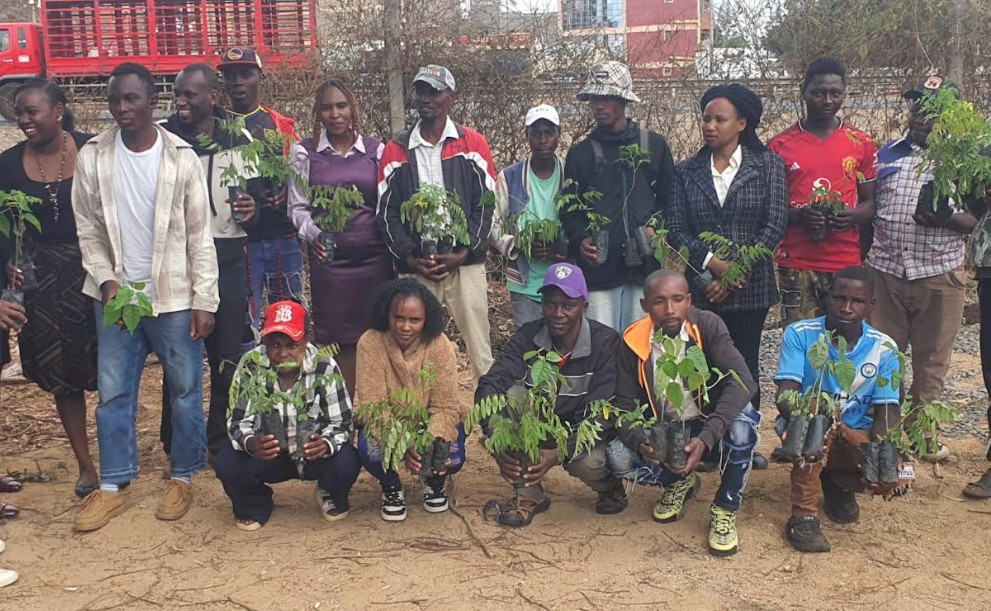
The Probation Department in Kenol has reaffirmed its commitment to rehabilitating offenders within the community, saying the approach helps decongest prisons, reduce government expenditure and support the reintegration of offenders into society.
Speaking during an event to mark Correctional Services Week, Kenol Probation Office in-charge Stanley Mwangi said probation offered offenders an opportunity to reform while remaining with their families and contributing to their communities.
He said the department’s primary role was to facilitate behavioural change without necessarily subjecting offenders to imprisonment.
“While having offenders on probation helps in decongesting prisons, it also enables them to stay within the community and their families as they reform,” Mwangi said.
He added that probation officers monitored offenders throughout their sentences to encourage responsible behaviour and reduce the likelihood of reoffending.
“Through probation, we keep these individuals in the community and monitor them throughout their sentence. This helps discourage them from reoffending because they learn from their mistakes,” he said.
Mwangi said probationers received support through education, vocational training and livelihood initiatives to help them become self-reliant.
He noted that officers assisted individuals seeking to acquire skills, pursue education or obtain tools needed to establish small businesses and earn a living while serving their sentences.
“If someone needs tools to start working, we try to assist them. If they want to study, we help them access education,” he said.
Probation Officer Daniel Odhiambo said community-based sentences also reduced the financial burden on the government by allowing people convicted of minor offences to serve their sentences outside prison.
He explained that maintaining inmates required public funds for food, accommodation and other basic needs, making probation a practical alternative for suitable cases involving petty offences.
“There is a budget allocated for every prisoner. The more prisoners there are, the more money the government spends keeping them in prison,” Odhiambo said.
He cited minor offences involving stealing items such as pineapples, cooking pots and maize, arguing that imprisonment could cost the Government more than the value of the stolen property.
Odhiambo said probation promoted rehabilitation through regular supervision, education, vocational training and assistance in establishing small businesses.
He urged the public to support probationers and give them an opportunity to reform and rebuild their lives rather than subjecting them to stigma after conviction.
Former probationer Dickson Kamande said the programme had transformed his life by allowing him to serve his sentence in the community while rebuilding his relationship with his family.
Kamande said he had been arrested after threatening to kill his parent while intoxicated, subsequently appearing in court and being placed under probation.
He said the experience helped him take responsibility for his actions, restore family ties and continue supporting his household.
“Probation positively impacted my life by giving me the freedom and opportunity to reform, take responsibility for my actions and plan for a better future,” he said.
The Kenol Probation Office became operational in November 2022 and has handled 634 probationers since its establishment.
As of October 16, the office was supervising 87 people serving various community-based sentences, comprising 63 men, 16 young offenders and eight women.
By Joshua Kyalo