Kenya has surpassed Egypt to become the largest producer of milk in Africa.
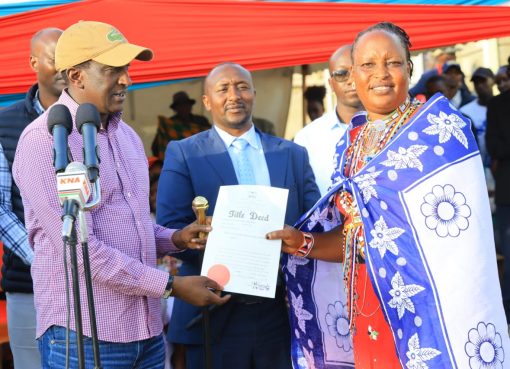
In a speech during the 5th edition of the Kenya meat expo and conference under the theme “Accelerating Sustainable Growth: Empowering the next Generation in the Meat Value Chain,” Livestock Development Principal Secretary (PS), Jonathan Mueke, observed that Kenya’s livestock sector is undergoing a profound transformation where pastoralist communities have sustained the nation from the harshest lands, yet remained on the margins of economic prosperity.
PS Mueke said that the numbers tell a compelling story. Kenya has surpassed Egypt to become the largest producer of milk in Africa, with output rising from 4.6 billion litres to 5.4 billion litres.
Meat exports have also climbed by 87 percent – from Sh8.9 billion to Sh16.4 billion. Dairy exports have grown from Sh4.9 billion to Sh14.2 billion. These are not just statistics said Mueke adding that they represent livelihoods transformed, families lifted, and a sector finally realising its immense potential.
PS Mueke reiterated that the goal is to turn the livestock and meat sector into a Sh1 trillion industry. To achieve this, the PS revealed that government is focusing on four critical enablers that will commercialise livestock production and move it from being merely a livelihood activity into a powerful engine of economic growth.
Better genetics for better yields
Since the foundation of any productive livestock sector is genetics, the National Livestock Breeding Programme and the Kenya Animal Genetic Resources Centre (KAGRC), distributed over 1.7 million doses of bull semen have been distributed and maintained a strategic reserve of more than 724,000 straws. KAGRC is now distributing subsidised sexed semen from Sh8,000 to Sh1,000 following a Presidential directive. This has dramatically reduced the cost barrier for smallholder farmers.
Mueke noted that Kenya has also exported semen to Sierra Leone, Mauritius, Rwanda, Burundi and Nigeria, positioning Kenya as a regional genetics hub. Quality breeds and sound animal health practices are essential to transforming the sector into a commercially viable and resilient industry where better breeds mean more milk, more meat, and more income for farmers.
Disease control through mass vaccination
The Livestock and Development PS reaffirmed that no commercial livestock sector can thrive without robust disease control. That is why the National Mass Livestock Vaccination campaign was launched in January 2025.
To date, over 18 million animals have been vaccinated against Foot and Mouth Disease (FMD) and Peste des Petits Ruminants (PPR) – diseases that have historically devastated herds and livelihoods.
At the same time, the Kenya Veterinary Vaccines Production Institute (KEVEVAPI) has manufactured over 114 million doses of vaccines since August 2022, with annual production growth of over 500 percent from 6.6 million to 41 million doses.
This is not just about protecting animals; it is about safeguarding our national food systems and securing Kenya’s access to export markets.
Without timely and reliable disease control, Kenya cannot build the trust that international buyers demand.
Traceability through ANITRAC
The Animal Identification and Traceability System – ANITRAC – is Kenya’s digital platform for farm-to-fork livestock traceability. It is designed to uniquely identify every animal via RFID tags and trace its entire life cycle, from birth to processing. ANITRAC is already being piloted in government farms and private ranches, with a nationwide rollout underway. This system does more than track animals. It opens doors to premium markets.
The European Union and Middle Eastern markets demand traceability. ANITRAC delivers it. It also strengthens disease surveillance, curbs illegal livestock movement, and makes livestock bankable assets for financial inclusion.
Aggregation through CLICs
“We are transforming how pastoralists participate in the value chain through County Livestock Investment Companies – CLICs, said PS Mueke adding that just as tea farmers own KTDA and milk farmers own cooperatives, pastoralists will now have their own livestock business companies.
PS Mueke assured that CLICs are professionally governed, commercially oriented companies owned primarily by pastoralists, with catalytic public and private investment. Through these companies, pastoralists will access organised markets and finance, become credible shareholders in the value chain, and sell collectively to high-value export markets.
They will be protected from broker exploitation and capture value at every stage – from breeding and animal health to fattening, grading, processing, logistics and leather linkages. Mueke reported that the Government has established a Sh5 billion Pastoralist Livestock Business Fund to support over 350,000 pastoralists across 21 ASAL counties to form and operate their own CLICs. In Phase One alone, this will improve the livelihoods of two million household members.
From herd to wealth
These four enablers – genetics, disease control, traceability and aggregation – are the pillars of Kenya’s livestock transformation agenda. They are designed to work together, better breeds, produce healthier animals that are vaccinated against disease, traced through ANITRAC, and marketed collectively through CLICs.
The results are already visible. Meat exports have risen 87 percent. Milk production has hit record highs. More than 330,000 pastoralist households are now insured under the DRIVE project, protecting 2.7 million animals worth Sh29.3 billion.
The challenge is not just ownership of livestock. It is how we commercialise it said the PS adding that livestock products will be commercialised through genetics, vaccination, traceability and aggregation. Mueke reaffirmed Governments commitment to walk with farmers, demonstrating value at every step, building a sector that is resilient, competitive, and globally connected since the time for pastoralists of Kenya, has come
By Joseph Kamolo