Kenya has intensified preparations for potentially heavy October-November-December (OND) rains, with the National Disaster Operations Centre (NDOC) estimating that about 1.5 million people could be affected and 500,000 displaced under a worst-case scenario.
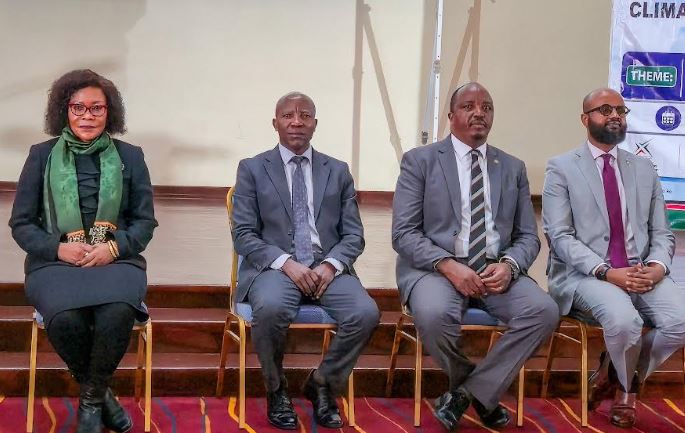
The warning was issued Monday as the 13th National Climate Outlook Forum (NCOF13) opened at a Nairobi hotel, bringing together government agencies, climate experts, humanitarian organisations, development partners, the private sector and civil society to plan for the anticipated rainfall.
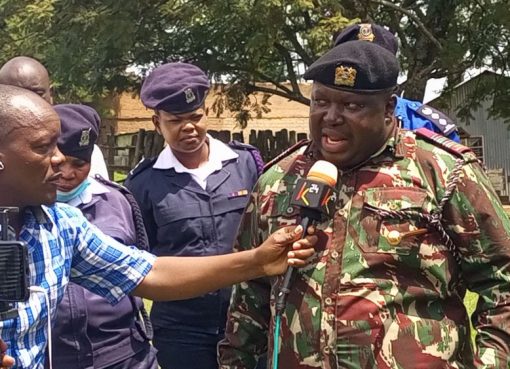
NDOC Director Col. (Rtd) David Samoei, who officially opened the three-day forum, said the country was now concentrating on preparing for the possible impacts of the rains rather than debating whether they would occur.
“We are planning on the worst case,” Samoei said.
He said the government was preparing for flooding, landslides, drowning incidents, washed-away bridges, dam failures, building collapses and disruption of transport, water supplies, and electricity and communication networks.
The areas under close monitoring are Mandera, Wajir, Garissa, Tana River, parts of the Coast, Elgeyo-Marakwet, Baringo, Murang’a, Kiambu, Kisumu and Busia.
Samoei identified Murang’a, Elgeyo-Marakwet and Kiambu as particularly vulnerable to landslides, while several of the other areas face significant flood risks.
“There will be a transport disruption,” he said, noting that the government was putting contingency measures in place for communities that could be cut off.
Samoei disclosed that NDOC has activated multi-agency preparedness measures and is working with county commissioners in the areas of concern to assess possible impacts and coordinate response operations.
“The government is also working with the Kenya Defence Forces (KDF) to facilitate rescue operations in areas that could become inaccessible by road, including the possible deployment of helicopters.” Samoei said.
He explained that authorities are planning to pre-position food and other essential commodities closer to vulnerable communities before the rains. Businesses operating in potentially affected areas have also been urged to increase their stocks to cushion communities against possible disruptions to transport and supply chains.
He further added that the government is working to identify evacuation centers before the onset of the rains to avoid using schools as emergency shelters, following previous experiences in which schools used for such purposes suffered disruption and damage to property.
Samoei urged residents, particularly in urban areas, to keep drainage systems, rivers and other waterways clear of waste to minimize flooding.
The preparedness measures follow climate forecasts indicating a strong rainfall signal for the season.
Kenya Meteorological Service Authority (KMSA) Acting Director Edward Muriuki, said weather models indicate an over 80 per cent chance of heavy rainfall during the OND period.
He said the Greater Horn of Africa Climate Outlook Forum held the previous week had also indicated a 99 per cent chance of El Niño occurring, with more than 90 per cent likelihood that it would be very strong.
Muriuki, however, cautioned that El Niño alone does not determine rainfall behaviour, saying KMSA was continuing to monitor other factors that could influence conditions across the country.
“The department is closely monitoring this El Niño phenomenon,” Muriuki said.
He said a detailed national OND forecast would be released to provide more specific information on the expected rainfall and its likely impacts.
Muriuki stressed that forecasts must be communicated in a way that enables Kenyans to understand and act on the information.
“It is one thing to communicate this information, but it should be understandable,” he said.
Kenya Red Cross Society Secretary General Dr Ahmed Idris said the forum should not end with the production of a forecast but should translate climate information into practical decisions for communities and different sectors.
He said the OND season was particularly sensitive because it coincides with the reopening of schools, national examinations and increased movement across the country as preparations for elections intensify.
“We will be advising people on what to do with their lives. We will be advising the country on how the economy ought to be organized the next couple of months,” Idris said.
He said climate experts should apply scientific forecasts to specific sectors and geographical areas so that policymakers can make informed decisions.
Ms Margaret Oduk, Head of the UNEP Liaison Office to the African Union Commission and UN Economic Commission for Africa and Representative to Ethiopia, called for a shift from reacting to disasters after they occur to anticipating and reducing risks beforehand.
“We must move from responding to disasters after they occur to anticipating and reducing risks before they materialize,” Oduk said.
She said early-warning information would only be effective if it led to early action and was backed by adequate resources for institutions and communities to respond.
Oduk also highlighted the role of forests, watersheds and other ecosystems in reducing risks from floods, droughts, erosion and other climate-related hazards.
The NCOF13, themed “Enhancing Preparedness and Early Action for the OND 2026 Rainfall Season under Evolving El-Niño Conditions,” is providing a platform for producers and users of climate information to assess the expected conditions and develop sector-specific risk assessments and action plans.
The forum will conclude on Wednesday 26th 2026, with the official release of the OND 2026 seasonal forecast, together with sector advisories covering agriculture, food security and livestock, energy, water, disaster risk management, health, environment and forestry, transport and infrastructure, vulnerable groups and the economy.
By Sharon Njeru and Lilian Gichohi