Kenya and South Africa have pledged to strengthen regional and international cooperation in the fight against corruption, with leaders from both countries calling for stronger institutions, accountability and ethical governance during a Kenya Leadership Integrity Forum (KLIF) meeting in Nairobi.
Ethics and Anti-Corruption Commission (EACC) Chairperson David Oginde described corruption as a “slow-acting destroyer” that gradually weakens institutions and economies.
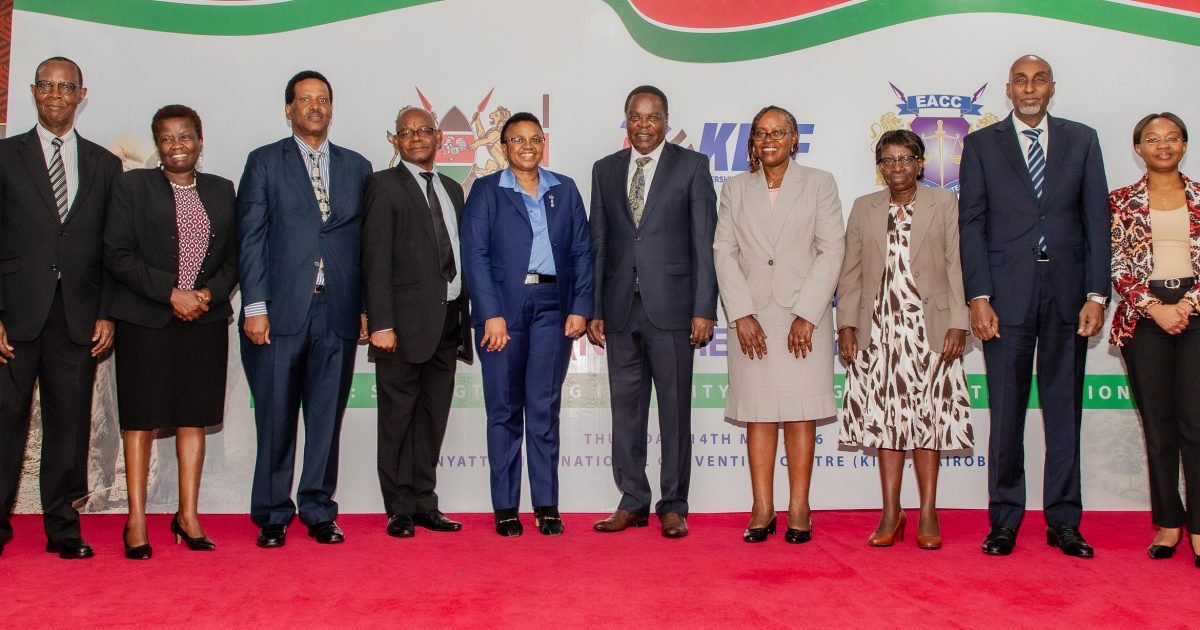
Speaking on Thursday during the Kenya Leadership Integrity Forum 58th National Coordinating Committee (NCC) meeting held in Nairobi, Dr. Oginde said corruption acts like a painless disease and by the time its effects are discovered, institutions are already weakened and the damage is severe.
Dr. Oginde warned that corruption erodes public trust, increases the cost of services and commodities and can ultimately trigger conflict, economic collapse and state failure if left unchecked.
He cited examples of countries affected by prolonged corruption and governance failures, including Somalia and Haiti, saying weak institutions and misuse of public resources had contributed to instability and humanitarian crises.
Dr. Oginde also pointed to Singapore’s transformation under former Prime Minister Lee Kuan Yew as an example of how integrity, accountability and meritocracy could transform a nation.
“Nothing comes from nothing. If you see success, somebody built it. Nations become prosperous because people commit themselves to integrity and accountability,” he said.
He urged Kenyans to embrace ethical leadership and excellence in public service, adding that corruption should be treated as a threat to national development.
Attorney General Dorcas Oduor said corruption could only be defeated through coordinated efforts involving both state and non-state actors.
“The Kenya Leadership Integrity Forum reflects our shared recognition that no single institution can win this fight alone. It requires a coordinated, multi-sectoral approach bringing together state and non-state actors,” Oduor.
The Attorney General called for enhanced cooperation between Kenya and South Africa in areas such as mutual legal assistance, asset recovery, information sharing and prosecution of corruption cases.
She noted that although both countries are signatories to the United Nations Convention Against Corruption and the African Union Convention on Preventing and Combating Corruption, they still lack a formal framework for judicial cooperation in anti-corruption efforts.
“This presents a timely opportunity for us to initiate structured engagement towards strengthening cooperation,” she said.
The Attorney General further highlighted ongoing reforms aimed at strengthening Kenya’s legal and policy framework against corruption. She cited the recently approved Conflict of Interest Act and regulations as a major step towards addressing conflicts between public duty and private interests.
She also noted that a whistleblower protection bill currently before Parliament would help create a safer environment for reporting corruption and promoting accountability.
In addition, the Attorney General said her office and the State Department for Justice had reviewed the national ethics and anti-corruption policy in collaboration with stakeholders and development partners to address emerging governance challenges.
Director-General in the Presidency of South Africa Phindile Baleni said corruption continued to undermine development, democracy, human rights and economic growth across the world, especially in developing countries facing economic uncertainty and geopolitical tensions.
She said South Africa had adopted a multi-agency anti-corruption framework after the advent of democracy in 1994, establishing several institutions and laws to prevent, detect, investigate and prosecute corruption.
“Our National Development Plan envisions a corruption-free society by 2030, with accountable leadership, ethical governance and institutions that serve citizens rather than private interests,” she said.
Baleni explained that South Africa’s anti-corruption architecture includes financial disclosure systems, lifestyle audits for senior public servants, oversight by the Auditor-General and specialised agencies such as the Hawks and the Special Investigating Unit.
She said judicial commissions of inquiry had also played a critical role in exposing governance failures and systemic corruption in the country.
“The fight against corruption requires the collective involvement of government, business, civil society and citizens,” she said.
Baleni commended Kenya for promoting transparency and dialogue through KLIF, noting that such engagements were essential in strengthening accountability and building resilient institutions across Africa.
The forum brought together government officials, anti-corruption agencies, civil society representatives and development partners to discuss strategies for promoting integrity, good governance and regional cooperation in the fight against corruption.
By Anita Kariuki and Lilian Gichohi