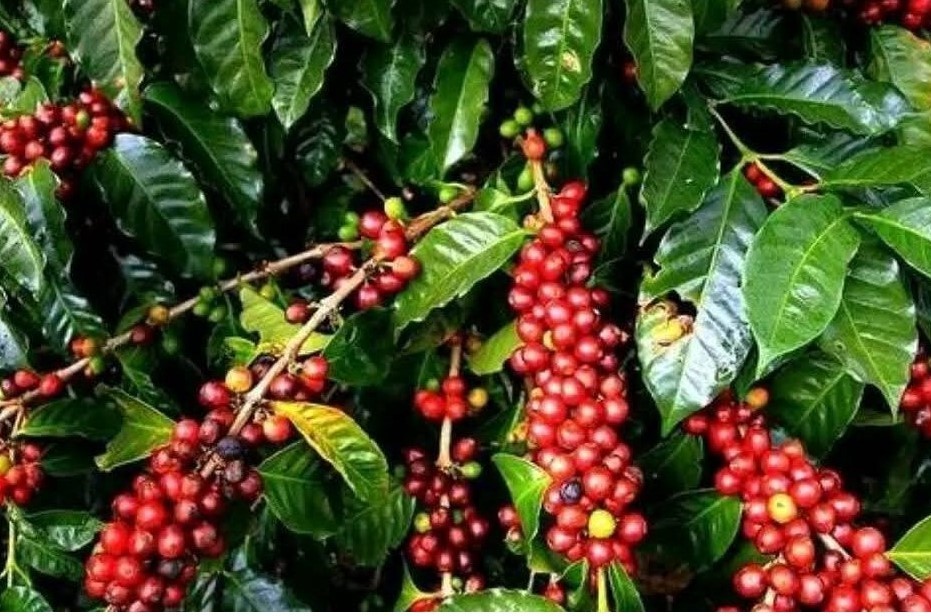
Kenya is targeting to increase annual coffee production from the current average of 50,000 metric tonnes to 150,000 tonnes by 2028.
The government is therefore scaling up seedling distribution and access to affordable financing to support farmers.
New Kenya Planters Cooperative Union Managing Director Timothy Mirugi said the country had distributed more than four million coffee seedlings in the first phase of the programme and planned to distribute another 15 million during the 2026/2027 financial year.
Speaking during an interview on the sidelines of the ongoing Agriculture Summit at the Nairobi ASK showground, he said demand for seedlings remained high, with counties having submitted a cumulative request for about 43 million seedlings, highlighting the need to expand production capacity to meet farmers’ needs.
“We are seeing coffee growing taking off in both traditional and emerging growing zones, and we believe we could achieve the 150,000-tonne target even before 2028,” he said.
The MD attributed the improvement in coffee farmers’ earnings to reforms introduced by the government in 2023, saying they had enhanced transparency and brought greater structure to the coffee trade.
Mirugi said some farmers were now receiving as much as Sh185 per kilogramme of coffee, a level of earnings he said had not been experienced in previous years.
He said Kenya’s coffee was performing well in international markets, with the benefits increasingly reaching producers.
The government has also expanded the Coffee Cherry Advance Revolving Fund, administered through New KPCU, to provide farmers with affordable financing as they await payment for their produce.
Mirugi said the fund had grown from an initial government allocation of Sh3 billion to about Sh8.24 billion, with cumulative disbursements reaching Sh15 billion, with nearly 700,000 farmers benefiting.
The facility charges a three per cent administration fee, which is recovered when farmers sell their coffee, providing an alternative to expensive borrowing.
He said the financing had enabled farmers to purchase farm inputs on time and meet household expenses, including school fees and medical bills.
Mirugi said expanding production would help Kenya capitalise on its favourable coffee-growing conditions, including high-altitude areas and fertile volcanic soils, which support the production of high-quality beans.
He noted that increased output, supported by improved planting materials and research into better varieties, would strengthen the sector and improve farmers’ incomes.
However, the MD said climate change remained a major threat to coffee production, urging farmers to adopt regenerative agriculture practices to protect soils and mitigate adverse weather conditions.
He recommended planting cover crops to shield coffee plants from intense sunlight, adopting minimum tillage and using other climate-friendly farming methods to conserve soil and the environment.
Mirugi said strengthening climate resilience was increasingly important amid concerns about potential global coffee shortages, adding that sustainable production would help safeguard the country’s coffee industry.
President Dr William Ruto, speaking to farmers Thursday at the ongoing Agriculture and Food Security summit, directed for the provision of Sh100 million to facilitate the establishment of a world-class quality analysis laboratory at the Nairobi Coffee Exchange within six months.
The laboratory is expected to support the handling and marketing of specialty coffee through a proposed special auction for micro-lots of fewer than 10 bags.
The move followed concerns that Kenya’s specialty coffee is being traded through a conventional auction system that does not adequately cater for specialty coffee.
By Wangari Ndirangu