The Kenya Electricity Transmission Company (KETRACO) has energized the 400kV Isinya–Konza Transmission Line and the new Konza Substation, a move set to secure stable power for Konza Technopolis and strengthen the national grid across the Lower Eastern region.
The project is financed by the government of Kenya and the Exim Bank of China at a cost of Sh8 billion and will enhance electricity transmission capacity and access to power across lower eastern regions of Machakos, Kajiado, Makueni, and Kitui.
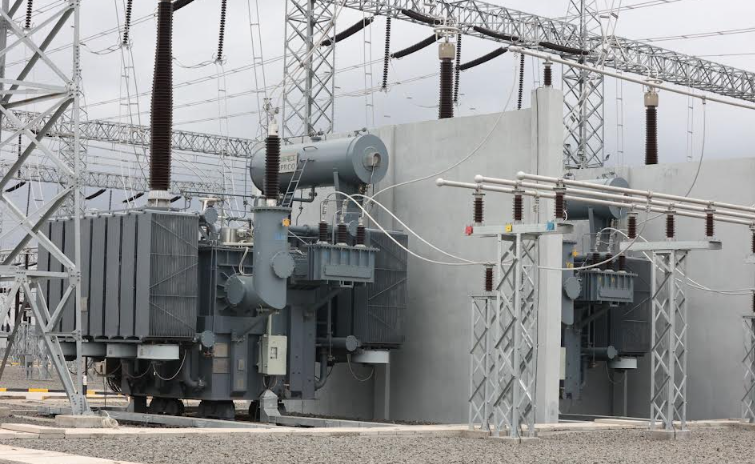
The project switches on a 98-kilometer double-circuit 400kV line linking Isinya to Konza, along with a 400/132/66kV substation. The facility houses two 400/132kV, 350MVA transformers and two 132/66kV, 100MVA transformers, giving the grid major new capacity for industrial and residential growth.
According to KETRACO Managing Director Eng. Kipkemoi Kibias, the successful energization of the Isinya–Konza Transmission Line and Konza Substation strengthens the reliability of the national grid and guarantees a quality power supply to Konza Technopolis and surrounding areas.
Eng. Kibias, while speaking at Konza, said that Konza Technopolis, Kenya’s flagship smart city, requires high-reliability power to attract data centers, manufacturing, and tech firms, and the energization removes a key infrastructure bottleneck for Vision 2030’s industrialization goals.
“This project is critical in supporting industrialization, attracting investments, and advancing Kenya’s Vision 2030 development agenda,” Eng. Kibias added.
He affirmed that the infrastructure will facilitate electricity evacuation and distribution while enhancing interconnectivity across the national grid. It will also provide capacity required to support the growth of Konza and other emerging industrial, commercial, and residential developments.
“The upgrade is part of a broader push to build transmission capacity ahead of demand from new industries, commercial hubs, and growing urban centers,” said Eng Kibias.
The new line improves power transfer capability and network stability nationwide. It creates an alternative supply path for the lower eastern region, reducing outage risks and improving resilience during peak demand or line faults.
The company reiterated its commitment to developing a robust transmission system to drive economic growth and expand universal access to reliable electricity.
By Anne Kangero