Deputy President Prof. Kithure Kindiki has defended the government’s fuel subsidy and fertiliser reform programs, saying the measures were necessary to cushion Kenyans from the rising cost of living caused by global economic shocks and international conflicts.
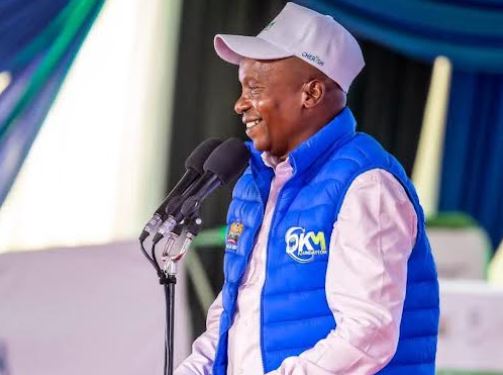
Speaking during the launch of the Cherangany Hills Ecosystem Restoration for Livelihood Improvement, Sustainability and Harmony (CHERISH) programme in Kapyego, Elgeyo Marakwet County, Kindiki said the Kenya Kwanza administration inherited a struggling economy in 2022 characterised by high inflation, rising food prices, and economic pressure on ordinary citizens.
He said the government under President William Ruto had since implemented several interventions aimed at stabilising the economy and protecting wananchi from further hardship.
“We inherited an economy that was under serious strain, but since coming into office, we have put in place measures to stabilise the economy and support wananchi,” Kindiki said.
The Deputy President noted that among the first interventions by the administration was reducing the cost of fertiliser to support farmers and enhance food production across the country.
“We were able to reduce the prices of fertiliser to support farmers across the country,” he said.
Kindiki also defended the government’s fuel stabilisation measures, saying the administration had gradually reduced pump prices over time to protect households and businesses from escalating transport and production costs.
“Consistently, we reduced fuel prices by about 43 shillings gradually over time to protect Kenyans and support the economy,” he stated.
However, he acknowledged that recent increases in fuel prices had triggered concern among Kenyans, attributing the situation to global conflicts and disruptions in international supply chains rather than local policy failures.
“The fuel prices problem is not local. It is an external problem caused by the war between Israel, Iran, and the United States,” Kindiki said.
He explained that the conflict had disrupted global shipping routes and increased logistical expenses associated with petroleum imports.
“Transport costs have gone up, insurance costs have gone up, and the entire fuel supply chain logistics have been interrupted. That is what has led to the situation we have today,” he added.
The Deputy President said the government had continued cushioning citizens by reducing Value Added Tax (VAT) on petroleum products from 16 percent to 8 percent and introducing fuel subsidies worth billions of shillings.
“We have reduced VAT on fuel and petroleum products from 16 percent to 8 percent,” he said, adding that the subsidy programme had helped prevent fuel prices from rising further and reversing the economic gains achieved since 2022.
Kindiki also criticized leaders he accused of misleading Kenyans with unrealistic political promises, particularly on taxation and public spending.
“One year ago, there were people who brought politics of deception and lies, telling Kenyans that the solution to every problem is reducing taxes to zero percent,” he said.
“But the same Kenyans need roads, healthcare, education, and other government services. All these things require money,” he added.
He emphasised the need for balanced taxation policies, saying the government requires adequate revenue to fund development projects and essential services.
“We must strike a balance because the government needs resources to provide services and support development,” Kindiki stated.
At the same time, the Deputy President called for dialogue and negotiations in resolving disputes, assuring Kenyans that the government remained open to engaging all stakeholders.
“The correct way of addressing issues is through discussions and negotiations, and the government is willing to listen to all stakeholders,” he said.
Kindiki further urged young people to focus on securing their future and protecting the interests of future generations through constructive engagement and responsible leadership.
The Deputy President assured Kenyans that the government would continue implementing policies aimed at easing the cost of living despite prevailing global economic pressures.
He urged leaders across the political divide to embrace honest leadership, unity, and practical economic solutions instead of misleading Kenyans with promises that cannot be sustained.
By June Jebet and Rennish Okong’o