More than 2,000 farmers in Kirinyaga County have been trained on high-yielding maize varieties under a county government programme aimed at increasing maize production, strengthening dairy farming and preparing farmers to take advantage of the anticipated El Niño rains.
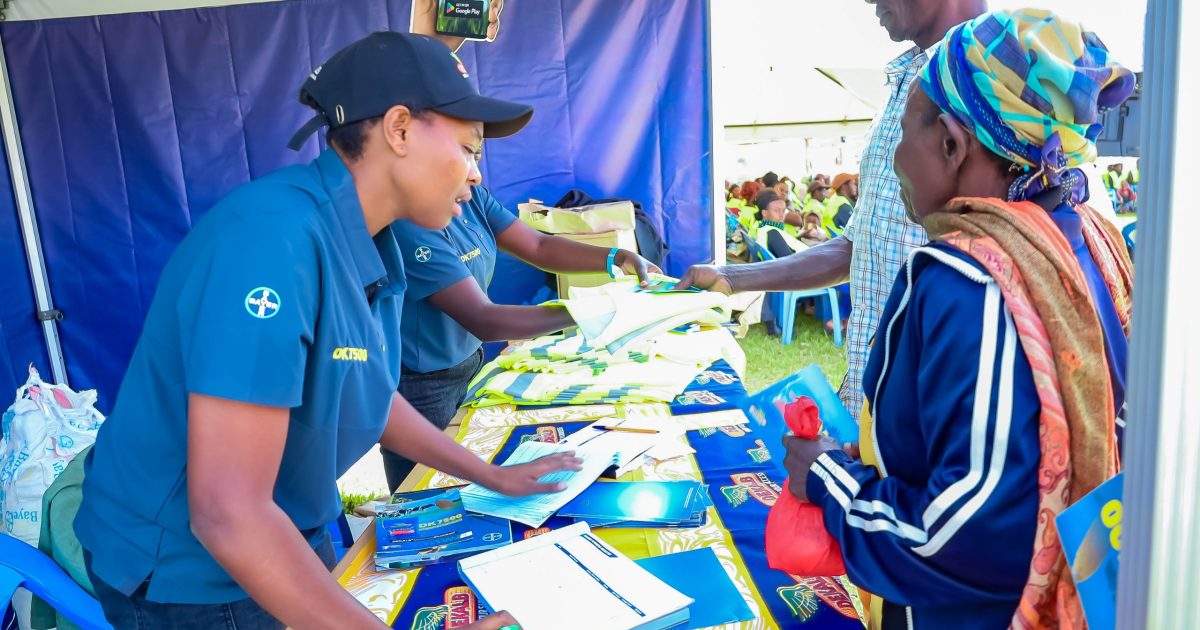
The training, conducted in partnership with Bayer East Africa Limited, equipped farmers with practical knowledge on selecting maize varieties suited to different ecological zones and planting seasons, climate-smart farming practices and available market opportunities to improve productivity and household incomes.
The initiative is being implemented under Governor Anne Waiguru’s Masomo Mkulima Mashinani programme, which delivers agricultural extension and advisory services directly to farmers across the county.
Speaking during the training, Governor Waiguru said the programme enables extension officers to conduct practical demonstrations on crop and livestock value chains, helping farmers adopt modern technologies that enhance productivity, resilience and profitability.
“This support is part of the Wezesha Kirinyaga programme, which seeks to transform the lives of smallholder farmers by supporting households engaged in various agricultural value chains to increase production and access better markets,” she said.
Waiguru said the county government would continue investing in value addition, post-harvest handling and market access to protect farmers from price fluctuations and exploitation by middlemen.
“Our next phase is about sustainability, ensuring every farmer continues to grow their income and every village becomes part of Kirinyaga’s agricultural success story,” she added.
During the training, farmers were introduced to improved maize varieties, including DK777, DK8031, DKC8033, DKC9089 and the newly promoted DK7500, a yellow maize variety recommended for both grain production and silage to support dairy farming.
County Executive Committee Member for Agriculture Dr. John Gachara said the programme is supported by 147 agricultural extension officers deployed across all sub-locations to provide technical support, monitor crop performance and collect field data to strengthen extension services.
He said similar training programmes are being rolled out across other agricultural value chains to improve productivity and increase farm incomes.
Dr. Gachara explained that the county introduced the Masomo Mkulima Mashinani programme after realising that many farmers were unable to travel to the Agricultural Technical and Vocational Education and Training (ATVET) Centre at Kamweti in Karumandi Ward for training.
To bridge that gap, the county established the Kangai Tomato Propagation Centre as an extension of the Kamweti facility, enabling farmers to access practical training closer to their homes.
He said the county remains committed to ensuring farmers have access to quality seed, practical knowledge and reliable markets, noting that the partnership with Bayer has enabled farmers to learn about improved seed varieties while the county works to expand market opportunities.
Dr. Gachara added that the county is monitoring maize performance across different ecological zones to determine the suitability of various seed varieties and farming practices. The findings will guide future extension services and help farmers make informed production decisions.
Bayer East Africa trainer Peter Kibure said the training was designed to help farmers understand the characteristics of different maize varieties and select seed best suited to prevailing weather conditions and intended use.
He said farmers were introduced to DK7500, a high-yielding yellow maize variety containing about 12 percent protein, making it suitable for both grain production and silage for dairy cattle. The variety also contains beta-carotene and has demonstrated strong performance under favourable rainfall conditions.
Kibure said the anticipated El Niño rains present an opportunity for farmers to maximise production by planting varieties that perform well under wetter conditions.
Farmers who attended the training welcomed the initiative, saying it had equipped them with practical skills to improve production and increase incomes.
Christopher Wanjohi said the programme had provided valuable knowledge that would enable farmers to achieve higher yields and improve their livelihoods.
Jane Wambui of Kerugoya Ward said the county’s agricultural training programmes had transformed her maize farming since 2022 by helping her adopt improved seed varieties with better yields.
She said she had previously planted low-performing maize varieties but had recorded better harvests after switching to recommended seeds and expressed confidence that the newly introduced DK7500 would further improve maize production across the county.
By Mutai Kipng’etich