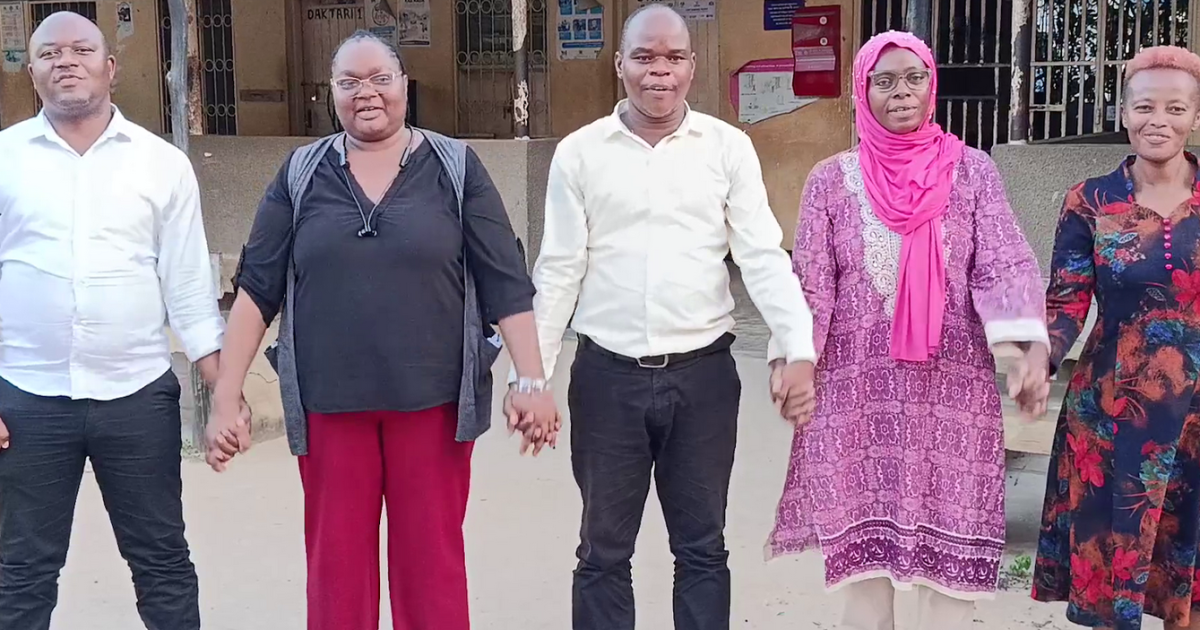
Clinical officers in Kwale County have vowed to continue their ongoing strike, now entering its seventh day, accusing the county government of failing to address long-standing grievances affecting healthcare workers and service delivery.
Officials from the Kenya Union of Clinical Officers (KUCO) said the industrial action will persist until the county provides a clear implementation plan for their demands, which include the signing and implementation of a Collective Bargaining Agreement (CBA), promotions, payment of salary arrears, recruitment of additional staff, and implementation of career progression guidelines.
Speaking in Diani, KUCO National Treasurer Mary Boniface said the union had exhausted all avenues for dialogue before resorting to the strike.
“Our strike has now entered day six and up to now we have not found solutions to the grievances that we presented to the county government,” said Boniface.
She said one of the union’s key demands is the implementation of the CBA negotiated between KUCO and county governments.
“The negotiations ended in January this year and the official signing ceremony was held on February 2 at the Council of Governors, but the County Government of Kwale did not sign the agreement at that time,” she said.
Boniface noted that although county officials had now signed the document, the union remained dissatisfied due to the lack of a clear implementation framework.
“We are not returning to work until we are very clear on how the implementation of that CBA will be done,” she added.
The union is also demanding implementation of career guidelines for clinical officers, which were commissioned in May 2024 to streamline promotions and professional progression.
Boniface dismissed claims by the county that the absence of a County Public Service Board had delayed implementation.
“For how long will that excuse be used? We are saying the county must find a way to implement the career guidelines,” she said.
The officials further demanded payment of 19 months of salary arrears arising from SRC salary increments awarded in 2024.
“They paid the increment, but the arrears are still pending and must be paid as soon as possible,” Boniface stated.
The union also cited severe staff shortages in health facilities across the county, saying the lack of personnel has overworked clinical officers and contributed to burnout.
“We need about 66 clinical officers employed. Right now, the county says they can only employ about 10, which is not enough,” she said.
KUCO leaders additionally called for the creation of a director position for clinical officers at Job Group R as part of the county’s staff establishment structure.
“We want a clinical director who is a clinical officer. We need to see the advert so that qualified officers can apply,” Boniface said.
On promotions and redesignations, she accused the county of neglecting clinical officers who had stagnated in the same job groups for years despite acquiring higher qualifications.
“We have officers who have stayed in one job group for 10 to 15 years without promotion,” she said.
Addressing residents of Kwale, Boniface apologized for the disruption of medical services but blamed the county government for the stalemate.
“We know the hardships residents are going through, but it is not our wish to punish them. We are ready to return to work once the county government meets our demands,” she said.
KUCO-Kwale Secretary Jonathan Shumba said no clinical officer had reported to work in the county since the strike began.
“We are here at Diani Health Centre in Msambweni Sub-County. Since Thursday, there has not been a single clinical officer working across Kwale County,” he said.
Shumba said the union wanted assurances on when the signed CBA would be implemented, including payment of risk allowances and salary increments.
“The problem is not signing the CBA. The issue is implementation and timelines,” he said.
He explained that the career guidelines were meant to ensure clinical officers progress professionally from Job Group J upwards and receive proper recognition for specialized training.
“A clinical officer who has trained in anesthesia should be recognized and paid accordingly, but many are not,” he said.
Shumba further lamented delays in promotions, saying some officers had remained in one job group for more than a decade.
“Every after three years, officers should be promoted accordingly, but that is not happening,” he said.
He warned that essential medical services had been paralyzed due to the strike, especially surgical operations that depend on clinical officer anesthetists.
“If you go to Msambweni, Kinango, Samburu or Lungalunga hospitals, the anesthetists are not there. Services have been crippled,” Shumba said.
KUCO Vice Secretary Samuel Nyae accused the county government of ignoring repeated appeals from the union before the strike began.
“We tried everything possible to avoid this strike, but the county government failed to listen to us,” he said.
Nyae said the union had issued notices and given the county time to respond to their grievances, but no meaningful action was taken.
“We are tired, and we will not back down. The strike is still on until all our demands are addressed,” he declared.
He urged the county government to prioritize healthcare workers if it truly considers health services a priority.
“We are not making political statements. We are government workers, but we want the government to act responsibly so that we can return to work,” Nyae said.
By Chari Suche