The government has reaffirmed its commitment to protecting media freedom, strengthening information integrity, and building a resilient digital ecosystem, even as Africa grapples with the rapid transformation brought about by Artificial Intelligence and digital platforms.
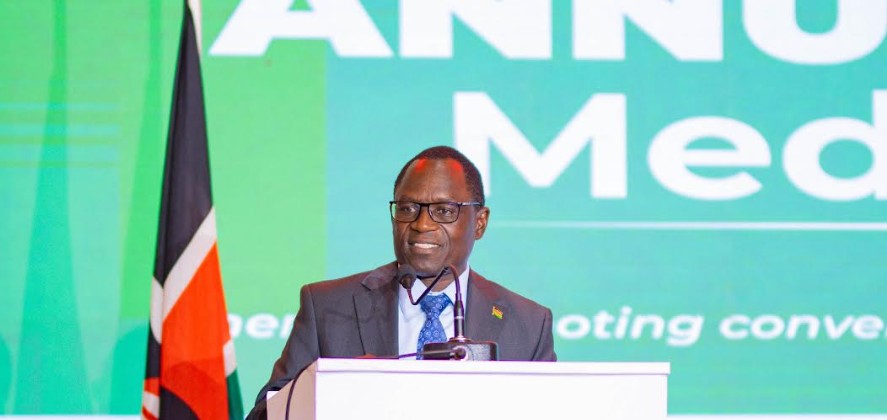
Speaking during the Africa Media Summit in Nairobi on Wednesday, State Department for Broadcasting and Telecommunications Principal Secretary (PS), Stephen Isaboke, underscored the need for media in Africa to embrace technological change while safeguarding ethical journalism and democratic values.
The PS said Africa was entering a defining digital era that was fundamentally reshaping how information is created, distributed and consumed.
“We are experiencing a total shift from the world before digital to the world after digital,” he observed, noting that the transformation had permanently altered media operations globally.
The PS commended the organizers of the Summit, including the Organisation for Economic Co-operation and Development (OECD) and the Media Council of Kenya for convening discussions on information integrity, digital platforms and the future of media in Africa.
He also paid tribute to senior media practitioners and industry leaders present at the forum, including representatives from the Kenya Editors Guild, Kenya Union of Journalists, Media Complaints Commission and regional press organisations, describing them as key pillars in safeguarding media freedom and professionalism.
Isaboke said Kenya remained firmly committed to a media environment that is “free, responsible, innovative and adaptive to technological change”, adding that the country’s approach was anchored in the Constitution and supported by progressive broadcasting regulations, cybersecurity frameworks and digital governance reforms.
According to the PS, Kenya possesses one of Africa’s most vibrant and advanced media ecosystems, driven by strong infrastructure expansion, high mobile penetration and growing internet connectivity.
“Kenya has one of the most robust media landscapes not just in Africa, but globally,” he stated.
He noted that mobile penetration in Kenya had exceeded 100 per cent, reflecting widespread access to multiple mobile lines and increasing reliance on digital communication platforms.
The PS said the government’s investments in fibre connectivity, digital superhighways and creative economy initiatives were intended to expand internet access to all parts of the country and deepen digital inclusion.
Isaboke further observed that Kenya’s broadcasting sector had grown significantly, with more than 200 licensed broadcasters spanning television, radio and community media, strengthening media pluralism and civic participation.
However, he noted that the country was undergoing a major shift in media consumption patterns, with more than half of Kenyans now accessing news and entertainment through digital and social media platforms.
“Digital platforms are now the fastest-growing space for information consumption, driven by mobile-first access and algorithmic distribution,” he said.
The PS explained that the transition had also disrupted traditional media business models, forcing newsrooms to adopt digital-first strategies, subscription models, content diversification and data-driven journalism to remain sustainable.
Isaboke cautioned that broadcasting regulations could no longer focus solely on spectrum management, given that digital platforms now enable individuals and organisations to reach millions of audiences without conventional broadcast licenses.
“It must evolve to address converged and cross-platform content ecosystems, while safeguarding public interest, competition fairness and information integrity,” he said.
The PS highlighted the opportunities emerging from Africa’s expanding digital economy, noting that the continent currently had more than 615 million internet users, with nearly 90 per cent of internet traffic being mobile-based.
Isaboke said digital platforms had amplified African voices and enabled the rise of new creators, podcasters, digital publishers and citizen journalists, particularly among young people.
“Young creators on platforms such as Facebook, Instagram and X are reshaping public discourse and engaging audiences that traditional media has historically struggled to reach,” he remarked.
At the same time, the PS warned that misinformation, disinformation and AI-generated synthetic media posed significant threats to public trust, democratic institutions and electoral integrity.
He noted that the rise of deepfakes and manipulated content had made it increasingly difficult for citizens to distinguish between authentic journalism and fabricated information.
“In the age of AI, Africa must choose truth,” he emphasised, warning that false information circulating online could trigger panic and distort public discourse before verification is done.
Isaboke said studies indicated that journalists globally believed Artificial Intelligence would significantly increase disinformation risks, while many citizens still lacked the capacity to identify AI-generated content.
He further acknowledged the economic challenges facing traditional media houses, including declining revenues and growing pressure from global technology companies dominating digital advertising markets.
The government, he said, was addressing digital inequality through the establishment of 1,450 digital hubs across the country aimed at expanding internet access and equipping young people with digital skills.
He also stressed the need for stronger measures against cyber-enabled propaganda, coordinated inauthentic behaviour and malicious use of artificial intelligence through regional cooperation and cyber-resilience frameworks.
Despite the challenges, Isaboke said Africa remained well-positioned to shape the future of digital transformation due to its youthful population and growing pool of innovators, creators and technologists.
“If governed responsibly, these technologies can strengthen journalism, improve efficiency, expand local language content and enhance access to credible information,” he stated.
The PS called for the development of Africa-led digital platforms and AI ecosystems rooted in local data and African languages to ensure the continent was not excluded from the global information economy.
He urged stakeholders attending the summit to translate discussions into practical policy outcomes, including updated broadcasting codes, responsive licensing frameworks, platform accountability systems and stronger child online safety measures.
“As Africa rises, we have an opportunity not only to participate in the global digital transformation, but also to shape it in ways that reflect our values,” he said.
The PS concluded by welcoming proposals to establish a Centre of Media Excellence in Africa, describing the initiative as a timely step towards strengthening journalism standards and media innovation across the continent.
By Nyawira Githinji and Nicholas Ochieng