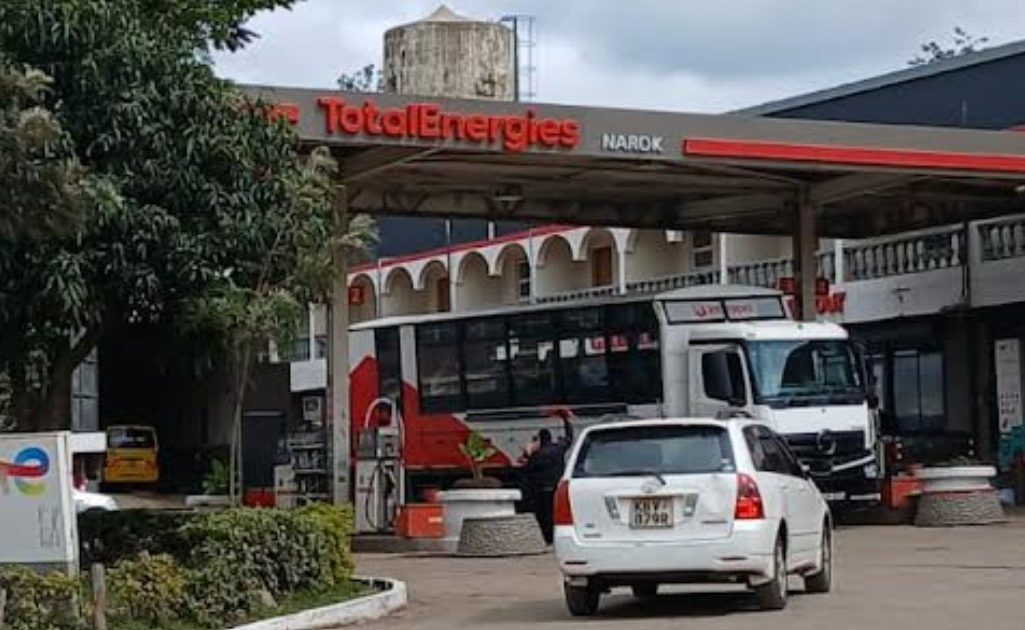
Residents of Narok County have called on the government to urgently intervene following a sharp increase in fuel prices that has triggered widespread concern among motorists, transport operators, and small-scale traders, as the cost of living continues to rise across the country.
The latest fuel review by the Energy and Petroleum Regulatory Authority (EPRA) has seen petrol increase by Sh16 to retail at Sh214.25 per litre, while diesel has risen by Sh46 to Sh242.92 per litre.
Kerosene remains at Sh152.78 per litre. The significant adjustments have sparked frustration among consumers who say the increases are worsening economic pressure on households and businesses.
Speaking in Narok Town, petrol station attendant Alphonce Njomo said the price hike has led to a noticeable decline in customers at fuel stations.
He noted that motorists are now purchasing fuel in smaller quantities compared to previous months, reflecting reduced purchasing power and growing financial strain.
Njomo added that customers frequently express concern over the rising costs and warned that continued increases could further suppress demand.
He urged the government to consider smaller and more gradual fuel price adjustments to cushion citizens from sudden economic shocks.
Public service transport operators have also reported increased operational costs. Bernard Mutai, a matatu driver operating the Narok–Eldoret route, said fuel expenses per trip have risen significantly, increasing from about Sh10,000 to nearly Sh14,000.
Mutai explained that the rising costs have forced operators to adjust fares from Sh1,000 to Sh1,400 in order to sustain their businesses. He further noted that higher fuel prices have reduced the number of daily trips, negatively affecting earnings and inconveniencing passengers who rely on public transport for mobility.
He attributed the global rise in fuel prices to international crude oil market fluctuations and increased shipping costs, which he said have been worsened by geopolitical tensions in the Middle East involving major global powers.
Boda boda operators have also been affected, with many reporting reduced customer demand as commuters opt to walk short distances instead of paying higher fares.
Rider Major Kamongo said business has declined significantly since the latest fuel adjustment, affecting daily income for many motorcycle transport operators.
Kamongo noted that the fuel price increases are not only impacting transport operators but also ordinary citizens who depend on affordable mobility to access workplaces, markets, schools, and essential services.
Residents have now appealed to the government to implement urgent measures to stabilize fuel prices and protect consumers from further economic strain.
They warned that continued increases could trigger a ripple effect, pushing up the cost of basic commodities and deepening the burden on low-income households.
They emphasized that without timely intervention, the cost of living is likely to escalate further, affecting economic activity and reducing household purchasing power across the country.
By Emily Kadzo and Duncan Kamau