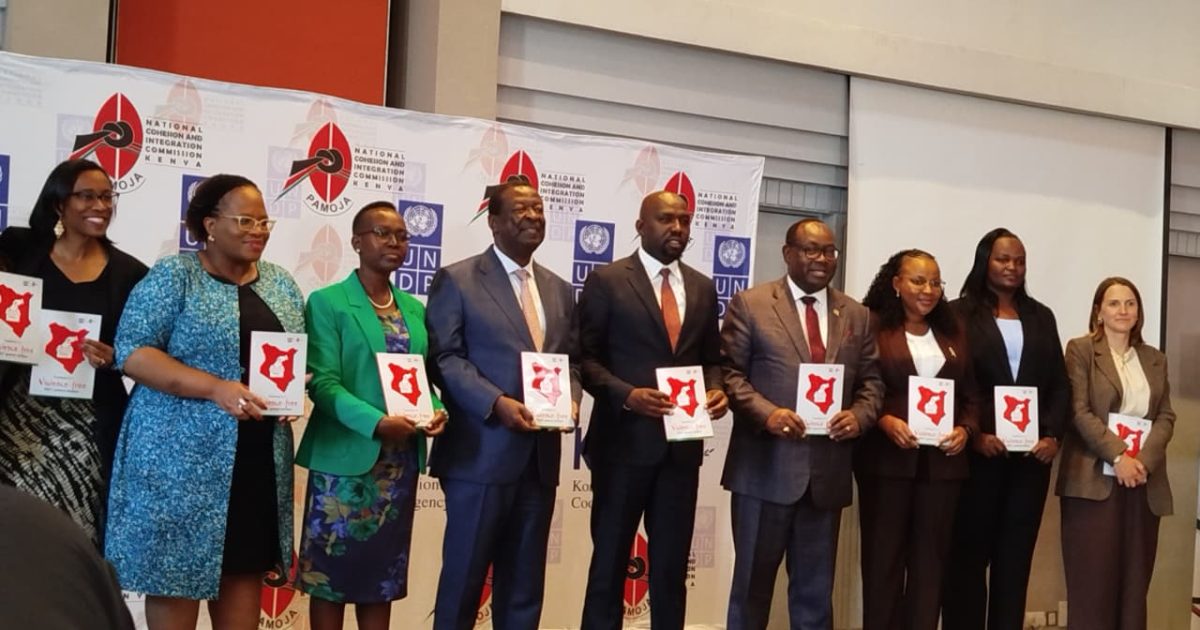
The National Cohesion and Integration Commission (NCIC) has launched a roadmap aimed at preventing electoral violence, hate speech and political intolerance ahead of the 2027 General Election.
The second edition of the Roadmap to a Violence-Free 2027 General Election, dubbed Uchaguzi Bila Noma, seeks to strengthen early warning and response mechanisms, promote responsible political leadership and enhance collaboration among security agencies, electoral institutions, political actors, civil society and communities.
Launching the roadmap in Nairobi on Tuesday, Prime Cabinet Secretary Musalia Mudavadi said peaceful elections were essential not only for Kenya’s democracy but also for economic stability.
He warned that political violence could undermine investment, businesses and livelihoods, saying Kenya must learn from the 2007/08 post-election violence in which lives were lost, families displaced and economic activity disrupted.
“Peace has enormous economic value. Peace creates confidence,” Mudavadi said, adding that preventing political violence was also about protecting the Kenyan economy and livelihoods.
He urged Kenyans to embrace political competition without allowing political differences to turn into hostility, saying elections should not destroy relationships among citizens.
“Kenya is bigger than any election. Kenya is bigger than any political party,” he said.
Mudavadi called on political leaders, the media, social media users and citizens to exercise responsibility in their communication, warning that violence can begin with inflammatory language long before physical confrontation occurs.
Interior Cabinet Secretary Kipchumba Murkomen said security agencies would adopt a preventive approach to electoral violence by using intelligence to identify emerging threats before they escalate.
Murkomen said political leaders and citizens had a responsibility to heed security advisories, particularly when public gatherings face security threats.
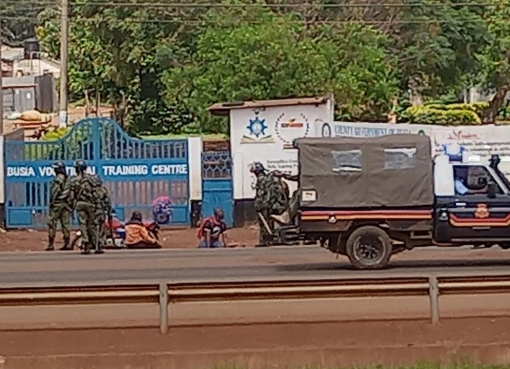
He cited a recent incident in Homa Bay where a police officer was killed and others injured during political activities after security teams advised organisers to call off a rally because of darkness and emerging security concerns.
“Political leaders have a duty to work with the security team to ensure that we protect our people,” Murkomen said.
He said the Government would strengthen coordination between security agencies, national government administration officers and communities through grassroots forums known as ‘Jukwaa La Usalame’, which he described as platforms for early warning, conflict prevention and community engagement.
Murkomen disclosed that police had arrested 27 suspected hardcore criminals allegedly targeting political rallies in Homa Bay, saying security agencies would deal firmly with individuals involved in political violence and their sponsors.
He further challenged political leaders to abandon ethnic and regional mobilisation, insisting that no part of Kenya belongs exclusively to a particular candidate, political party or community.
“Political competition must be won through ideas. It must be won through the ballot. It must never be won through fear,” he said.
Deputy Inspector General of Police Gilbert Masengeli said the National Police Service would work closely with NCIC and other stakeholders to strengthen early warning, community engagement and prevention of election-related violence.
He urged political actors to embrace issue-based competition, respect their opponents and communicate responsibly, noting that political leaders had the ability either to calm or inflame their supporters.
Masengeli said the police mandate goes beyond maintaining peace and protecting life and property, stressing that prevention should remain at the centre of security operations ahead of the 2027 elections.
He also called for cooperation among independent commissions and security agencies, saying institutions may be independent in their mandates but remain interdependent in protecting Kenya’s peace and stability.
NCIC Chairperson Bishop Kepha Omae Nyamweya said the roadmap marked a shift from reacting to electoral violence to preventing it before tensions escalate.
He said peaceful elections could not be left to one institution, urging political leaders, security agencies, civil society, religious organisations, the media and citizens to take collective responsibility.
NCIC Vice Chairperson Irene Tulel said the roadmap had identified political, economic, social, technological, legal and environmental factors as potential drivers of electoral conflict.
She cited political intolerance, ethnic mobilisation, misinformation and disinformation, unemployment, historical grievances, organised criminal gangs, community conflicts and the rapid growth of artificial intelligence as emerging challenges.
Tulel said NCIC would undertake nationwide conflict hotspot mapping, strengthen mediation structures, recruit peace and cohesion monitors and enhance monitoring of social media and public spaces for hate speech and dangerous speech.
The commission also plans to engage political parties and candidates to sign a peace accountability charter and establish a “wall of honour” and “wall of shame” to recognise responsible leaders and expose those who promote violence.
Tulel said the roadmap would further prioritise young people through dialogue forums, civic education, peace caravans, sports tournaments and digital peace-building initiatives.
She said NCIC requires Sh308.7 million to implement the proposed interventions.
The roadmap will guide coordinated interventions throughout the electoral cycle, with NCIC emphasising early action, dialogue, responsible leadership and protection of citizens’ rights as Kenya prepares for the 2027 General Election.
By Nancy Omondi and Zipporah Odionyi