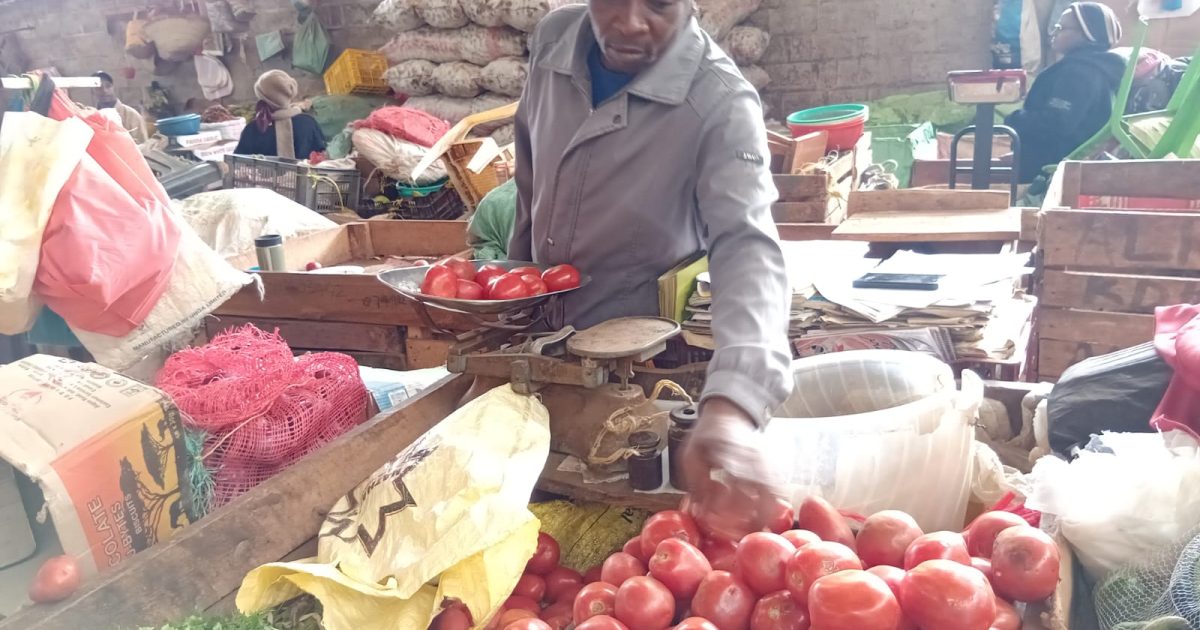
Residents of Nyeri Town and its surrounding areas are grappling with a sharp increase in tomato prices, with traders and consumers expressing concern over the rising cost of one of the country’s most essential kitchen ingredients.
A spot check conducted by the Kenya News Agency (KNA) in Nyeri open-air markets, groceries and estate stalls established that the price of tomatoes has more than doubled in recent weeks, disrupting household budgets and forcing many families to adjust their diets.
Until recently, a kilogramme of tomatoes in Nyeri retailed at between Sh40 and Sh50. However, the same quantity is now selling at between Sh100 and Sh120 depending on size and quality, placing additional pressure on consumers already struggling with the high cost of living.
For many households, tomatoes are a daily necessity used in preparing stews, sauces, salads and other popular dishes. The sharp rise in prices has therefore become a major concern among residents who rely on the commodity for everyday cooking.
At Nyeri open-air market, traders say the increase has caught both vendors and customers by surprise.
Jane Mwangi, a vegetable trader commonly referred to as a mama mboga, said the high prices have affected business as customers are now buying smaller quantities.
“The price of tomatoes has really gone up,” she explained.
“We used to sell a kilo at between Sh40 and Sh50, but now it ranges between Sh100 and Sh120. Customers are complaining, but even us traders are struggling because sales have reduced.”
According to Mwangi, the price hike has largely been caused by heavy rainfall experienced earlier in the season which destroyed tomato crops in many farming areas.
“The rains were too much,” she said.
“Many tomatoes were destroyed in the farms before they could even be harvested. When supply is low and demand remains high, prices automatically rise.”
She added that floods and waterlogging affected many farms, leading to huge losses among farmers and reducing the amount of produce reaching the market.
The shortage has been felt not only in Nyeri but across many parts of the country. Since the beginning of May, tomato prices have surged drastically due to reduced supply.
A kilo of tomatoes that previously sold for between Sh15 and Sh25 at wholesale level has risen sharply, while the price of a 70-kilogramme crate has increased from approximately Sh3,000 to as high as Sh18,000 in some markets.
As a result, traders are being forced to purchase tomatoes at significantly higher wholesale prices and transfer the additional cost to consumers.
At the household level, the impact is becoming increasingly evident as families adjust their cooking habits to cope with the rising prices.
Mary Ann Kimani, a resident of Nyeri, said she has had to reduce the amount of tomatoes she uses when preparing meals for her family.
“One tomato now costs about Sh10 if it is of fair size,” she noted.
“Previously, I could buy several tomatoes without worrying much about the price. I used to use three tomatoes in one meal, but now I only use one.”
Kimani explained that she has started minimizing the use of tomatoes in stews and sauces and at times substitutes them with other ingredients to cut costs.
“It affects the taste and quality of food, but we have no choice. We must adjust in order to survive,” she said.
Other residents echoed similar concerns, noting that tomatoes are a staple ingredient in most Kenyan homes and their rising cost is making it difficult for families to maintain their usual diet.
Traders at Nyeri market also attributed the high prices to transportation challenges brought about by the ongoing rainy season.
Some traders noted that poor road conditions in rural areas have made it difficult and expensive to transport produce to town markets. Middlemen transporting vegetables from farms to urban centres are reportedly charging more due to increased fuel consumption and delays caused by muddy roads.
Karugu, a resident of Nyeri Town, believes the problem extends beyond the county and reflects broader national challenges affecting agriculture and food supply.
“This situation is not only in Nyeri,” he said.
“The country is experiencing high tomato prices because of supply shortages being felt in many regions.”
Karugu called on households to embrace small-scale farming and kitchen gardening as a long-term solution to recurring food shortages and rising prices.
“We should go back to the farms, even if it is a small kitchen garden,” he advised.
“If families grow tomatoes and other vegetables at home, they can reduce dependence on external supplies and cushion themselves from price fluctuations.”
He further observed that climate change and unpredictable weather patterns are increasingly affecting agricultural production, making it necessary for communities to adopt more sustainable farming methods.
Agricultural experts have consistently warned that excessive rainfall can cause crop diseases, flooding and post-harvest losses, especially for perishable produce such as tomatoes. Excess moisture often causes tomato plants to rot or develop fungal infections, reducing both the quality and quantity of harvests.
The current situation in Nyeri clearly demonstrates the economic principle of supply and demand. With reduced harvests caused by heavy rains and transportation challenges, the quantity of tomatoes reaching local markets has declined sharply while demand remains consistently high.
For traders such as Jane Mwangi, the situation presents a difficult balancing act. Although prices are high, customer purchasing power has weakened, resulting in lower sales volumes.
“Customers are buying fewer tomatoes,” she said.
“Some people now buy only one or two tomatoes instead of a whole kilo. Business is not as good as many people think.”
Consumers are now calling for interventions to help stabilize food prices and protect households from further economic strain.
Some residents have proposed improvements in rural infrastructure, particularly roads, to ease transportation during rainy seasons. Others are advocating for training farmers on modern farming methods and climate-smart agricultural practices capable of withstanding extreme weather conditions.
As Nyeri residents continue to cope with the soaring cost of tomatoes, many agree that the crisis reflects broader challenges facing the country’s agricultural sector, infrastructure and climate resilience.
For now, families are being forced to stretch their budgets and reduce the use of tomatoes in their daily meals, while traders continue negotiating with suppliers and hoping for improved harvests in the coming weeks.
Many residents, like Karugu, believe that embracing household farming and sustainable agricultural practices could provide a long-term solution to future food price crises.
by Samuel Maina and Thomas Mondiri