Farmers, youth and Persons with Disabilities (PWDs) in Bugamanji Village, Lugaga Ward, Vihiga County, have benefited from a field training and equipment distribution exercise aimed at boosting agricultural production and enhancing livelihoods.
The event, organised by Practical Action in partnership with Infam Alliance, brought together farmers for training on modern farming technologies and sustainable agricultural production.
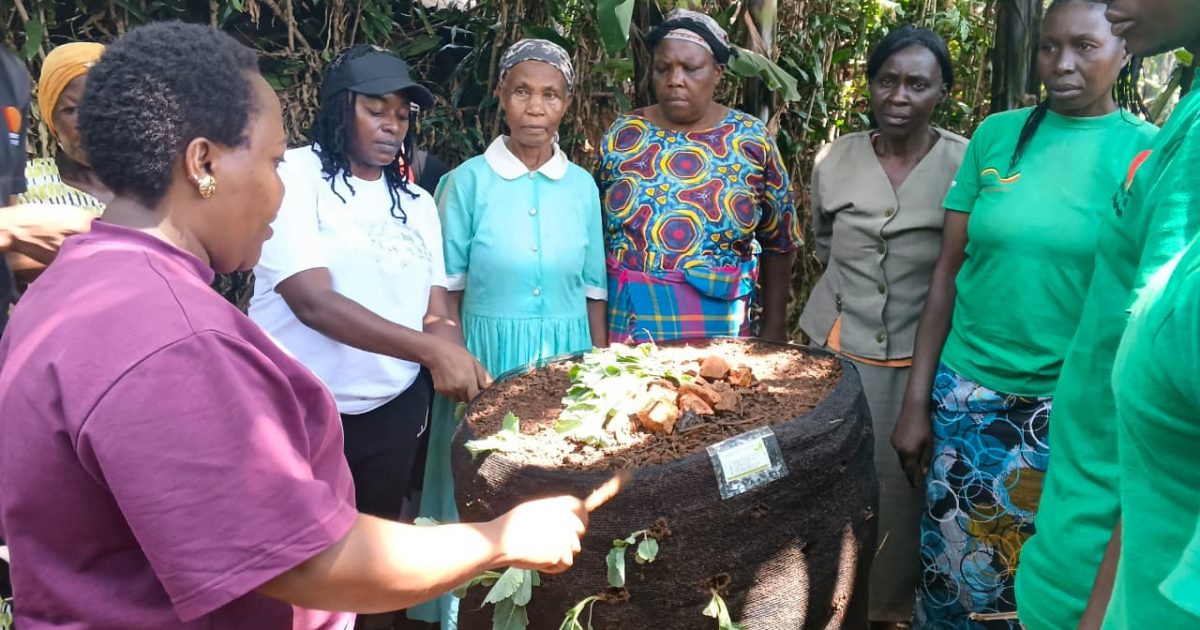
The training covered weed management, compost manure production and indigenous vegetable cultivation, among other practices. Participants also received farming equipment, seeds and practical skills to enable them to produce food and generate income using minimal space.
The session was part of the Empowering Farmers Through Knowledge initiative, which seeks to showcase farmers’ produce, create market linkages and equip farmers with knowledge and skills to improve their livelihoods.
The programme has encouraged youth and people living with disabilities to take the lead in modern agriculture through vertical and conical garden technologies for vegetable production and income generation.
Speaking to KNA, Practical Action Project Officer in Vihiga County Amos Maina urged PWDs to embrace farming as a source of income, noting that disability should not prevent them from engaging in productive activities.
He said sack garden technology requires little space and water, making it suitable for many young people who have limited access to agricultural land.
“One sack can carry 140 seedlings and above,” Maina said, adding that the technology enables farmers to maximise small spaces while reducing water requirements.
He noted that sack gardens are also affordable because farmers can use locally available organic manure to improve soil fertility and crop production.
On her part, Infam Alliance Officer Rachel Gaku said the grow bags were designed to support both food production and income generation among PWDs.
“Grow bags are serving two purposes, nutrition and improving livelihoods of PWDs by empowering them so that they can get something from the project,” she said.
The beneficiaries, particularly PWDs, said vegetables were easy to grow and sell because they mature within a short period.
They encouraged other youth to embrace agriculture, work together and reduce dependence on others for their livelihoods.
The training highlighted the importance of practical knowledge, innovation and collaboration in promoting sustainable agriculture and improving livelihoods among vulnerable groups in Vihiga County.
By Florence Oteng’o