The Government has challenged Heads of Procurement in public institutions to rethink procurement processes and adopt innovative approaches to meeting set timelines without compromising integrity, accountability or value for money.
Deputy Head of the Public Service (DHOPS) Amos Gathecha said procurement is no longer viewed merely as an administrative support function but as a strategic tool for implementing Government policies, stimulating economic growth, and improving the quality of public services.
Gathecha told procurement officers to be responsible and ensure that every procurement decision contributes to measurable outcomes for citizens.
He challenged them to critically examine processes that majorly contribute to delays and bureaucratic red tape in their institutions.
“How can procurement timelines be shortened without compromising integrity? How do we do business process re-engineering?” he posed.
The deputy head said efficient procurement was critical to translating government budgets and policies into tangible development projects and services, including roads, hospitals, schools, water systems, digital infrastructure, and affordable housing.
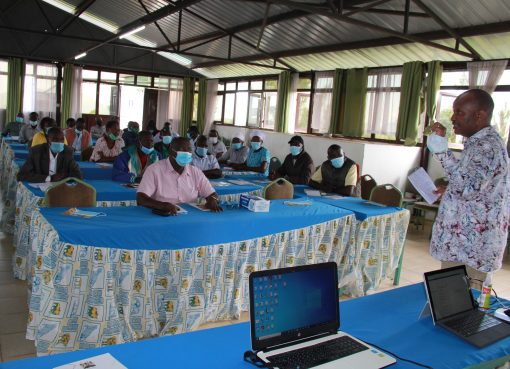
Gathecha spoke on Friday during the official closing of the Fifth Heads of Procurement and Supply Chain Management Conference in Mombasa, which brought together procurement and supply chain management professionals countrywide.
The DHOPS said the effectiveness of public procurement should ultimately be measured by its impact on citizens rather than the amount of money spent.
“Every Kenyan ultimately judges’ government not by the volume of money appropriated but by the quality of services delivered,” he said, noting that citizens always expect quality healthcare, roads, clean water, and schools.
“Procurement is therefore where government policy meets implementation and where public expectations meet public service delivery,” he said.
Gathecha further challenged Accounting Officers and Heads of Procurement to use data prudently to improve planning, contract management, and decision-making while creating meaningful opportunities for youth, women, and persons with disabilities to participate in procurement processes, saying such measures would significantly improve public expenditure performance in Kenya.
He emphasised that procurement professionals are at the centre of Government execution, noting that major national programmes and development priorities depend on efficient, transparent, ethical, and results-oriented procurement systems.
He said the Government is committed to strengthening procurement reforms through the continued rollout of the Electronic Government Procurement System (e-GP), which has enhanced transparency, efficiency, accountability and real-time oversight.
He disclosed that by May 2026, 1,543 public procuring entities had been registered and onboarded onto the e-GP platform, with 679 having published their consolidated annual procurement plans.
He added that the system had also processed more than 9,700 published tenders and over 2,600 contracts valued at approximately Sh12 billion, with the numbers continuing to rise as more entities fully migrate to the platform.
Gathecha reiterated that, in line with the Presidential directive and National Treasury policy, all public procuring entities, including Ministries, Departments and Agencies, County Governments and State corporations, are required to undertake procurement activities exclusively through the e-GP platform.
“From 1st July 2026, no procurement outside the e-GP platform is to be undertaken or paid for. This is not optional; it is a mandatory requirement aimed at eliminating manual loopholes, enhancing value for money and restoring public trust,” he said.
However, Gathecha cautioned that technology alone would not transform the procurement function, stressing the need for professionals who uphold ethical standards, exercise sound judgement, and take responsibility for their decisions.
“Digital systems require ethical professionals. Artificial intelligence requires informed judgement. Data requires leadership. Ultimately, institutions succeed because people choose integrity, professionalism, and accountability every day,” he said.
He further called for a whole-of-government and whole-of-economy approach to procurement, saying effective public value delivery requires strong collaboration among government institutions, suppliers, regulators, oversight bodies, development partners, the private sector, and citizens.
“Government requires capable suppliers. Businesses require predictable institutions. Investors require confidence. Citizens require results,” he said.
Gathecha said procurement could serve as a powerful catalyst for inclusive economic growth by creating opportunities for local businesses and strengthening participation by youth, women, and persons with disabilities.
He urged participants to implement the resolutions and commitments from the conference in their respective institutions.
“The future of procurement is delivery, and it is about ensuring that every public shilling produces visible and lasting benefits for the people of Kenya,” he said.
In his final remarks, Gathecha challenged public institutions to ensure that every public investment generates tangible benefits.
“Our challenge is not simply to spend more; our challenge is to spend better, deliver faster, innovate continuously, eliminate wastage, uphold integrity, and create greater value from every public investment,” he said.
“When procurement delivers, Government delivers, the economy grows, businesses thrive, investors gain confidence, public trust is strengthened, and the lives of our citizens are transformed,” he added.
By Ian Chepkuto and Bonface Malinda