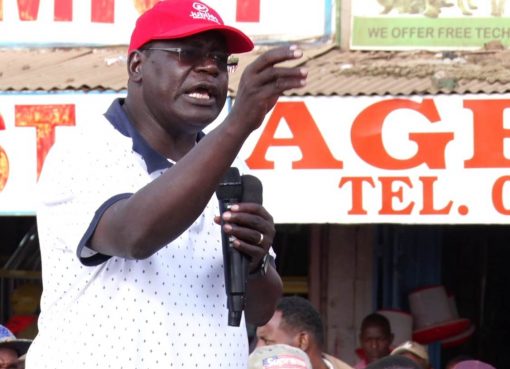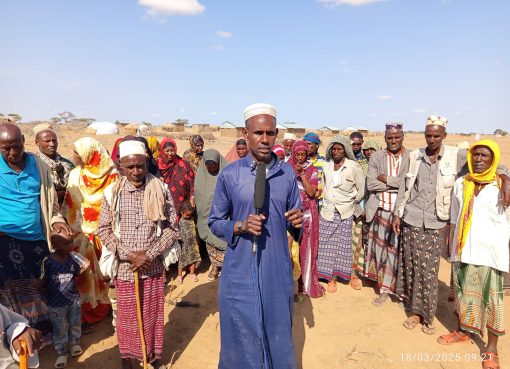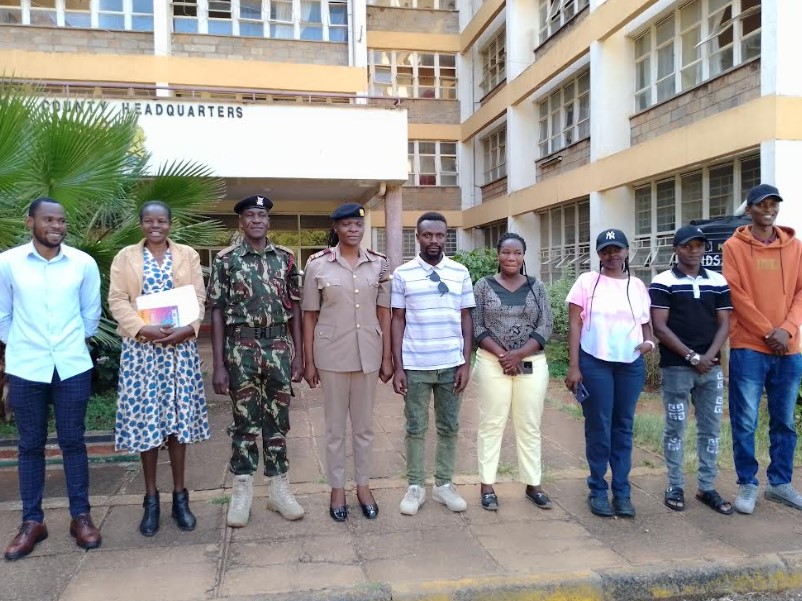
The State Department for Housing and Urban Development through the slum upgrading department conducted a public participation on Climate-Resilient, Social Housing and Infrastructure Programme, today, at Lugaga Wamuluma Ward in Vihiga County.
The programme aimed at enhancing sustainable housing, resilient infrastructure and inclusive socio-economic development within informal settlements.
An official from the slum upgrading department under the State Department of Housing in charge of facilitating the exercise, Mutugi Mugo, stated that the purpose of the visit was to conduct a public participation exercise that entailed a program they would want to incorporate in a slum upgrading bill called Climate Resilience Social Housing improvement program.
“We are here to undertake public participation with focus group discussion of selected members from Mjini settlement here in Vihiga County and further collect data on the general characteristics on the housing conditions and the conditions of the informal settlements where residents of the Mjini settlement reside,” explained Mugo.
Mugo further explained that the conditions of the informal settlements that they were looking at varied from housing typologies, conditions and structures to physical infrastructure, social infrastructure and lastly Climate change.
Mugo highlighted that the purpose of the data collection was for reporting purposes as it would be used to beef up the slum upgrading bill that would be forwarded to Parliament for proposal and enactment.
“The Bill is being undertaken in a number of counties, we began with collecting data in 34 counties and the data will be summarized and a report done, once it is finalized, the framework and the guidelines for the Social Housing Associations will be in the bill and we will begin with informal settlements visited and the people that are collaborative in wanting the program within their settlement,” cited Mugo.
Mugo revealed that the program will be implemented building up from projects that were previously being intervened by their component called the Kenya Informal Settlement Improvement program (KISIP) with the settlements having been prior planned and a buildup of efforts made before. The residents of Lugaga wamuluma ward mainly raised concern about poor drainage conditions, few social amenities, soil erosion, insecurity, water scarcity and increased dumping sites in the area.
Speaking during the participation, Mbale market trader, Ben Were argued that traders lack public toilets in the area and requested for better drainage systems to be implemented in the Market.
Peter Kuka, a resident from Mbale town raised concerns about insecurity, deplorable sewerage condition and water scarcity.
“We as the people of Lugaga Wamuluma Ward are facing high cases of insecurity due to poor lighting conditions, our environment is not appealing because of poor sewer lines and water scarcity in our area,” complained Kuka.
Vihiga Municipality Social Development officer, Isaac Chelimo, who spoke on behalf of the Municipality manager during the occasion urged area residents to remain patient as the county government installed vital developmental infrastructure within the county.
“We have heard the concerns that you have raised and we concur with you, but as a municipality we lack enough funds to finance projects that have been raised here, if we had funds, we would have wanted to create a recreational area and a community hall, but it is difficult, adding to the unavailability of space,” expressed Chelimo.
With regard to lighting in the Municipality, a concern raised by the participants, Chelimo informed the residents that the County Government had found it unsustainable to continue paying for electricity due to the huge bill incurred every month hence had started changing to solar street lighting but the only arising issue was that the change was taking much more time than expected.
The exercise employed a mixed method approach comprising of Focus Group Discussions (FGDs), household Surveys and structured field observations to gather information from communities and stakeholders.
The exercise seeks to share the concept and receive feedback on community perspective and evidence that will inform the design of intervention responsible to the local needs and priorities as well as share the draft ‘slum upgrading and prevention Bill’.
By Florence Oteng’o and Yvonne Misango