Government is stepping-up efforts to integrate Artificial Intelligence (AI) and digital literacy into STEM education to enhance learning in classrooms.
The approach is aimed at strengthening teachers’ skills in science, technology, engineering, and mathematics alongside digital competencies.
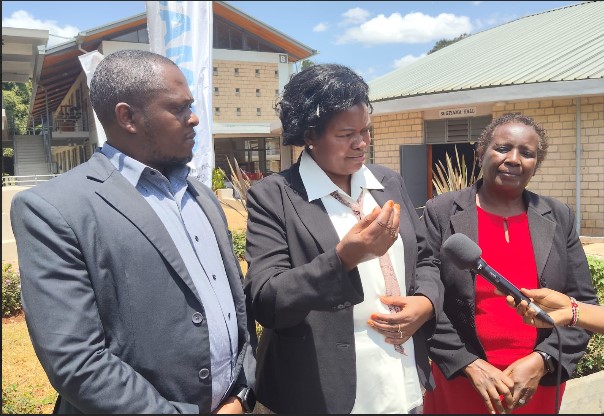
Speaking during the closing ceremony of a workshop on advancing digital literacy for competency-based STEM education at the Centre for Mathematics, Science and Technology Education in Africa (CEMASTEA) in Nairobi, Professor Catherine Ngila, Executive Director of the African Foundation for Women and Youth in Education, Science, Technology and Innovation (AFoWYESTI), said digital literacy training, particularly in Artificial Intelligence, is a crucial component of modern education as it deepens learners’ understanding of STEM subjects.
Prof. Ngila added that digital tools can promote innovation, increase student participation, and expand access to learning beyond the classroom.
However, she cautioned that unequal access to technology remains a major challenge in Kenya, particularly for learners in remote areas and children with special needs, potentially limiting their access to equal educational opportunities. She called for a multi-stakeholder and partnership approach to address these disparities and ensure inclusive access to digital learning.
She also highlighted infrastructure gaps in schools, including the need for improved facilities and laboratories, as well as persistent gender disparities in science education, which continue to hinder the full participation of women and girls in STEM.
The Chemistry Professor dismissed the perception that AI is intended to replace teachers. Instead, she explained that AI should strengthen teachers’ capabilities and make their work easier.
Since AI-generated information can sometimes be inaccurate or insufficiently specific, she called on teachers to verify facts, interpret information, and adapt learning materials that align with the curriculum.
“Teachers must always continuously… make sure that they have cross-checked information generated or obtained through AI,” she said, stressing the importance of verifying facts against books, journals, and other reliable sources.
Prof. Ngila said Kenya is relatively advanced in digital technology in Africa and is well positioned to adopt and embrace AI in education.
However, she called for continued development and implementation of policies and regulatory frameworks to guide the responsible use of AI in education.
She commended the Kenya Institute of Curriculum Development (KICD) for its work on STEM education, Artificial Intelligence, and digital literacy, calling for continued efforts to ensure that schools and institutions implement policies governing the responsible use of AI.
Dr. James Munyao, a lecturer at the Technical University of Kenya, has called for robust data protection measures as Kenya embraces digital technology and artificial intelligence in STEM education.
Dr. Munyao, who is also a Member of the African Foundation for Women and Youth in Education, Science, Technology, and Innovation (AFoWYESTI), said protecting data is important as learners, teachers, and schools increasingly participate in digital spaces.
He called for strengthening of legislation and institutional policies to ensure that personal and institutional information is adequately protected as digital technologies become more integrated into schools.
He noted that although Kenya already has data protection policies in place, the rapid evolution of Artificial Intelligence means that existing frameworks must continuously be reviewed and strengthened to address emerging gaps and security risks.
The Technical Don said universities have an important role to play through continued research into digital technologies, data protection, and safety, adding that the process will require institutions and policymakers to adapt as AI continues to evolve.
Professor Ruth Wanjau from Kenyatta University called for greater equity and inclusion in the adoption of artificial intelligence and digital technology in education, urging educators to ensure that no learner is left behind.
Prof. Wanjau, a Professor of Chemistry and Director, African Foundation for Women and Youth in Education, Science, Technology, and Innovation (AFoWYESTI), said digital learning initiatives must take into account learners who may not have access to advanced smartphones or other sophisticated technologies.
She said educators should explore innovative solutions that allow learners to access digital tools using basic mobile phones, noting that the goal should be to ensure that all learners, regardless of their circumstances or learning abilities, can participate in digital education.
Prof. Wanjau also acknowledged disparities in infrastructure across schools but urged teachers to focus on making the best use of the resources available to them. She said innovation should not be limited by what schools lack, encouraging educators to “use what they have” to empower learners.
She dismissed concerns that artificial intelligence could make learners or teachers “lazy,” saying the technology can instead empower them to achieve more. However, she stressed that teachers must guide learners in understanding and using AI effectively, rather than allowing the technology to take over the learning process.
According to Prof. Wajau, learners should first consider their own circumstances and learning needs before turning to AI. This, she said, enables them to ask more relevant questions and customise AI-generated responses to their local context.
She urged teachers participating in the workshop to embrace their role as coaches and mentors, helping learners critically assess AI-generated information and apply it appropriately to real-life situations.
The two-day workshop aimed to strengthen teachers’ digital literacy and skills in using AI and digital tools for STEM teaching, learning, and assessment.
By Ian Chepkuto