The State Department for ICT and the Digital Economy has unveiled a strategic blueprint to decentralize access to parliamentary processes across all 47 counties by integrating Parliamentary Information Centres (PICs) into existing Digital Hubs.
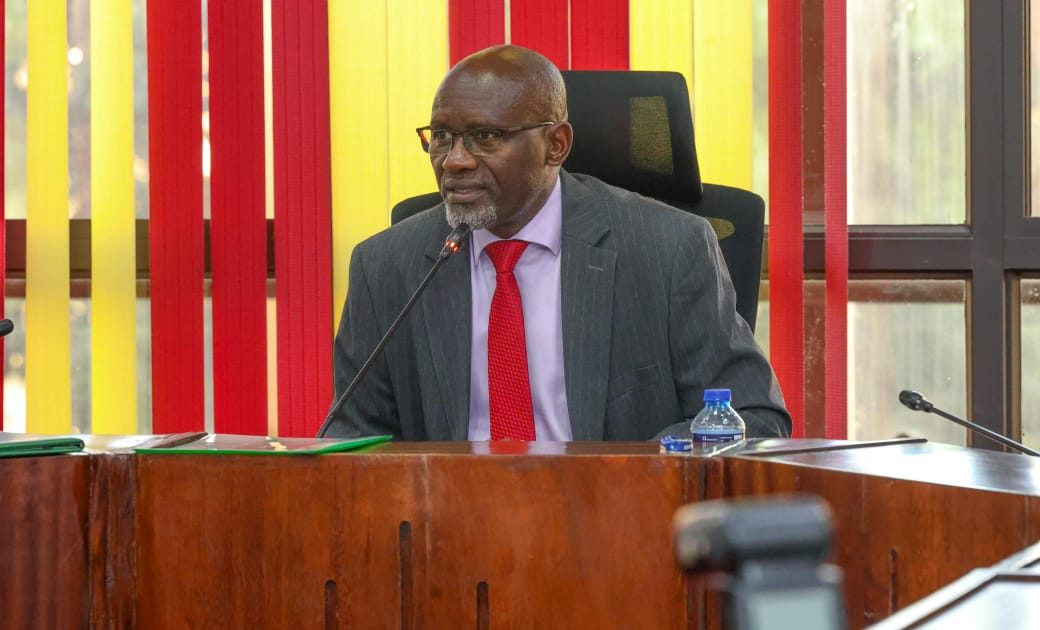
Appearing before the National Assembly Committee on Parliamentary Broadcasting and Library, chaired by Turkana West MP Hon. Daniel Epuyo Nanok, ICT Principal Secretary (PS) Eng. John Tanui outlined a differentiated implementation model aimed at strengthening civic education, enhancing transparency, and expanding public participation without incurring unnecessary construction costs.
The initiative stems from a proposal by the National Assembly seeking to leverage the government’s Digital Superhighway Initiative and Bottom-Up Economic Transformation Agenda (BETA) infrastructure to bring live proceedings, electronic Hansard records, parliamentary publications, digital research libraries, and virtual committee participation to citizens in rural and underserved areas.
Addressing the committee, Eng. Tanui explained that the State Department’s spatial assessment of digital hubs nationwide informed a tiered rollout tailored to facility capabilities.
“Given the current infrastructure designs and spatial capacities of existing digital hubs, a differentiated implementation model will provide the most practical and sustainable approach,” the PS stated.
“Prioritizing the 47 Centres of Excellence, complemented by selected Standard Digital Hubs, will provide an appropriate foundation for establishing dedicated Parliamentary Information Centres while allowing other digital hubs to facilitate access through their existing ICT infrastructure,” he added.
Under the proposed plan, the 750-square-metre Centres of Excellence, one established in each county, will serve as the primary hubs. These facilities feature dedicated Learning Centres and Tech/Creative spaces capable of hosting fully equipped parliamentary terminals, smart interactive screens, video conferencing setups, and assistive technologies for persons with disabilities.
Selected 237-square-metre Standard Digital Hubs will also host dedicated PIC spaces based on local connectivity and spatial readiness. Meanwhile, Basic Digital Hubs (175 square metres) and renovated community structures will offer digital access to parliamentary websites and live streaming through existing computers and internet access, preserving their core learning and innovation functions.
To this regard, the PS highlighted ongoing rapid deployments of digital hardware to support the rollout, confirming that nearly 40,000 devices are earmarked for digital hubs nationwide.
“We have close to 8,000 devices ready for installation in these digital hubs, including those built by Members of Parliament through CDF. We have another 10,000 in transit under the ICT Authority, and an additional 20,000 finalizing procurement,” Tanui informed lawmakers
He further emphasized the Ministry’s expanding digital portfolio, citing progress in equipping Junior Secondary Schools (JSS) with interactive smart screens, expanding fiber connectivity, and advancing national policy frameworks for Artificial Intelligence (AI).
“We are working with partners to establish regional centers of excellence in AI and digital skills at the Kenya School of Government. We are putting the country at the forefront when it comes to AI, ensuring we adopt AI solutions in government services and equip young innovators,” reported the PS.
Following the presentation, Committee Chairman and Turkana West MP Hon. Daniel Epuyo Nanok stressed the urgency of counteracting public misinformation by providing authentic, real-time access to parliamentary debates, public participation portals, and legislative proceedings.
“We saw this country grappling with misinformation and a lack of correct information. Kenyans need access to accurate information about the laws, bills, and processes passing through Parliament that directly impact their lives. Establishing these parliamentary corners brings Parliament directly to the citizens,” Hon. Nanok remarked.
Weighing in on the discussions later, Limuru MP Hon. Eng. John Kiragu Chege commended the initiative, sharing practical grassroots insights from his constituency, which pioneered early community digital hubs.
“When we started the Limuru one, I couldn’t believe when I met some young people working at night for the American market,” Hon. Kiragu recalled, highlighting how free Wi-Fi and secure community hubs have empowered local youth.
He further emphasized the need for proper coordination between CDF-funded facility developments, equipment distribution criteria, and national ICT management personnel.
Responding to inquiries on infrastructure distribution and management, ICT Authority officials assured the committee that last-mile connectivity is expanding rapidly via high-speed fiber lines co-located along power distribution networks, alongside satellite and microwave solutions for remote regions. Furthermore, the State Department has recruited 290 center managers to oversee daily operations, assist the public, and run training programs within operational hubs.
To ensure seamless implementation, the State Department and Parliament agreed to establish a joint technical taskforce involving the Parliamentary Service Commission, the National Assembly Clerk’s office, the ICT Authority, and local CDF fund managers. The team will undertake joint site assessments to verify power supply, spatial requirements, and security arrangements prior to commissioning.
By Lilian Gichohi