Africa has the potential not only to feed itself but also to play a major role in global food systems, driven by its natural resources, growing population, and expanding market.
However, food security and agricultural development continue to be constrained by climate variability and, more critically, by the degradation of soils, water resources, and ecosystems, which is undermining productivity.
Experts say that with global food demand expected to rise by 60 per cent by 2050, strengthening sustainable soil, water, and energy management while integrating local knowledge with scientific research remains a central priority for transforming agriculture in Africa.
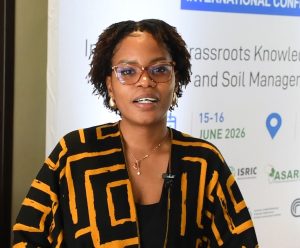
This came out today during a two-day international workshop in Nairobi reviewing outcomes of the Climate Smart Water Management and Sustainable Development for Food and Agriculture in East Africa (WATDEV) initiative organized by the Association for Strengthening Agricultural Research in Eastern and Central Africa (ASARECA).
The forum brought together stakeholders to integrate community knowledge with scientific research to strengthen climate-resilient agro-ecosystems.
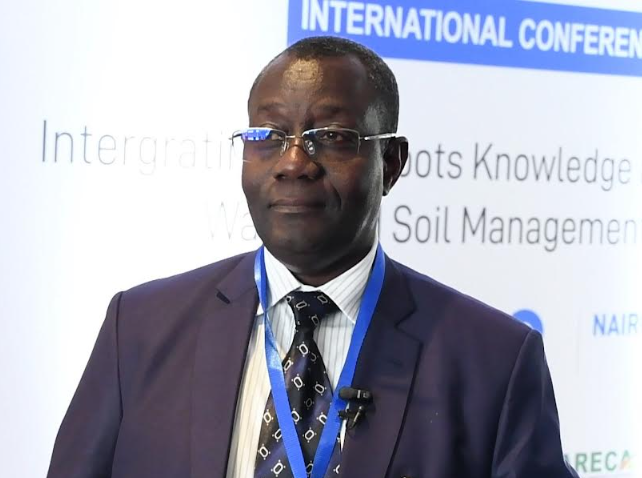
ASARECA Executive Director Sylvester Baguma underscored that sustainable soil and water management is essential for building resilient agri-food systems.
He noted that the four-year EU-funded WATDEV project that was being implemented in Kenya, Ethiopia, Egypt and Sudan has tested and promoted best management practices to improve agricultural water and soil use
“Water alone is not enough; soil management is equally critical if we are to achieve sustainable and resilient food systems,” Baguma said.
The project, now in its final phase in June 2026, was focusing on practical solutions for farmers in arid and semi-arid regions.
It has developed a toolbox of technologies, including planting basins, intercropping, and small-scale irrigation systems, allowing farmers to choose context-specific solutions.
Baguma said the workshop provided an opportunity to assess achievements, challenges, and lessons learned to guide future interventions. He expressed optimism about a potential second phase of the project, citing strong results and farmer uptake.
In Kenya, WATDEV has scaled up climate-smart practices in the Tana River Basin, particularly in Hola and Bura irrigation schemes.
Tana River County Energy Officer Laura Mikali-Dema said the project is supporting agroforestry and strengthening water users’ associations (WUAs).
“Strengthening Water Users Associations has improved water governance, allocation, and conservation, addressing persistent water scarcity and rising salinity challenges in the region.
“Agroforestry interventions,” she added, initially focused on fruit trees such as mangoes, pawpaws, and coconuts but were adapted to include fodder vegetation after concerns about crop damage from birds.
“The fodder is expected to reduce farmer–pastoralist conflicts, improve livestock feed availability during dry seasons, and enhance household incomes while reducing wind erosion”, Dema added
In Ethiopia, Principal Investigator Tanna Alamro reported significant progress at the Goga Irrigation Scheme, where farmers are increasingly adopting organic fertilizers, including manure and vermicompost, improving soil health and reducing reliance on chemical inputs by up to 50 percent.
The project has also promoted agroforestry systems integrating shade-loving spice crops within avocado farms, providing farmers with early income while trees mature. Irrigation efficiency, currently as low as 30–35 percent, could rise to 60–70 percent through improved water management practices.
Alamro said the development of an integrated modeling tool to support decision-making on sustainable land and water management, with potential for broader regional and global application, was timely.
He noted that regional collaboration under WATDEV has strengthened knowledge sharing between Kenya, Ethiopia, and Egypt, ensuring continued impact beyond the project’s lifecycle.
ASARECA was established in 1994 to advance agricultural research and development in the Eastern and Central Africa region. It brings together the National Agricultural Research Institutes from its ten member countries—Kenya, Burundi, the Democratic Republic of the Congo, Eritrea, Ethiopia, Madagascar, Rwanda, Sudan, Tanzania, and Uganda.
By Wangari Ndirangu