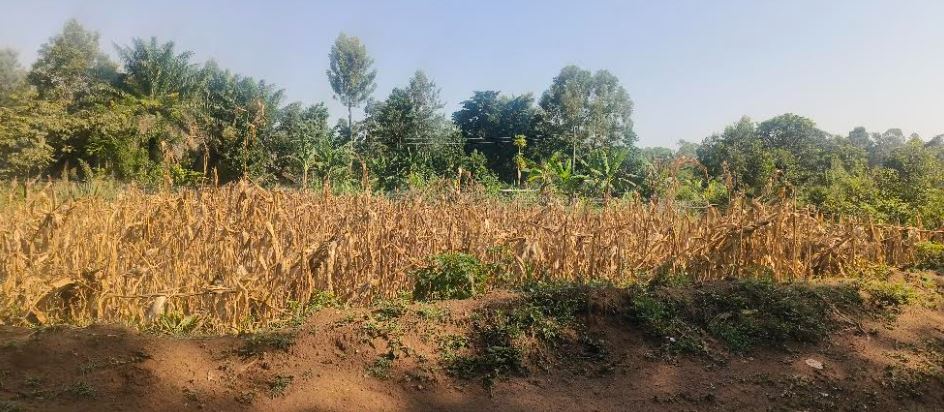
Farmers in Teso North have been urged to preserve adequate stocks of their newly harvested maize for household consumption before selling any surplus produce.
Local leaders said maintaining sufficient food reserves until the next planting and harvesting season is essential in safeguarding household food security and protecting families from possible shortages.
The advice follows reports that some farmers have started selling freshly harvested maize at between Sh50 and Sh60 per gorogoro (two-kilogram tin), despite the same quantity retailing at about Sh100 at Malaba Market.
Teso North Member of Parliament Oku Kaunya, who led the appeal, expressed concern that selling maize at low prices could force farmers to dispose of much of their harvest without gaining meaningful returns.
He warned that such decisions could leave households with inadequate food reserves and limited income after months of farming efforts.
Kaunya said reports of declining maize production in some parts of the country should encourage farmers to prioritize food storage before marketing their surplus.
He also urged farmers to diversify into other crops such as cassava and groundnuts to strengthen household resilience, improve nutrition, and create alternative income sources during seasons of poor maize performance.
The concerns come as various counties undertake assessments to establish maize production levels following changing weather patterns.
In Uasin Gishu County, the county government, in collaboration with the Ministry of Agriculture, has started a countywide digital maize crop assessment after indicating that approximately 30 per cent of the crop had been affected by several weeks of dry conditions.
According to the county government, the exercise aims to determine the extent of crop damage and generate information to guide interventions and policy decisions.
In Busia County, the Department of Agriculture is also conducting a two-week Rapid Maize Performance Assessment of the 2026 long-rains maize crop to evaluate crop performance, estimate expected production, and support agricultural planning and food security interventions.
The assessment, which began on July 13, 2026, involves agricultural officers and agripreneurs visiting farms across the county to collect crop performance data.
Teso North Deputy County Commissioner Solomon Kitai and Kenya National Union of Teachers (KNUT) Teso Branch Chairman Alex Omoit supported the call for farmers to make careful decisions when selling their produce.
Teso North Agricultural Officer Gertrude Wambia advised farmers against selling maize individually, saying they risk receiving low prices due to weak bargaining power.
She encouraged farmers to market their produce collectively through Farmer Producer Organisations (FPOs), Common Interest Groups (CIGs), and cooperative societies to negotiate better prices and access reliable markets.
“I urge all farmers to work closely with agripreneurs who provide training, link them to service providers, and connect them with buyers through FPOs. When you harvest your produce, please do not rush to sell individually. Let agripreneurs help you secure better prices,” Wambia said during a recent farmers’ field day in Amagoro.
The leaders emphasized that proper post-harvest management, collective marketing, and crop diversification would enable farmers to protect their livelihoods and improve returns from agriculture.
By Moses Wekesa