By S, KNA
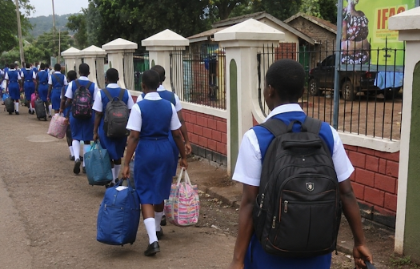
Confusion continues to cloud the implementation of the Competency-Based Education (CBE) senior school pathways as parents, teachers and learners grapple with understanding how the new system will work and what it means for future careers.
With the first CBE cohort currently transitioning to senior school, anxiety is growing among education stakeholders who say information gaps and uneven preparedness could disadvantage learners.
Under the CBE structure, senior school covers Grades 10 to 12, during which learners are placed into one of three pathways based on their abilities, interests and performance at junior school level.
However, many parents in Tinderet Sub County, for instance, say they are still unsure of what each pathway entails and whether nearby schools are adequately equipped to offer them.
Ruth Komen, the Nandi County coordinator of the Elimu Bora Initiative, said the prevailing confusion is largely due to limited sensitization and lingering attachment to the former 8-4-4 system.
She explained that CBE is designed to move learners away from exam-centred education and instead nurture skills, talents and competencies aligned with real-life application.
“The senior school pathways are not meant to lock learners out of opportunities but to help them grow in areas where they are strongest,” Komen said. “What we need is proper understanding so that parents and learners can make informed choices.”
She explained that the Science, Technology, Engineering and Mathematics (STEM) pathway focuses on subjects such as mathematics, biology, chemistry, physics and computer science, alongside emerging technical disciplines.
Learners who pursue this pathway can progress to careers in engineering, medicine, information technology, environmental science, architecture and scientific research.
Komen noted that effective delivery of STEM requires fully equipped laboratories, ICT infrastructure, workshops and teachers with specialized training in competency-based instruction.
The Social Sciences pathway, she said, covers humanities, languages, business studies and social disciplines. This pathway prepares learners for careers in teaching, law, public administration, journalism, diplomacy, economics and commerce. Successful implementation requires well-trained teachers, functional libraries, digital learning resources and strong guidance and counselling services to help learners link their studies to career opportunities.
The Arts and Sports Science pathway targets learners with talents in creative and physical fields such as music, visual arts, theatre, media and sports. Careers associated with this pathway include creative industries, sports management, coaching, media production and performance arts.
According to her, schools offering this pathway must invest in studios, performance spaces, sports facilities and specialized trainers to nurture talent effectively.
Beyond the pathways themselves, Komen emphasized that CBE demands significant human resource and infrastructural investment.
She said teachers require continuous professional development to master learner-centred teaching and assessment methods, while schools must establish counselling units, digital learning systems and partnerships with higher learning institutions and industry players.
On preparedness, she stated that the situation remains uneven. Some schools have begun upgrading facilities and training teachers, but many rural institutions face shortages of classrooms, laboratories and specialized staff. As a result, not all schools will be able to offer all three pathways at the onset.
This reality worries some parents who fear that learners’ choices may be limited by school capacity rather than individual talent. “My concern is that my child may be forced into a pathway just because the school nearby cannot offer the one she is good at,” said Beatrice Chebet, a parent from Songhor area. “We need clear guidance and equal investment in all schools.”
Teachers have also voiced concern over readiness. A junior school teacher, who requested anonymity, said many educators are still adjusting to competency-based assessment. “We support CBE, but the training needs to be continuous. Senior school requires even more specialisation, and that means more teachers and better facilities,” he said.
Learners, too, are feeling the pressure. “We hear about pathways, but we are not sure what careers they lead to,” said Kiprono Bett, a Grade 9 learner at a public school in the Sub County. “We need people to explain to us clearly so that we don’t make mistakes.”
Rono called for intensified public sensitization, increased funding for infrastructure and sustained teacher training to ensure a smooth transition. He urged parents, school administrators and local leaders to work together in supporting learners during the transition to senior school.
“The success of CBE will depend on how well we prepare our schools and how clearly we communicate with the community,” he said. “If we do it right, this system has the potential to unlock every learner’s ability,” explained Rono.