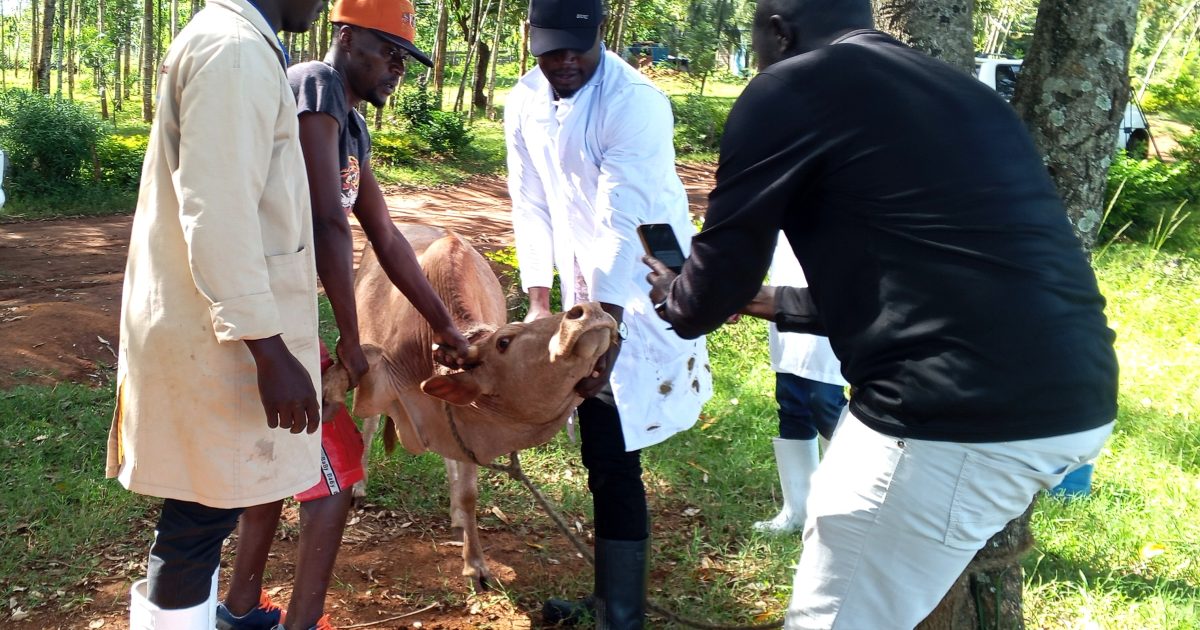
A mass vaccination of livestock against foot-and-mouth disease has kicked-off in Siaya County, with the local Department of Livestock and Veterinary Services calling on farmers to ensure their cattle are vaccinated.
Speaking during a vaccination exercise at Majengo Primary School grounds in Usigu Sub County, the National Agriculture Value Chain Development Project (NAVCDP) Siaya County Co-ordinator, Vincent Okoth, said the aim of the campaign was to address animal health issues so as to enable farmers access markets.
He said that Siaya and the neighboring counties regularly record outbreaks of the foot-and-mouth disease that affects both dairy and red meat value chains.
“Foot and Mouth disease makes the cost of livestock production high,” he said, adding that during the vaccination exercise, farmers will be paying a subsidized rate of Sh50 per cow, while the government, through the NAVCDP, will pay the balance of Sh110.
Okoth said that during the exercise, the animals are also registered through the muzzle technology, that will help identify them in case of theft and transfer to other areas.
The County director of livestock production and veterinary services, Dr. Otieno Owino said that Siaya targets vaccinating 115,000 cattle during the on-going exercise.
Dr. Owino said that the Foot and Mouth disease vaccination drive was part of the countrywide campaign aimed at controlling and eventually eradicating the disease altogether.
“If we can vaccinate 70 percent of all the animals, we will be able to contain this disease,” he said, urging farmers to vaccinate their animals.
Bondo Sub-county Veterinary Officer Dr. Clay Ngoye said the registration of cattle using the muzzle technology will help reduce cattle theft.
“Just like human beings use thumbprints for identification, the new technology helps in the identification of an animal,” he said.
A livestock farmer, Joseph Buoga Ogumbo, hailed both the national and county governments for the initiative but called for timely information on the venues to enable farmers avail their livestock on time.
by Philip Onyango