Vihiga County is expected to experience above-average rainfall from September 2026 through January 2027, with the peak of the enhanced El Niño rains forecast between October and November, the Kenya Meteorological Services Authority (KMSA) has said.
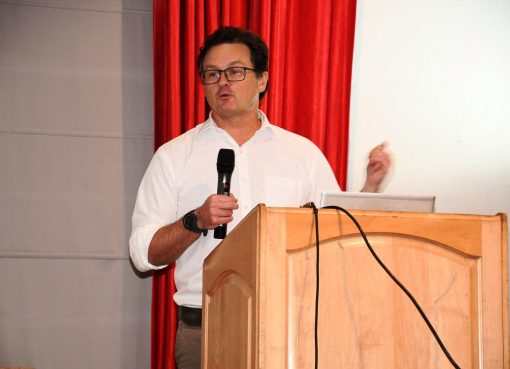
Speaking to the Kenya News Agency (KNA) on Thursday, Vihiga County Director of KMSA Fredrick Etemesi said the county could begin receiving persistent seasonal rainfall in September, with November expected to be the principal peak month.
Etemesi said although November was projected to record the highest rainfall, heavy rainfall episodes could occur outside the monthly peak due to the El Niño-enhanced conditions.
“For planning purposes in Vihiga, I would use September as the expected onset, November as the principal peak month, while remaining prepared for significant heavy-rain episodes from October through December,” he said.
He noted that the rainfall could extend into January 2027, with the distribution expected to be fair to good, urging farmers to factor the residual rains into their harvesting, drying and storage plans.
“Residual rainfall may continue into January 2027, which is important when planning harvesting, drying and storage. Farmers should not interpret the end of December as necessarily the end of the wet period,” said Etemesi.
The forecast, he said, points to prolonged wet spells, occasional isolated heavy and intense storms, flash flooding, landslides in vulnerable areas, waterlogging and possible disruption of roads and other infrastructure.
Etemesi said the expected rains could provide favourable conditions for agriculture, particularly maize and beans farming, if farmers properly manage the risks associated with excessive moisture.
For maize farmers, he advised them to take advantage of the expected availability of soil moisture but cautioned them against planting solely because of isolated rainfall events in September.
He urged farmers to plant certified, locally recommended and preferably early- to medium-maturing varieties, based on advice from agricultural extension officers.
Farmers should also avoid waterlogged areas, improve drainage in low-lying fields, apply fertiliser and manure according to soil and extension recommendations, and prepare for increased weed growth occasioned by abundant moisture, he said.
Etemesi further advised maize farmers to plan early for post-harvest drying, noting that prolonged wet conditions could make it difficult to dry the crop properly.
On beans, he said the crop could benefit from adequate moisture but was more sensitive than maize to waterlogging and excessive rainfall.
“Farmers should plant on well-drained fields and avoid poorly drained valley bottoms. They should not plant too early on the basis of a single rainfall event and should monitor for fungal diseases and other moisture-related pests and diseases,” he said.
He also urged farmers to use varieties recommended locally for the prevailing season and plan harvesting and drying carefully to avoid deterioration in bean quality.
Etemesi emphasized that the expected El Niño rains presented an opportunity for good crop establishment and potentially higher yields but cautioned that excessive rainfall could also cause waterlogging, disease outbreaks, soil erosion, crop lodging and post-harvest losses.
On preparedness, Etemesi called for a multi-agency, last-mile early-warning approach to ensure timely dissemination of weather information to residents.
He recommended collaboration between the County Government, KMSA, National Drought Management Authority (NDMA), Kenya Red Cross, health authorities, agricultural officers, chiefs and village administrators in conducting countywide public awareness campaigns.
At ward level, he said simplified rainfall forecasts and impact-based advisories should be disseminated through chiefs, assistant chiefs, village elders, community health workers and agricultural extension officers.
He also encouraged the extensive use of local radio stations to reach residents who may have limited access to smartphones and internet services, noting that weather information should be communicated in English, Kiswahili and appropriate local languages.
Agricultural officers, he said, should translate weather forecasts into practical guidance for farmers, including decisions on planting, crop varieties, drainage, disease surveillance, harvesting and drying.
Etemesi further advocated the use of SMS and WhatsApp alerts to issue timely warnings whenever heavy rainfall, flooding or thunderstorms are expected.
He said schools, churches, markets and public meetings should also be used as important channels for reaching residents who may not regularly access online weather forecasts.
Etemesi called for the identification and mapping of flood and landslide hotspots before the peak rains begin, including vulnerable villages, roads, bridges, rivers and steep slopes.
He said communities living in such areas should receive impact-based warnings rather than generic alerts on heavy rainfall.
He stressed that the seasonal forecast should not be treated as a one-off warning, noting that KMSA would continue updating forecasts on the onset, distribution and cessation of the rains as the season approaches.
He urged residents, farmers and relevant agencies to remain alert and regularly follow official weather updates to minimise the potential impacts of the enhanced rainfall.
By Yvonne Misango and Rose Wasike