Securing women’s land rights in Kenya is vital for successful environmental conservation and climate action since without secure ownership or tenure, women who make up the backbone of rural farming, are severely limited in their ability to invest in long-term soil management and ecosystem restoration.
According to Participatory Ecological Land Use Management (PELUM) Kenya, the lack of land ownership severely restricts women from adopting agro-ecological practices and without formal titles they cannot secure agricultural credit, make long-term investments in soil health or agroforestry, or claim decision-making power over the land they cultivate.
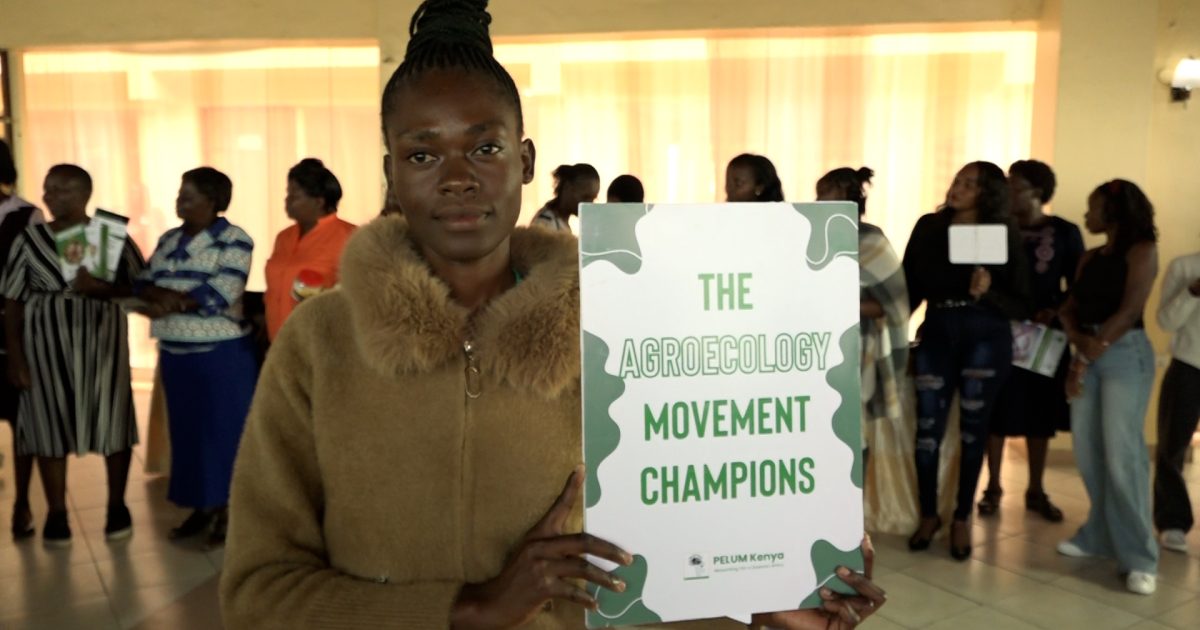
Speaking in Nakuru during a sensitization forum organized by PELUM, senior trainer Cecilia Murugu indicated that cultural beliefs that deny women land rights were to blame for adverse climate change affecting them adding that implementing policies that ensure they have better access to land and finances will guarantee their engagement in agroecology more equitably.
While indicating that the organization was advocating for equal land rights and sustainable land use to promote ecosystem balance, environmental conservation, food security and nutrition and mitigate against effects of climate change.
Murugu noted that research findings had established that between 73 and 93 percent of agricultural land is not owned by women, while about 70 percent of women in Kenya have no land ownership at all.
She affirmed that secure land tenure for women is key to eradicating poverty, increasing agricultural investment and ensuring food security, and is an essential element of climate action and climate resilience.
Murugu however noted that Kenya already had legal provisions guaranteeing women equal rights to land and inheritance. “Kenya already has strong legal provisions that support women’s land rights. The real challenge is implementation and accountability,” she said.
The senior trainer pointed out that the enjoyment of land and property rights is additionally hindered by limited or lack of awareness of the existence of these laws by women and society in general.
Customary laws, she added, are applied with extreme favour towards men.
Moreover, the decision-making processes in most organs or bodies dealing with land are male dominated and limited the participation of women. The sensitization forum brought on board over 200 widows drawn from across all the 47 counties.
PELUM Kenya (Participatory Ecological Land Use Management) is a network of 66 Civil Society Organizations and Non-Governmental Organizations (NGOs) that promotes agroecology and sustainable farming among small-scale farmers.
Through advocacy and policy influence, networking, capacity development, information, and knowledge sharing it promotes organic agriculture, sustainable agriculture, regenerative agriculture, agroforestry, permaculture, conservation agriculture, biodynamic agriculture, family farming, and bio-intensive agriculture.
Murugu explained that agroecology requires time, labor, and capital for investments like water harvesting and organic soil improvement adding that without a land ownership document, women struggle to access agricultural loans from financial institutions.
Agroecological methods like agroforestry, soil conservation, and composting require upfront labor and capital. Because women often lack secure land tenure, they hesitate to invest in practices whose benefits are realized over years, stated the Senior Trainer.
Murugu observed that women play crucial roles in Kenya’s agri-food systems – from production to agribusiness – shouldering a disproportionately higher burden of climate change amidst limited access to critical resources.
She indicated that the focus on industrial agriculture in Africa has contributed to unsustainable practices that worsen social inequalities and increase environmental degradation, further reducing productivity and increasing hunger adding that enhanced involvement of women in agroecology offers a viable alternative.
She noted that towards entrenching agroecology practices in Kenya, women can be empowered by building their skills and developing practices through collective action, creating opportunities for commercialization, and enhancing their negotiation and leadership skills.
Murugu stated that building on women’s indigenous knowledge about the use, management and conservation of diverse species in restoring biodiversity, is important adding that the knowledge encompasses crop rotation, intercropping, the integration of livestock–crop production, agroforestry and agro pastoralism.
This, she noted, reflects the efficient practices of resource reuse and innovations that reduce or eliminate the use of costly, scarce or environmentally damaging inputs.
Grace Achieng, a paralegal from Siaya County noted that women’s deep-rooted knowledge of local ecosystems, traditional farming methods, and seed management practices makes them invaluable contributors to sustainable agricultural development.
Achieng said incorporating their perspectives and expertise leads to culturally relevant and effective agroecological practice and that promoting gender equity within agroecological transitions is not only a matter of social justice, but also a strategic imperative for enhancing food security and resilience in the face of climate change.
She noted that lack of land ownership was one of the major inequalities that prevented women from engaging fully in agroecological transition.
She said that successful agroecological transition should support investment in improving women’s representation in the transition process adding that funding and supporting women-led cooperatives were critical in enabling women to pool resources, gain better access to markets, and advocate for fairer policies to help address pervasive gender biases that limits women’s rightful benefits from agriculture.
She added that patrilineal systems could limit women’s land access and relegate them to areas with poor soils, demanding more work to increase production. In East Africa, women’s access to land is still culturally driven.
Achieng further lamented that widows are routinely disinherited and dispossessed of land and housing, often by their close kin and in-laws despite these customary practices running counter to the Kenyan laws including the Constitution.
“Women’s cultural inability to own and manage land, home and property keeps them vulnerable. Kenyan laws recognize women’s rights to own and inherit property, but in practice, many widowed women are chased away from their land or home,” she elaborated.
Lilian Ngoya a paralegal officer from Bungoma County noted that cultural stereotypes on women land ownership have a ripple effect on the economy, as women without land and property rights are economically insecure and prone to poverty.
Ngoya noted that this makes them vulnerable to domestic violence and unable to leave abusive relationships.
The paralegal officer pointed out that the Constitution of Kenya covers these inequalities through the provisions of affirmative action which are aimed at countering the effects of long-term discrimination against groups such women, persons with disabilities among others. The Constitution, she elaborated, has dealt with the issue of gender discrimination in land acquisition and use.
“Article 600(1)(f) calls for the elimination of gender discrimination in practices relating to land and property rights while Article 68 (ii) provides that parliament shall enact legislation to regulate the recognition and protection of matrimonial property,” she elaborated.
By Esther Mwangi and Dennis Rasto