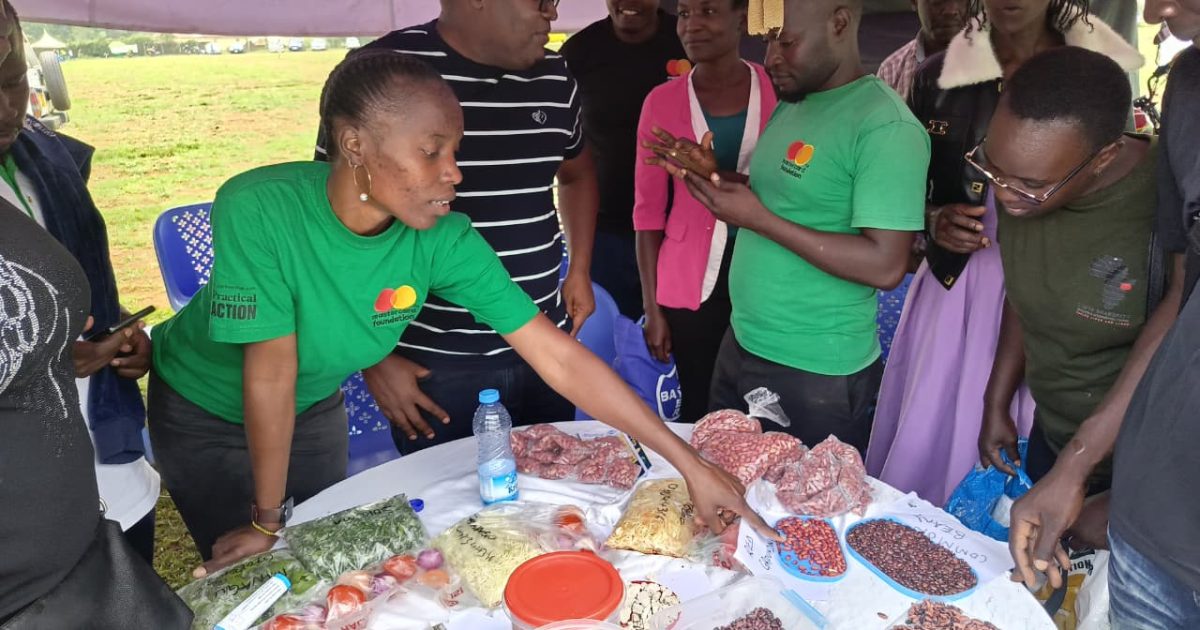
Youth have been urged to take a leading role in food production, environmental conservation and community development through organised farm labour solidarity and food cooperatives.
Speaking during a youth training programme at Mulo Cooperative Society in Awendo Sub-County, the General Coordinator of the Kenya Peasants League (KPS), David Otieno, said the Farm Labour Solidarity Building Programme would help young people come together within food cooperatives to support farmers with labour.
Otieno said the Kenya Peasants League also helps the food production industry identify and respond to challenges affecting households and communities.
The Farm Labour Solidarity Building Programme has been bringing together youth from different counties, with participants organising themselves to visit farms and provide labour support to farmers.
The organisers said the initiative seeks to address the growing trend of young people leaving rural areas in search of urban employment, leaving older members of the community to undertake farming activities.
Otieno said the programme would also ensure that youths participate in food cooperative markets, where they work as sales agents, collect orders, package and distribute food, and engage in businesses that provide them with income-generating opportunities.
A key component of the programme is the establishment of agroecology schools within food cooperatives and clusters. The schools bring together young men and women to learn about sustainable agriculture, indigenous seeds, environmental protection and community development.
The programme also includes senior schools that focus on women’s rights and sexual and reproductive rights, while encouraging young men to grow into responsible members of society.
Otieno emphasised the importance of involving young people in household and community decision-making, arguing that equality and cooperation between parents and children are essential for building stronger families and communities.
During the programme, youth also participated in food festivals showcasing indigenous foods prepared by young people. Organisers said the festivals are intended to preserve traditional knowledge and strengthen the connection between parents, youth, households and food production.
The programme brought together more than 100 youths from Migori and other parts of the country, linking them to a network of more than 67 food cooperatives.
Patrick Otieno Oduor, a youth leader from Ndere Ligega Youth Food Cooperative in Siaya County, said the training had exposed participants to digital platforms and technology that could help strengthen food cooperatives and improve communication, marketing and access to information.
Oduor said the programme had enabled young people to exchange ideas and acquire new skills, particularly on the use of digital technology to strengthen cooperative activities.
He encouraged young farmers to preserve indigenous seeds and embrace organic farming practices, saying traditional farming knowledge passed down by parents remains an important aspect of sustainable food production.
Wendy Agola, a youth from Nairobi, said the programme had enhanced her understanding of farming, indigenous and hybrid seeds, climate protection and teamwork.
She urged young people to create employment opportunities through agriculture rather than depending solely on urban employment.
Agola said she would mobilise more young people to form groups and promote farm labour solidarity, food production and cooperation within communities as a way of creating wealth for themselves and the country.
She highlighted teamwork, a growth mindset, confidence and volunteerism among young people as key ingredients for success in agricultural entrepreneurship.
Michelle Atieno, another youth from Migori, encouraged young people to take advantage of available opportunities and participate actively in farm labour solidarity programmes to acquire skills necessary for successful agricultural entrepreneurship.
The youth also called for greater government support for sustainable agriculture and smart climate farming.
They raised concerns over increasing dependence on inorganic agricultural inputs, saying some farming practices were affecting soil health and fertility.
“We are advocating for farming practices that protect soil fertility through the use of organic fertilizer and indigenous seeds as a way of strengthening communities’ ability to produce their own food,” Atieno said.
By Makokha Khaoya