Every year on August 19, World Humanitarian Day shines a light on the people and institutions working to uphold human dignity and alleviate suffering around the world.
But while humanitarian action is critical during times of crisis, lasting change requires more than emergency relief. It requires creating the conditions that enable individuals and communities to move from vulnerability to self-reliance.
In Kenya, this broader vision of sustainable humanitarianism is increasingly taking shape through urban development, housing and infrastructure. At the centre of this transformation is the State Department for Housing and Urban Development (SDHUD), whose programmes are changing not only the physical appearance of towns and cities, but also the social and economic prospects of the people who live in them.
Through initiatives such as the Affordable Housing Programme (AHP), the Kenya Informal Settlements Improvement Project (KISIP), the Nairobi River Regeneration Project and Smart City initiatives, the department is linking housing, infrastructure, environmental restoration and economic empowerment to create more resilient communities.
The Affordable Housing Programme has emerged as more than a housing initiative. It is also becoming an engine for employment, skills development and local enterprise.
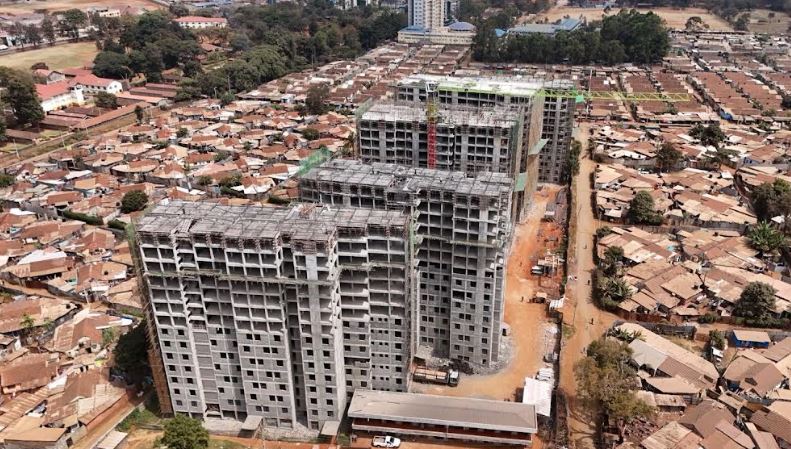
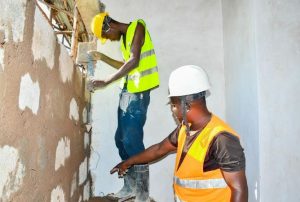
According to the State Department for Housing and Urban Development, more than 138,000 housing units are currently under construction, with informal-sector workers playing a significant role in supplying and producing construction materials, including doors, windows and steel fittings.
Some workers have also received training and certification, giving them an opportunity to strengthen their skills and improve their livelihoods.
For low-income families, the promise goes beyond the construction of new buildings. It is about the possibility of owning a modern, secure home and establishing a permanent foundation for their families.
In Mukuru, Nairobi, for instance, a housing development with a planned capacity of 13,248 units is expected to provide homes for thousands of families. More than 1,000 families have already been housed, marking a significant step in the transition from informal settlements to planned residential communities.
For many residents, the significance of such a transition cannot be measured simply in the number of units completed.
For decades, low-income urban households have faced the threat of eviction, insecure tenure, poor drainage, inadequate sanitation and unsafe structures. Moving into a planned home with reliable electricity, running water and proper drainage represents not just an improvement in living standards, but a restoration of dignity and security.
For Nairobi trader Mary Wambui, secure housing and legal land ownership represent something even more enduring.
“When you hold a title deed, you no longer fear that tomorrow someone will demolish your livelihood,” she says. “It gives your children a permanent anchor.”
Housing is only one part of the urban transformation story. Environmental conditions, particularly in densely populated settlements, have a direct impact on public health and livelihoods.
The Nairobi River Regeneration Project seeks to address these challenges by cleaning waterways, improving sanitation, restoring river ecosystems and creating healthier public spaces.
The programme includes plans to expand sewer reticulation by more than 220 kilometres, construct more than 200 ablution blocks and improve access to sanitation facilities. Along riverine stretches in areas such as Korogocho and Dandora, youth groups are participating in river-cleaning and greening activities.
Places once associated with accumulated waste and environmental hazards are gradually being transformed into cleaner and safer public spaces.
The project also carries an important climate-resilience dimension. Heavy rains and urban flooding disproportionately affect residents of informal settlements, where blocked drainage channels and settlements along waterways can turn extreme weather into humanitarian emergencies.
By clearing waterways, stabilising riverbanks and introducing urban forestry, river regeneration can help reduce flood risks while contributing to the mitigation of the urban heat-island effect.
For millions of urban residents, informal settlements have historically meant living with inadequate sanitation, limited infrastructure and uncertain land tenure.
The department says that KISIP is seeking to change that reality by upgrading basic infrastructure while supporting land tenure security.
The programme has improved living conditions for more than 1.36 million residents across 15 urban counties. It has supported the construction of 98.2 kilometres of bitumen roads, 112 kilometres of water pipelines and the processing of more than 23,000 land titles.
For residents, these improvements translate into everyday changes that can have profound consequences: better roads, improved access to water, greater security of tenure and safer neighbourhoods.
In areas such as Kayole and Ziwa la Ng’ombe, beneficiaries have reported improvements in neighbourhood safety, including a reduction in night-time crime.
Such outcomes demonstrate that urban upgrading is not simply about constructing roads or installing pipes. It is also about creating environments where people can live, work and raise their families with greater confidence.
As Kenya’s urban population continues to grow, the future of cities will depend increasingly on infrastructure that is sustainable, connected and technologically enabled.
Smart City initiatives are responding to this challenge by promoting digital connectivity, clean energy, modern infrastructure and technology-driven economic opportunities.
The ambition is not merely to create technologically advanced cities, but to build urban economies capable of generating new jobs, supporting digital enterprises and hosting critical national data infrastructure.
For a young generation entering an increasingly digital economy, such infrastructure could become as important to employment and enterprise as roads and electricity have been to previous generations.
Behind every kilometre of road, housing unit or rehabilitated riverbank are people whose livelihoods are directly affected by urban development.
For Samuel Wasike, a job at an affordable housing project in Bungoma has provided an opportunity to build a more stable future. Working as a plastering foreman and team leader, he says the job has helped stabilise his income and given him greater confidence in planning for his family’s future.
His experience illustrates an important dimension of urban development: construction itself can become a pathway out of economic vulnerability when local workers are deliberately incorporated into development projects.
Every project therefore has the potential to become an economic ecosystem, supporting masons, plumbers, electricians, welders, carpenters, transporters, suppliers and small businesses.
Urban development, in this sense, is as much about economic empowerment as it is about civil engineering.
The challenges facing rapidly growing cities are complex. Climate change, population growth, informal settlements, unemployment and inadequate infrastructure can combine to create conditions in which communities remain perpetually vulnerable.
But sustainable humanitarianism offers a different approach.
Emergency relief saves lives when crises occur. Structural development can help prevent communities from repeatedly falling back into crisis.
That is the broader significance of Kenya’s urban transformation agenda. By integrating shelter, security of tenure, sanitation, environmental protection, infrastructure and economic opportunity into national urban policy, the State Department for Housing and Urban Development is helping shift the conversation from aid dependence to empowerment and self-reliance.
The measure of success is ultimately not found only in construction statistics. It is found when a child can study safely at night. When a young person can earn a living from a skill acquired through a housing project. When a family can access clean water without paying exorbitant costs. When a worker can secure a stable income close to home. And when a household can turn a key in the door of a home it can confidently call its own.
That is where urban transformation becomes humanitarian action.
And that is where the restoration of dignity begins.
By Joseph Ng’ang’a