More than 800 county health facilities across Kenya are at risk of missing out on Social Health Authority (SHA) reimbursements for operating without valid licenses, Medical Services Principal Secretary Dr. Ouma Oluga has warned.
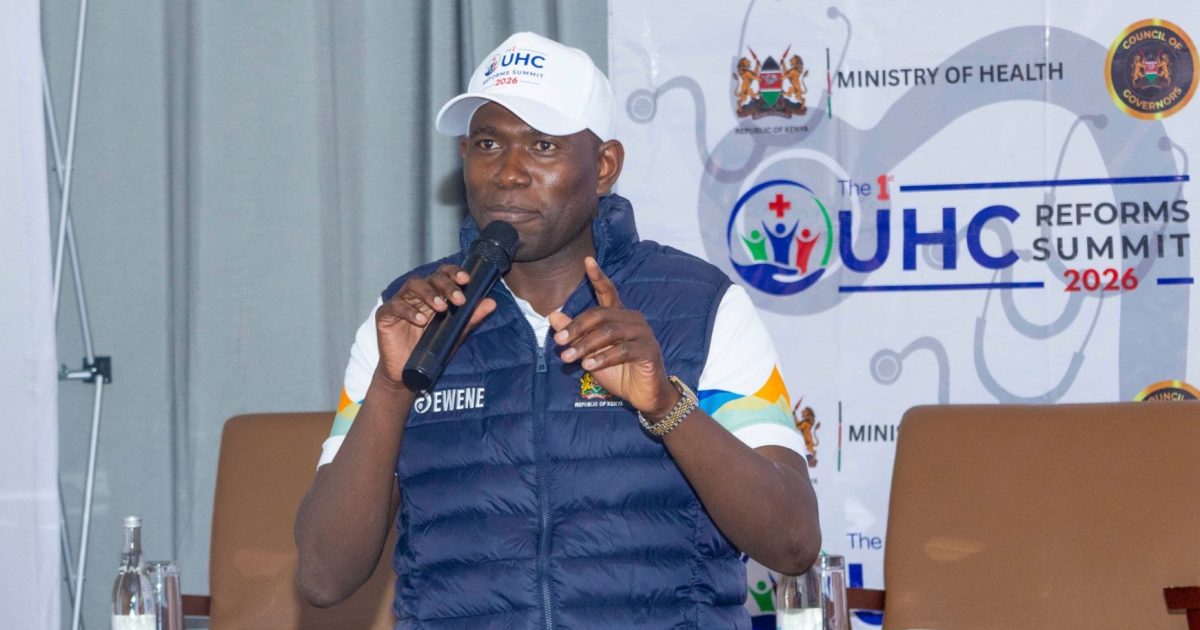
Speaking in Kisumu during a meeting of County Chief Officers for Health on Universal Health Coverage (UHC) reforms, Dr. Oluga said 819 county facilities have yet to secure licenses from the Kenya Medical Practitioners and Dentists Council (KMPDC), rendering them ineligible for SHA empanelment and funding.
The PS said the licensing gap was undermining the government’s efforts to expand Universal Health Coverage (UHC), despite significant progress made since the rollout of the Social Health Authority.
“As of June 8, KMPDC had registered 6,834 county health facilities, but only 6,015 hold valid operating licenses. That means 819 county facilities are operating without licenses. This is revenue counties are leaving on the table and it is also a patient access and safety issue,” said Dr Oluga.
He directed counties to work with KMPDC to ensure all facilities are licensed by July 31.
“No Kenyan should be turned away or charged money because counties have not licensed their facilities,” he said.
The warning came as the Ministry of Health highlighted gains made under the government’s UHC programme.
According to Dr. Oluga, SHA has registered 31.39 million Kenyans, contracted 11,034 health facilities, disbursed Sh.147.37 billion in claims and financed 1,166,144 safe deliveries since October 2024.
“These are not projections. These are facts recorded in the system. We are building a Kenya that does not just talk about health coverage but one that pays for it at scale and in real time,” he said.
The PS said the focus has now shifted from legislation and policy development to service delivery, with counties expected to play a central role in translating reforms into better patient outcomes.
He praised counties for supporting implementation of health reforms and maintaining services despite challenges, including disruptions caused by changes in donor funding arrangements.
Dr. Oluga also singled out maternal health as a key priority under the government’s Every Woman Every Newborn (EWENE) initiative, which aims to reduce maternal mortality by 80 per cent by 2028.
He said SHA has already spent more than Sh. 17 billion on maternity services, with over Sh. 9 billion paid to county governments.
An additional Sh. 4.2 billion, he said, has been provided by the National Treasury to sustain maternal healthcare services at Level Two and Three facilities during the current financial year.
“We want every pregnant woman to attend antenatal clinics and deliver in a health facility. The biggest causes of maternal deaths — bleeding, sepsis and obstructed labour can largely be prevented through quality antenatal care and skilled delivery services,” he said.
The PS revealed that the government has supplied maternity equipment to 638 facilities and is training healthcare workers to improve emergency obstetric care and promote respectful maternal care.
“We want mothers to be treated with dignity. We have seen facilities where antenatal attendance is high but women choose not to return to deliver there because of how they were treated,” he said.
Dr. Oluga also raised concern over blood shortages, describing them as a major threat to efforts to reduce maternal mortality.
Kenya requires about 550,000 units of blood annually but collected only 333,533 units during the 2024/25 financial year, equivalent to 63 per cent of the target.
He called on county governments to strengthen donor mobilisation, staffing and blood storage systems to improve availability of blood for emergency cases.
The meeting also reviewed progress in immunisation, with the PS noting that Kenya had recorded its first year in 16 years without vaccine shortages.
“This is the first year in 16 years that we have not experienced vaccine stock-outs. Some counties have even surpassed their vaccination targets, with one recording 113 per cent typhoid vaccine coverage,” he said.
On SHA registration, Dr. Oluga said national enrolment currently stands at about 66 per cent, but significant disparities remain among counties.
He urged health workers to take a leading role in educating the public about SHA benefits and registration procedures.
“If our own healthcare workers cannot explain what SHA covers and how patients can access services, we cannot blame the public for failing to enrol,” he said.
The PS further directed counties to complete the absorption of UHC staff into permanent employment by July 1 and deploy dedicated SHA claims officers in Level Four hospitals and above to improve reimbursement processes and reduce patient complaints.
Addressing concerns over the recent Ebola outbreak in DRC and Uganda, Dr. Oluga assured Kenyans that the country remains among Africa’s most prepared nations to respond to public health emergencies.
Citing World Health Organization assessments, he said Kenya scores 66 per cent on health emergency preparedness, with contact tracing capacity rated at 100 per cent and laboratory preparedness at 75 per cent.
“Kenya’s health system is strong, but the first line of defence remains individual vigilance. Anyone feeling unwell should seek medical attention early, especially if they have travelled from high-risk areas,” he said.
The Kisumu meeting is expected to adopt resolutions on facility licensing, blood mobilisation, digitisation of health services, SHA claims management and the transition of UHC workers as the government pushes to accelerate implementation of Universal Health Coverage across all 47 counties.
By Chris Mahandara